Chef Lupita
Acúmara Tatemada al Comal
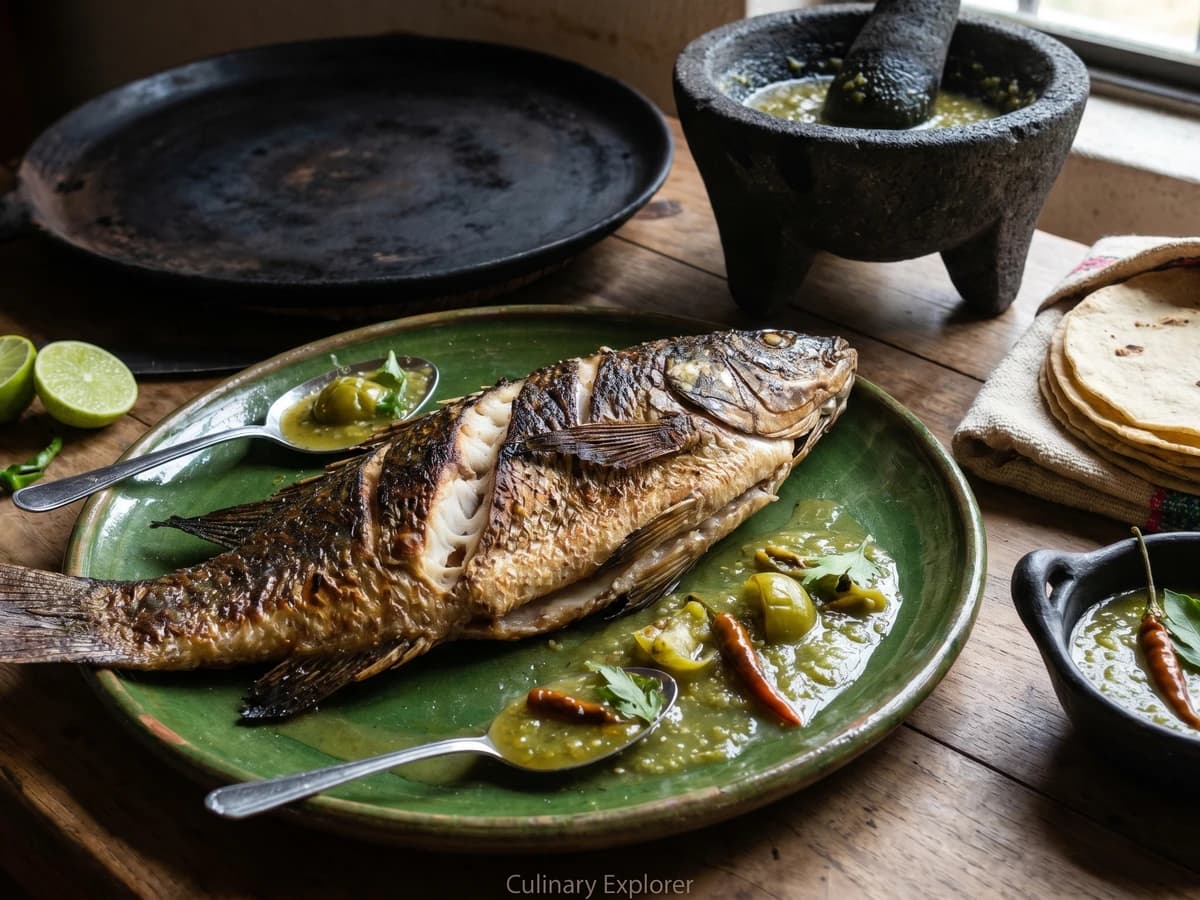
Michoacán's Lake Pátzcuaro acúmara, a whole kurucha from the lago tatemada on a comal de leña and served with chile perón atápakua, corn tortillas, and P'urhépecha discipline.
A cooking platform built around craft, culture, and the stories behind what we eat.

Created by
Campeche's stuffed squid braised in its own ink, with a picadillo of shrimp, crab, capers, olives, and the warm spice of the peninsular recado. The Gulf coast on a plate.
This is from Campeche. Not Veracruz, not the generic Mexican coast, Campeche. The state that sits on the Gulf with its back to the Yucatán peninsula and its face turned toward the boats. The cooking here is peninsular, which means Mayan technique married to Spanish, Caribbean, and a quiet thread of Lebanese influence that arrived in the late 19th century. You taste all of it in this dish.
The squid is local. The shrimp and crab are local. The olives, the capers, the raisins, the warm spices of allspice and clove, those came on Spanish ships and stayed in the kitchens of Campeche cooks who made them their own. This is not Mediterranean food with a Mexican accent. It is Campechano food, period. The picadillo de mar inside the squid is a cousin to the picadillo that fills the empanadas of San Francisco de Campeche, salty and briny and faintly sweet, warm with allspice. The ink turns the sauce the color of deep night water. The habanero sits on top of the cazuela like a watchman, perfuming everything without burning anything. Do not cut it open. That is not how it is done.
My mother never made this dish. She was from Jalisco and Jalisco does not cook with the sea this way. I learned it in Campeche, in the kitchen of a woman named Doña Esperanza who cooks for the families on Calle 59 and who showed me, with the patience of a teacher who has done this a thousand times, how to clean a squid without breaking the ink sac. She told me the dish is for guests. For Christmas Eve. For the day your son comes home from working in the north. You make it because the people at the table deserve the work. Saber cocinar es saber vivir.
Calamares en su tinta has roots in the Spanish Mediterranean tradition that arrived with Andalusian and Basque sailors during the colonial era, but the Campeche version was reshaped by the ingredients of the Gulf and the recado tradition of the peninsula, where complex spice mixtures, often containing allspice, clove, and oregano, define regional cooking more decisively than chiles do. The use of raisins, capers, olives, and warm sweet spices alongside seafood reflects the layered influence of Spanish, Caribbean, and Levantine cooks who passed through the port of San Francisco de Campeche from the 16th century onward, and the dish belongs to the category of comida de salón, the dressed-up cooking served at family celebrations and political dinners since the late 19th century. Campeche's cuisine remains the least documented of the peninsular three, overshadowed by Yucatán and Quintana Roo in the national imagination, though local cooks and the Universidad Autónoma de Campeche have worked since the 1990s to record and protect the recipes of the state.
Quantity
6 medium (about 6 to 7 inches in the body)
with ink sacs intact if possible
Quantity
8 ounces
peeled, deveined, and finely minced
Quantity
6 ounces
picked over for shell
Quantity
4 tablespoons, divided
Quantity
1 medium
finely diced
Quantity
4
finely minced
Quantity
1
finely diced, seeds in or out to taste
Quantity
2 tablespoons
rinsed and chopped
Quantity
1/3 cup
finely chopped
Quantity
2 tablespoons
finely chopped
Quantity
2 tablespoons
finely chopped
Quantity
1 teaspoon
Quantity
1/2 teaspoon
Quantity
1/4 teaspoon
Quantity
to taste
Quantity
4 packets (4 grams each), or the ink from the squid sacs
Quantity
2 pounds
blanched, peeled, and roughly chopped
Quantity
1/2 medium
roughly chopped
Quantity
3
peeled
Quantity
2
Quantity
1 sprig
Quantity
1/2 cup
Quantity
1 cup
Quantity
1
whole and uncut
Quantity
as needed
Quantity
for serving
Quantity
for serving
Quantity
for serving
warmed
| Ingredient | Quantity |
|---|---|
| whole squidwith ink sacs intact if possible | 6 medium (about 6 to 7 inches in the body) |
| fresh shrimppeeled, deveined, and finely minced | 8 ounces |
| fresh blue crab meatpicked over for shell | 6 ounces |
| manteca de cerdo (pork lard) | 4 tablespoons, divided |
| white onionfinely diced | 1 medium |
| garlic clovesfinely minced | 4 |
| fresh chile xcatic (or chile güero)finely diced, seeds in or out to taste | 1 |
| capersrinsed and chopped | 2 tablespoons |
| pitted green Manzanilla olivesfinely chopped | 1/3 cup |
| golden raisinsfinely chopped | 2 tablespoons |
| flat-leaf parsleyfinely chopped | 2 tablespoons |
| dried Mexican oregano | 1 teaspoon |
| ground allspice | 1/2 teaspoon |
| ground cloves | 1/4 teaspoon |
| kosher salt and freshly cracked black pepper | to taste |
| squid ink | 4 packets (4 grams each), or the ink from the squid sacs |
| ripe Roma tomatoesblanched, peeled, and roughly chopped | 2 pounds |
| white onion (for the sauce)roughly chopped | 1/2 medium |
| garlic cloves (for the sauce)peeled | 3 |
| bay leaves | 2 |
| fresh thyme | 1 sprig |
| dry white wine | 1/2 cup |
| seafood or fish stock | 1 cup |
| fresh chile habanerowhole and uncut | 1 |
| wooden toothpicks for sealing | as needed |
| white rice (optional) | for serving |
| pickled red onion with sour orange (optional) | for serving |
| hand-pressed corn tortillas (optional)warmed | for serving |
Hold each squid body in one hand and pull the head and tentacles out slowly. The ink sac is the small silver-gray pouch attached near the head. Cut it free with care and reserve it in a small bowl. Pull out the transparent quill from the body and discard it. Rinse the body under cold water, inside and out, and pat dry. Trim the tentacles just below the eyes and reserve them. Discard the beak, the small hard knob at the base of the tentacles. The body should be a clean, intact pouch.
Finely chop the reserved tentacles. In a heavy skillet over medium heat, melt 2 tablespoons of the lard. Add the finely diced onion and cook until translucent, about 5 minutes. Add the minced garlic and the chile xcatic, cook 1 minute more. The chile xcatic is the yellow chile of the peninsula, mild and floral. If you cannot find it, chile güero is a close cousin. Do not substitute jalapeño. The flavor is wrong.
Add the chopped tentacles to the skillet and cook for 2 minutes, until they tighten and turn opaque. Add the minced shrimp and cook just until pink, about 2 minutes more. Pull the skillet off the heat. Fold in the crab meat, capers, olives, raisins, parsley, oregano, allspice, and cloves. Season with salt and a generous turn of black pepper. Taste. The filling should be salty, briny, faintly sweet from the raisins, and warm with the allspice. This is the recado seco of the peninsula expressed through the sea. Let it cool until you can handle it.
Using a small spoon or your fingers, fill each squid body about two-thirds full with the cooled picadillo. Do not pack it tight. The squid shrinks when it cooks and a stuffing packed to the brim will burst the seam. Seal the open end with a wooden toothpick threaded through like a stitch. Set the stuffed squid aside on a plate.
Blend the peeled tomatoes, the chopped half onion, and the 3 peeled garlic cloves until smooth. In a wide cazuela or heavy braiser, melt the remaining 2 tablespoons of lard over medium-high heat. Pour in the tomato puree. It will sputter loudly. Cook for 10 to 12 minutes, stirring often, until the puree darkens from bright red to brick red and the fat starts to separate at the edges. This is the same step as frying a chile paste for mole or pozole. Skip it and the sauce tastes raw. La manteca es el sabor.
Stir in the squid ink (from the sacs or the packets). The sauce will turn from brick red to a deep, glossy near-black. Add the bay leaves, thyme sprig, white wine, and seafood stock. Lay the whole habanero on top, uncut. The habanero perfumes the sauce without making it spicy. If it breaks open, the dish becomes something else. Bring to a gentle simmer.
Lower the stuffed squid into the sauce in a single layer. Spoon some of the black sauce over each one. Reduce the heat so the sauce barely murmurs, cover partially, and cook for 35 to 45 minutes. The squid is ready when a knife slides easily into the side of the body. Squid has two doneness windows: under 3 minutes or over 30 minutes. Anything in between is rubber. Pregúntale a las señoras del mercado de Campeche, they will tell you the same.
Remove the habanero, bay leaves, and thyme sprig. Discard them. Let the cazuela rest off the heat for 10 minutes. The sauce will settle and the squid will absorb the flavor of the ink. Remove the toothpicks. Slice each squid crosswise into thick coins so the picadillo shows through the black sauce, or serve them whole if the table prefers. Spoon the dark sauce generously over the top. Serve with white rice, pickled red onion with sour orange, and warm corn tortillas. Recetas probadas y garantizadas.
1 serving (about 600g)
Culinary guides, cultural storytelling, and the editorial depth that makes cooking meaningful.
Discover Culinary ExplorerChef Lupita
Michoacán's Lake Pátzcuaro acúmara, a whole kurucha from the lago tatemada on a comal de leña and served with chile perón atápakua, corn tortillas, and P'urhépecha discipline.

Chef Lupita
Puebla's weekday adobo of pork shoulder braised in a thick guajillo and ancho sauce sharpened with vinegar, cumin, and clove. The deep red of a market spice stall, the dish a poblana cooks without thinking.

Chef Lupita
Loreto's pit-roasted clams, planted hinge-up in beach sand and tatemadas under a fast fire of dried romerillo brush, the resinous Baja desert shrub that gives this dish its smoke.

Chef Lupita
Oaxaca's eighth mole, the silky, almond-and-cinnamon almendrado, served over poached chicken. Mild, sweet, restrained, and a quiet rebuttal to anyone who thinks Mexican food has to be hot to be Mexican.