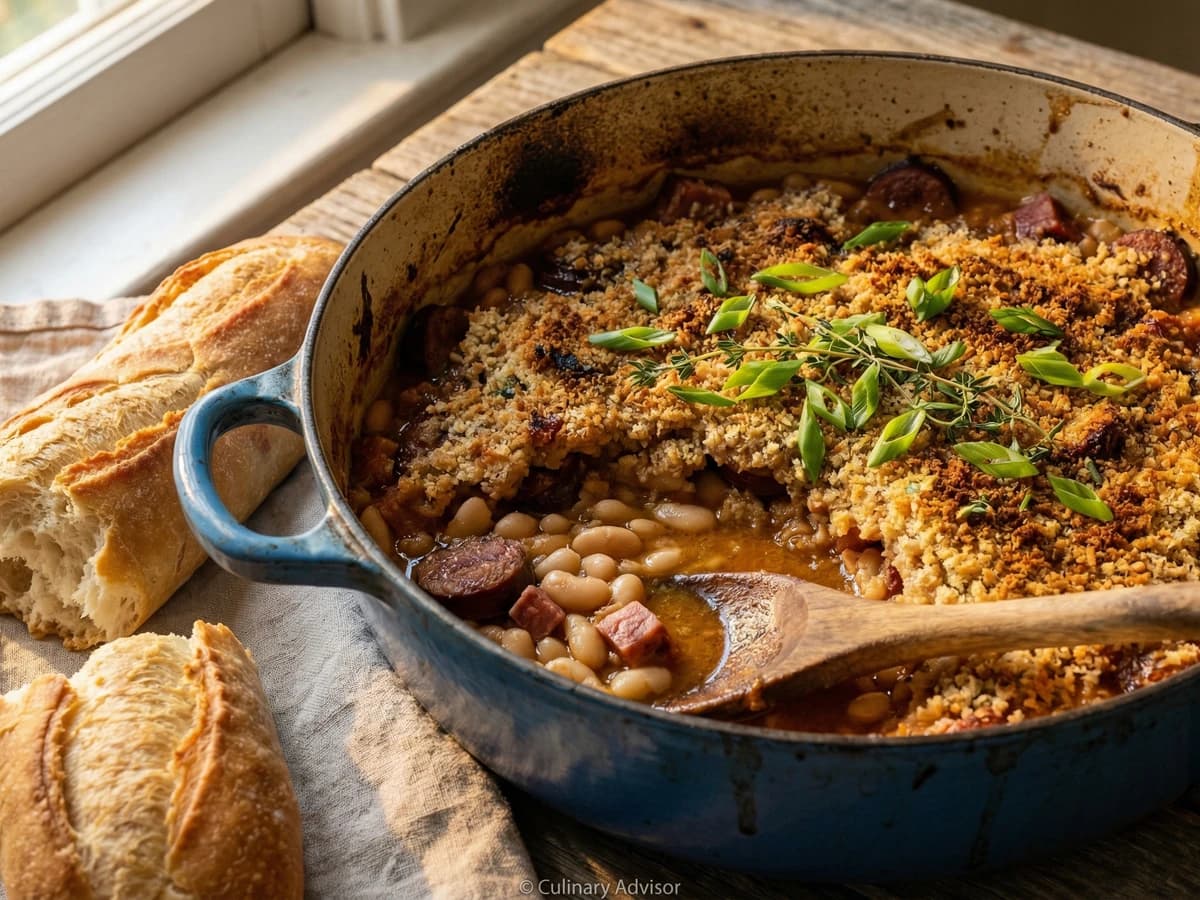
A massive chuck roast surrendered to a mountain of caramelized onions and slow, patient heat until it falls apart at the touch of a fork, swimming in a debris gravy so rich you'll want to drink it straight from the pot.
Main Dishes
Cajun
Comfort Food
Make Ahead
Slow Cooker
30 min
Active Time
4 hr cook•4 hr 30 min total
Yield8 servings
This is the dish that separates Louisiana cooks from everybody else. A tough cut of beef, a pile of onions taller than common sense suggests, and time. That's it. No shortcuts, no tricks. Just patience and heat doing what they do best.
My grandmother Evangeline made this every Sunday. She'd put the roast in the oven before church, and by the time the preaching was done and the visiting was over, that kitchen smelled like heaven had a mailing address in Lafayette Parish. The onions had melted into nothing, the meat was falling apart, and that gravy had turned into something almost holy.
The secret is the onions. You want twice as many as you think you need. They cook down to almost nothing, releasing their sweetness into the braising liquid until you can't tell where the onion ends and the gravy begins. At Lagniappe, we save every bit of this debris gravy. It goes on po'boys, over rice, anywhere you want something that tastes like it took three days to make.
Season that meat like you mean it. Don't be polite. The roast is thick, and timid seasoning never made it to the center. I coat mine heavily with Cajun spices, let it sit while I prep everything else, then sear it hard in hot oil until the crust is dark and promising. That fond on the bottom of the pot? That's flavor you're building. Every brown bit matters.
The technique, the tradition, and the story behind every dish.
•7-quart Dutch oven or heavy-bottomed pot with lid
•Sturdy metal tongs
•Two large forks for shredding
•Wooden spoon for stirring
Instructions
1
Season the roast
Pat the chuck roast dry with paper towels. Combine the Cajun seasoning, salt, and black pepper in a small bowl. Rub this mixture generously over every surface of the meat, pressing it into the flesh. Don't be shy. This is a thick piece of meat, and it needs bold seasoning to penetrate. Let it sit at room temperature for thirty minutes while you prep everything else.
Dry meat sears better. Wet meat steams. Take the extra minute to pat it down.
2
Sear the meat
Heat the oil in a large Dutch oven or heavy-bottomed pot over high heat until it shimmers and just begins to smoke. Carefully lower the seasoned roast into the pot. Let it sit. Do not touch it for four to five minutes. You want a dark, almost aggressive crust on the bottom. Flip and repeat on all sides until the entire roast is deeply browned. This takes twelve to fifteen minutes total. The kitchen will smell like something good is happening. Remove the roast to a plate.
If your roast is sticking, it's not ready to flip. When the crust forms properly, it releases on its own.
3
Build the onion base
Reduce heat to medium. Add all the sliced onions to the pot. Yes, all of them. It looks like too many. It's not. Stir to coat in the rendered fat and fond. The onions will sizzle and start to soften. Cook, stirring occasionally, for fifteen to twenty minutes until they're golden and wilted down to about half their original volume. They should smell sweet and look slightly caramelized.
The onions are the soul of this dish. Don't rush them. Let them get soft and sweet before moving on.
4
Add the holy trinity
Push the onions to the edges and add the bell pepper and celery to the center of the pot. Let them sizzle for two minutes, then stir everything together. Cook another five minutes until the celery softens. Add the garlic and cook, stirring constantly, until fragrant, about one minute. Stir in the tomato paste and let it cook for two minutes until it darkens slightly and loses its raw edge.
5
Create the gravy base
Sprinkle the flour over the vegetables and stir well to coat. Cook for two minutes, stirring constantly, until the raw flour smell disappears. Pour in the beef stock and red wine, scraping up every brown bit from the bottom of the pot. This is flavor you've been building. Add the Worcestershire, bay leaves, thyme sprigs, and cayenne. Stir well and bring to a simmer.
6
Braise low and slow
Nestle the seared roast back into the pot, spooning some of the onion mixture over the top. Cover with a tight-fitting lid. If using the oven, transfer to a 300°F oven. If staying on the stovetop, reduce heat to the lowest setting. Cook for three to four hours, flipping the roast once halfway through. The meat is done when a fork slides in with no resistance and the beef shreds easily.
For the slow cooker: transfer everything to your slow cooker after the searing step. Cook on low for eight hours or high for four hours.
7
Shred and finish
Transfer the roast to a cutting board. Remove and discard the bay leaves and thyme stems from the gravy. Using two forks, shred the beef into bite-sized pieces, discarding any large pockets of fat. Return the shredded meat to the pot and stir it into the gravy. This is your debris. Taste the gravy and adjust salt and cayenne as needed.
8
Add the butter finish
Remove the pot from heat. Cut the cold butter into tablespoon-sized pieces and stir them into the gravy one at a time, allowing each piece to melt before adding the next. This gives the gravy that glossy, restaurant finish. Serve over steaming white rice or pile onto crusty French bread for po'boys. Scatter fresh parsley over the top.
The butter must go in off the heat or it will break and turn greasy instead of silky. Stir gently until it disappears into the gravy.
Chef Tips
•Make a double batch of the debris gravy. It freezes beautifully and turns a weeknight po'boy into something special. At Lagniappe, we never let a drop go to waste.
•If you can't find a good chuck roast, ask your butcher for a boneless beef shoulder. Same concept: tough, well-marbled, and perfect for long cooking.
•The wine adds depth, but if you don't keep wine in the house, add another cup of beef stock and a splash of red wine vinegar at the end for brightness.
•Leftover debris keeps refrigerated for five days. The flavors deepen overnight. Reheat gently with a splash of stock if the gravy has thickened too much.
•Cayenne heat is personal. Start with a quarter teaspoon if you're feeding folks who run from spice. You can always add more at the table.
Advance Preparation
•The complete dish can be made three days ahead and refrigerated. The flavors marry and improve overnight.
•The debris freezes well for up to three months. Thaw overnight in the refrigerator and reheat gently on the stovetop.
•Season the roast up to 24 hours ahead and refrigerate uncovered. The salt draws moisture to the surface, which then reabsorbs, giving you better seasoning throughout.
Frequently Asked Questions
Nutrition Information
1 serving (about 350g)
Calories
785 calories
Total Fat
47 g
Saturated Fat
19 g
Trans Fat
0 g
Unsaturated Fat
26 g
Cholesterol
185 mg
Sodium
1150 mg
Total Carbohydrates
18 g
Dietary Fiber
3 g
Sugars
5 g
Protein
50 g
Where cooking meets culture.
Culinary guides, cultural storytelling, and the editorial depth that makes cooking meaningful.