
Chef Juliana
Água de Coco
You think opening a coconut belongs to the beach vendor. It doesn't. Chill the fruit, shave the cap, tap a small door, and you've solved the cold drink beside your pê-efe.
A cooking platform built around craft, culture, and the stories behind what we eat.
Created by
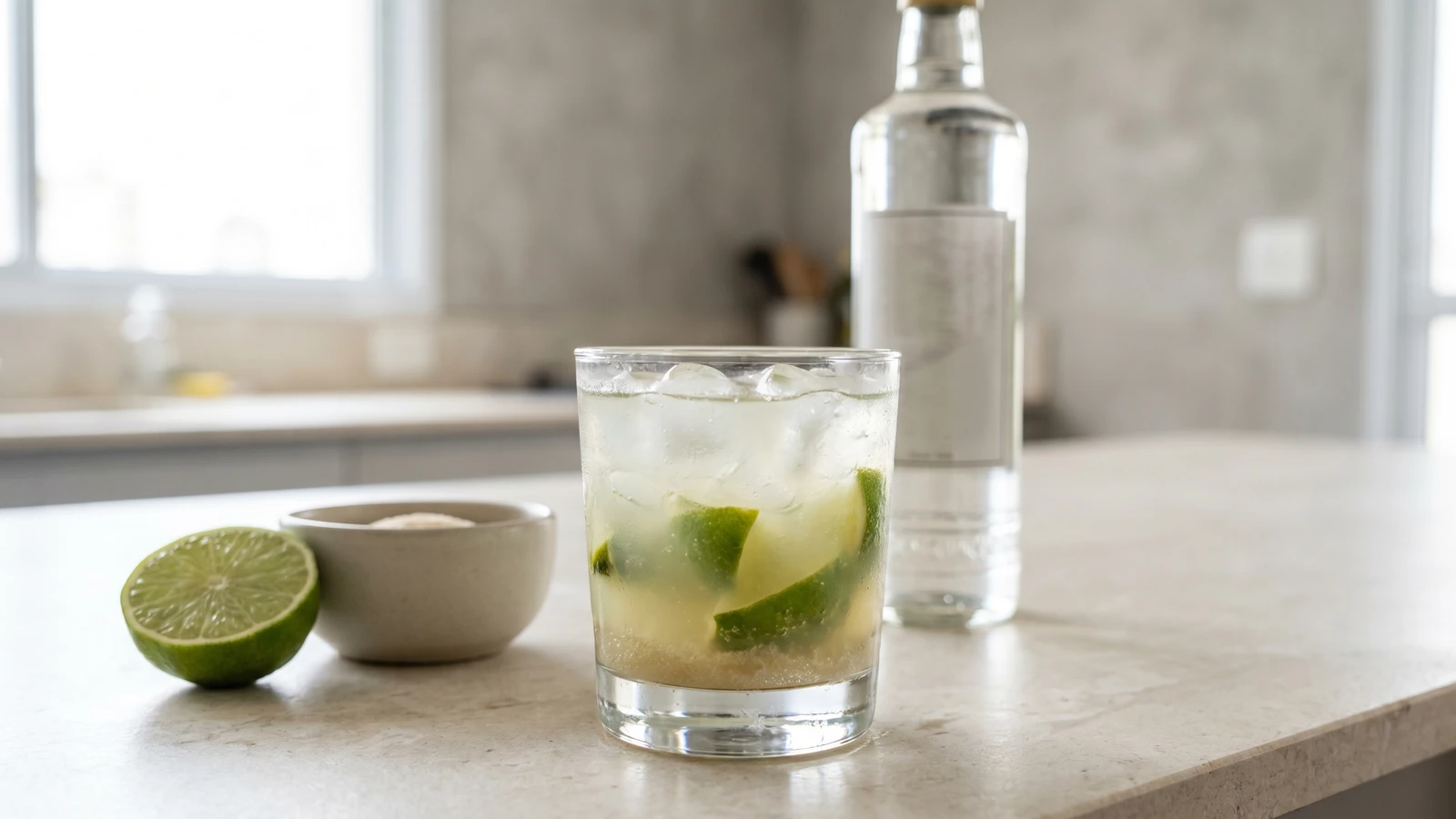
You don't need shiny tools or bar confidence. Half a lime, sugar, cachaça, and ice make the Brazilian drink that sits happily beside feijoada, churrasco, birthdays, and the table a gente actually uses.
You may be standing there with one lime and a bottle of cachaça thinking, isso não é pra mim, cocktails are for people with metal shakers and very serious opinions about ice. No. This is a glass, a spoon, sugar, lime, and the good sense to stop crushing before the peel turns bitter. Cozinhar não é dom, é um aprendizado, and making a drink at home follows the same rule.
At my grandmother's counter in São Paulo, the grown-ups didn't treat the caipirinha like theater. It was the cold, sharp thing that appeared when the table got louder: feijoada on Saturday, salgadinhos for a birthday, a pê-efe stretched into celebration. Rice, beans, a piece of chicken or an egg, something green, that's the everyday plate that quietly keeps Brazil itself. On the days a gente calls people over, lime and cachaça join the table and Brazil drinks its food.
The method matters because there are only four ingredients, so each one has to behave. Cut the lime into fat wedges so the juice releases easily. Put sugar on top because the grains scrub the peel and pull out the fragrant oil. Press, don't punish, because the white pith goes bitter when you grind it like you're angry at dinner. Then cachaça, ice, swirl, and serve while the glass is cold enough to sweat.
No sour mix. No bottled lime pretending to be fresh. This is comida de verdade in a glass: quick, honest, sharp, sweet, and completely learnable.
Caipirinha is built on cachaça, Brazil's sugarcane spirit, distilled from fresh cane juice since the colonial sugar economy of the 1500s and 1600s. The drink's name comes from caipira, a word for a person from the countryside, and its origin is usually tied to the interior of São Paulo in the early twentieth century, with a disputed story about a lime, honey, garlic, and cachaça home remedy during the 1918 flu. A 2003 Brazilian federal decree recognized caipirinha as a typical Brazilian drink made with cachaça, lime, and sugar, which is refreshingly blunt: change the spirit and you've made another drink.
Quantity
1/2 lime
cut into 4 fat wedges
Quantity
2 teaspoons, plus more to taste
Quantity
1/4 cup (2 ounces)
Quantity
1/2 to 3/4 cup
| Ingredient | Quantity |
|---|---|
| small juicy lime (limão tahiti)cut into 4 fat wedges | 1/2 lime |
| granulated sugar | 2 teaspoons, plus more to taste |
| cachaça | 1/4 cup (2 ounces) |
| ice cubes or cracked ice | 1/2 to 3/4 cup |
Wash the lime well, cut it in half lengthwise, and save one half for another drink. Cut the half you're using into 4 fat wedges. If the center has a thick white line, trim out the heaviest bit. You want juicy flesh and fragrant peel, not a mouthful of bitter pith.
Drop the lime wedges into a sturdy short glass and sprinkle the sugar over them. Let it sit for 30 seconds while you get the cachaça and ice. That tiny wait helps the sugar start pulling juice from the lime, so you're not grinding dry fruit and wondering why nothing is happening.
Press the lime 6 to 8 times with a muddler or the handle of a wooden spoon, just until juice pools at the bottom and the glass smells sharply of lime oil. Stop there. Pressing releases juice and peel aroma; pulverizing releases bitterness from the white pith. A gente wants flavor, not punishment.
Pour in the cachaça and stir for 5 to 10 seconds, scraping the bottom of the glass until most of the sugar starts to disappear. Do this before the ice, because sugar dissolves better in the lime-cachaça mixture than it does once the glass is packed cold.
Fill the glass with ice, then stir or swirl until the outside begins to bead with condensation and the drink looks glossy and pale green around the lime. Taste with a small sip. Too sharp, add 1/2 teaspoon sugar and stir. Too sweet, squeeze in a little more lime. Serve right away, before the ice takes over.
1 serving (about 190g)
Culinary guides, cultural storytelling, and the editorial depth that makes cooking meaningful.
Discover Culinary ExplorerChef Juliana
You think opening a coconut belongs to the beach vendor. It doesn't. Chill the fruit, shave the cap, tap a small door, and you've solved the cold drink beside your pê-efe.

Chef Juliana
Nobody is scared of a blender. Cachaça, coconut milk, condensed milk, and ice go in, and thirty seconds later the churrasco drink is solved.

Chef Juliana
You don't need a bar kit. Fresh maracujá, cachaça, condensed milk, and thirty honest seconds in the blender make a cold Brazilian toast that tastes bright, tart, and grown-up.

Chef Juliana
You don't need a machine to make coffee that smells like a Brazilian kitchen. Hot water, fresh grounds, a clean coador de pano, and the patience to pour like you mean it.