
Chef Margarida
Chanfana
The mountain braise of Beira, where old goats meet robust wine and black clay pots, cooked for hours until the meat surrenders. Convent cooking, peasant wisdom, patience rewarded.
A cooking platform built around craft, culture, and the stories behind what we eat.
Created by
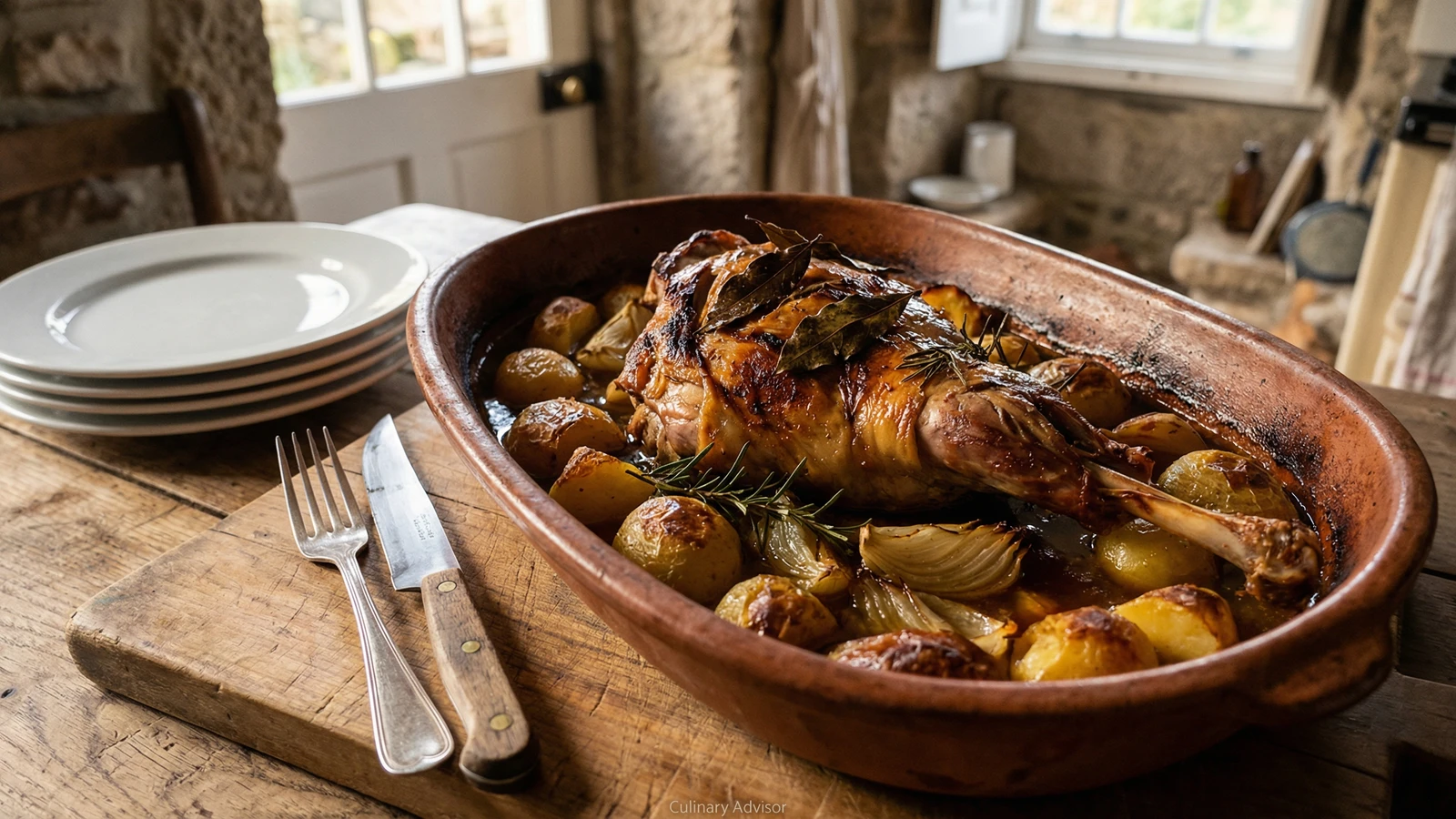
The Easter roast of mountain Portugal, where young goat meets garlic, rosemary, and slow heat. This is what celebration tastes like in Beira, carved at the table with family gathered around.
In the mountains of Beira, Easter isn't Easter without cabrito. The young goats born in late winter reach the perfect size by spring, tender enough that the meat practically falls from the bone. This is what my grandmother's neighbors raised. This is what appeared on every table from Guarda to Viseu when the bells rang on Domingo de Páscoa.
I didn't grow up in Beira, but I've spent years documenting recipes from the grandmothers there. What strikes me every time is how simple this dish is. Garlic, rosemary, bay leaf, salt, wine. Maybe some potatoes to catch the drippings. That's it. No marinades with seventeen ingredients. No complicated techniques. Just good meat treated with respect.
The secret is the garlic paste pressed into cuts all over the meat. As it roasts, that garlic perfumes everything. The house fills with the smell hours before dinner. By the time you carve, everyone is already hungry.
Cabrito assado is a dish of place and season. The mountain pastures, the spring herbs, the young animals. You can make it anywhere, but when you do, you're bringing a piece of those granite hills to your table. A cozinha é memória. Even recipes from regions not our own become part of who we are when we cook them with intention.
Kid goat has been central to Portuguese mountain cuisine since before recorded history, with Easter consumption tied to both agricultural cycles and religious symbolism predating Christianity. The Serra da Estrela region of Beira developed particular expertise in goat husbandry, the same animals providing milk for the famous Serra cheese. Cabrito assado appears in Portuguese cookbooks from the 16th century, always described with the same simple preparation: garlic, herbs, slow fire.
Quantity
1 leg and shoulder (about 2 kg total)
Quantity
8
Quantity
2 teaspoons
Quantity
1 teaspoon
Quantity
4 sprigs
Quantity
6
Quantity
1/2 cup
Quantity
1 cup
Quantity
1 kg
halved
Quantity
1 large
cut into thick wedges
Quantity
several sprigs
| Ingredient | Quantity |
|---|---|
| kid goat (cabrito) | 1 leg and shoulder (about 2 kg total) |
| garlic cloves | 8 |
| coarse sea salt | 2 teaspoons |
| black peppercorns | 1 teaspoon |
| fresh rosemary (alecrim) | 4 sprigs |
| fresh bay leaves (louro) | 6 |
| extra virgin olive oil (azeite) | 1/2 cup |
| dry white wine (vinho branco) | 1 cup |
| small waxy potatoeshalved | 1 kg |
| onioncut into thick wedges | 1 large |
| fresh thyme | several sprigs |
In a mortar and pestle, pound the garlic with the coarse salt and peppercorns until you have a rough paste. Strip the leaves from two rosemary sprigs and add them, pounding until incorporated. This is the alho that will perfume every bite. The smell alone should make you hungry.
Pat the meat completely dry with paper towels. Make deep incisions all over with a sharp knife, about 2 cm deep and spaced every 5 cm. Push the garlic paste into each incision, then rub the remaining paste all over the surface. Tuck bay leaves and the remaining rosemary sprigs into the cuts and around the meat. Drizzle generously with half the olive oil.
Cover loosely and let the cabrito sit at room temperature for at least 1 hour, or refrigerate overnight. The garlic needs time to penetrate. If refrigerated, bring to room temperature for an hour before roasting.
Preheat your oven to 180°C (350°F). Toss the potatoes and onion wedges with the remaining olive oil and scatter them in a large roasting pan or clay assadeira. Season with salt. Lay the thyme sprigs over the vegetables. They will catch all the drippings.
Place the cabrito directly on top of the potatoes. Pour the white wine around the edges, not over the meat. Cover tightly with foil. Roast for 1 hour. The covered stage allows the meat to braise gently in the wine steam while the garlic does its work.
Remove the foil and increase the oven temperature to 200°C (400°F). Roast uncovered for another 1 to 1.5 hours, basting every 20 minutes with the pan juices. The meat should become deeply golden, the fat rendering and crisping at the edges. The potatoes underneath will turn golden and absorb the drippings.
The cabrito is ready when the meat pulls easily from the bone and the internal temperature reaches 75°C (165°F) in the thickest part. The outside should be mahogany brown, the fat crisped, the potatoes golden and soaked with drippings.
Transfer the cabrito to a wooden board and let it rest for 15 minutes. The juices need to redistribute. Arrange on a large platter with the roasted potatoes and onions around it. Pour any remaining pan juices over everything. Bring it to the table whole. This is a celebration dish. Let people see what's coming before you carve.
1 serving (about 330g)
Culinary guides, cultural storytelling, and the editorial depth that makes cooking meaningful.
Discover Culinary ExplorerChef Margarida
The mountain braise of Beira, where old goats meet robust wine and black clay pots, cooked for hours until the meat surrenders. Convent cooking, peasant wisdom, patience rewarded.

Chef Margarida
A flour sausage born of necessity, fried crispy and scrambled with eggs. This is what Beira workers ate before dawn, fuel for the mountains, genius disguised as simplicity.

Chef Juliette
John Dory has the delicacy of sole and the firmness of turbot. A light flouring, a quick butter sauté, and nut-brown beurre noisette show exactly why looks never mattered.

Chef Juliette
Fresh haddock proves its delicacy in the meunière pan: a fine flour crust, moist pearly flakes, and beurre noisette sharpened with lemon and parsley, ready from one skillet in half an hour.