
Chef Ally
Beignets with Powdered Sugar
Pillowy squares of yeasted dough, fried until golden and hollow inside, then buried beneath a mountain of powdered sugar. Simple enough for a Sunday morning, celebratory enough for any occasion worth marking.
A cooking platform built around craft, culture, and the stories behind what we eat.
Created by Chef Remy
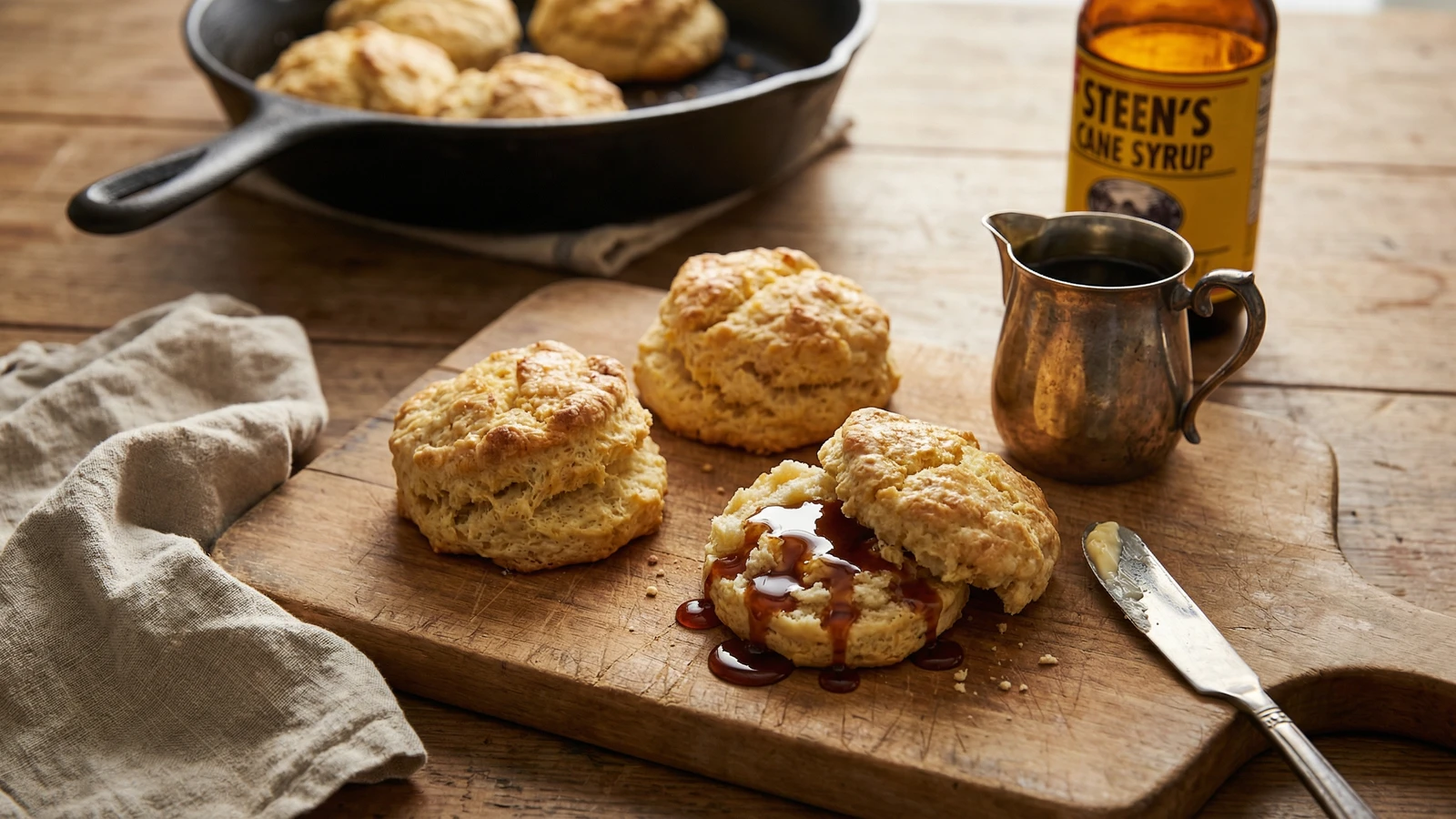
Tender, fluffy buttermilk biscuits with golden tops and soft centers, split warm from the oven and flooded with dark, earthy Louisiana cane syrup, the way four generations of bayou families have started their mornings.
The secret to a good biscuit is knowing when to stop. Most folks overmix. They keep stirring until the dough looks smooth and perfect, and then they wonder why their biscuits could double as hockey pucks. A proper biscuit dough should look messy. Shaggy. Like it might fall apart. That's when you know you've done it right.
My grandmother Evangeline made biscuits every single morning until she was ninety-two years old. Never measured a thing. She'd scoop flour into a wooden bowl that had seen fifty years of biscuit making, pinch in some salt, cut the butter with a fork, pour in buttermilk from the icebox, and have a dozen biscuits in the oven before the coffee finished perking. Drop biscuits, she called them. None of that rolling and cutting nonsense. Just scoop and bake.
Now, you can eat these biscuits with butter and jam if you want. But if you've never tasted real Louisiana cane syrup, you're missing something special. It's not molasses, though people confuse them. Cane syrup is lighter, cleaner, with notes of caramel and a sweetness that doesn't overwhelm. Steen's is the one you want. They've been making it in Abbeville since 1910. Pour it warm over a hot biscuit and you'll understand why folks down here guard their syrup recipes like family secrets.
Quantity
2 cups (240g)
Quantity
1 tablespoon
Quantity
1/2 teaspoon
Quantity
1 teaspoon
Quantity
1 teaspoon
Quantity
6 tablespoons (85g)
cold, cut into small cubes
Quantity
1 cup
cold, well shaken
Quantity
2 tablespoons
melted, for brushing
Quantity
for serving
| Ingredient | Quantity |
|---|---|
| all-purpose flour | 2 cups (240g) |
| baking powder | 1 tablespoon |
| baking soda | 1/2 teaspoon |
| fine sea salt | 1 teaspoon |
| granulated sugar | 1 teaspoon |
| unsalted buttercold, cut into small cubes | 6 tablespoons (85g) |
| buttermilkcold, well shaken | 1 cup |
| salted buttermelted, for brushing | 2 tablespoons |
| pure Louisiana cane syrup | for serving |
Get your oven hot: 425 degrees Fahrenheit. Line a heavy baking sheet with parchment paper. High heat is essential here. It creates steam inside the biscuit that lifts it up and gives you those tender, flaky layers. A timid oven makes dense biscuits.
Whisk together the flour, baking powder, baking soda, salt, and sugar in a large bowl. Make sure that leavening is evenly distributed. Lumps of baking powder mean some biscuits rise beautifully while others sit there looking sad. Nobody wants that.
Add those cold butter cubes to your flour mixture. Using your fingertips, a pastry blender, or two forks, work the butter into the flour until the mixture looks like coarse cornmeal with some pea-sized butter pieces remaining. Those larger bits create pockets of steam when they hit the hot oven. That's how you get flaky layers.
Pour the cold buttermilk over the flour mixture all at once. Stir with a wooden spoon or spatula just until the dough comes together. It will look shaggy and rough. That's exactly right. The moment you no longer see dry flour, stop. Overworking this dough is the fastest way to tough biscuits. Ten to fifteen stirs is all you need.
Using a large spoon or a quarter-cup measure, drop generous mounds of dough onto your prepared baking sheet, spacing them about two inches apart. These are drop biscuits, so they should look rustic and imperfect. Lumpy tops are honest tops. Don't fuss with them.
Slide the biscuits into that hot oven and bake for 12 to 15 minutes. You're looking for tall, proud biscuits with golden tops and lightly browned bottoms. They should smell like butter and promise. If they're still pale on top, give them another minute or two. Trust your eyes more than the timer.
The moment those biscuits come out of the oven, brush the tops generously with melted salted butter. Watch it soak in, glossy and fragrant. Let them cool just long enough that you won't burn your mouth. Split one open, watch that steam escape, and pour a generous ribbon of Louisiana cane syrup right into the center. Let it pool and soak in. That first bite is what Sunday morning is supposed to taste like.
1 biscuit with syrup (about 65g)
Culinary guides, cultural storytelling, and the editorial depth that makes cooking meaningful.
Discover Culinary ExplorerChef Ally
Pillowy squares of yeasted dough, fried until golden and hollow inside, then buried beneath a mountain of powdered sugar. Simple enough for a Sunday morning, celebratory enough for any occasion worth marking.

Chef Remy
Sandy, crumbly shortbread rounds perfumed with deeply nutty brown butter and studded with toasted Louisiana pecans, finished with a whisper of flaky salt that makes every bite sing.

Chef Remy
Soft, golden yeast rolls cradling spicy Cajun boudin in every bite, where Czech-Texan baking tradition meets Louisiana sausage-making, proving that good cooks have always borrowed from their neighbors.

Chef Remy
Flaky buttermilk pastry wrapped around tender spiced apples kissed with cane syrup and a whisper of cayenne, fried until golden and tumbled in cinnamon sugar while still warm from the oil.