
Chef Dean
Apple Cinnamon Pancakes
Tender buttermilk pancakes folded with butter-glazed apple pieces and warm cinnamon, stacked high and drowning in maple syrup. This is Sunday morning the way it ought to be.
A cooking platform built around craft, culture, and the stories behind what we eat.
Created by
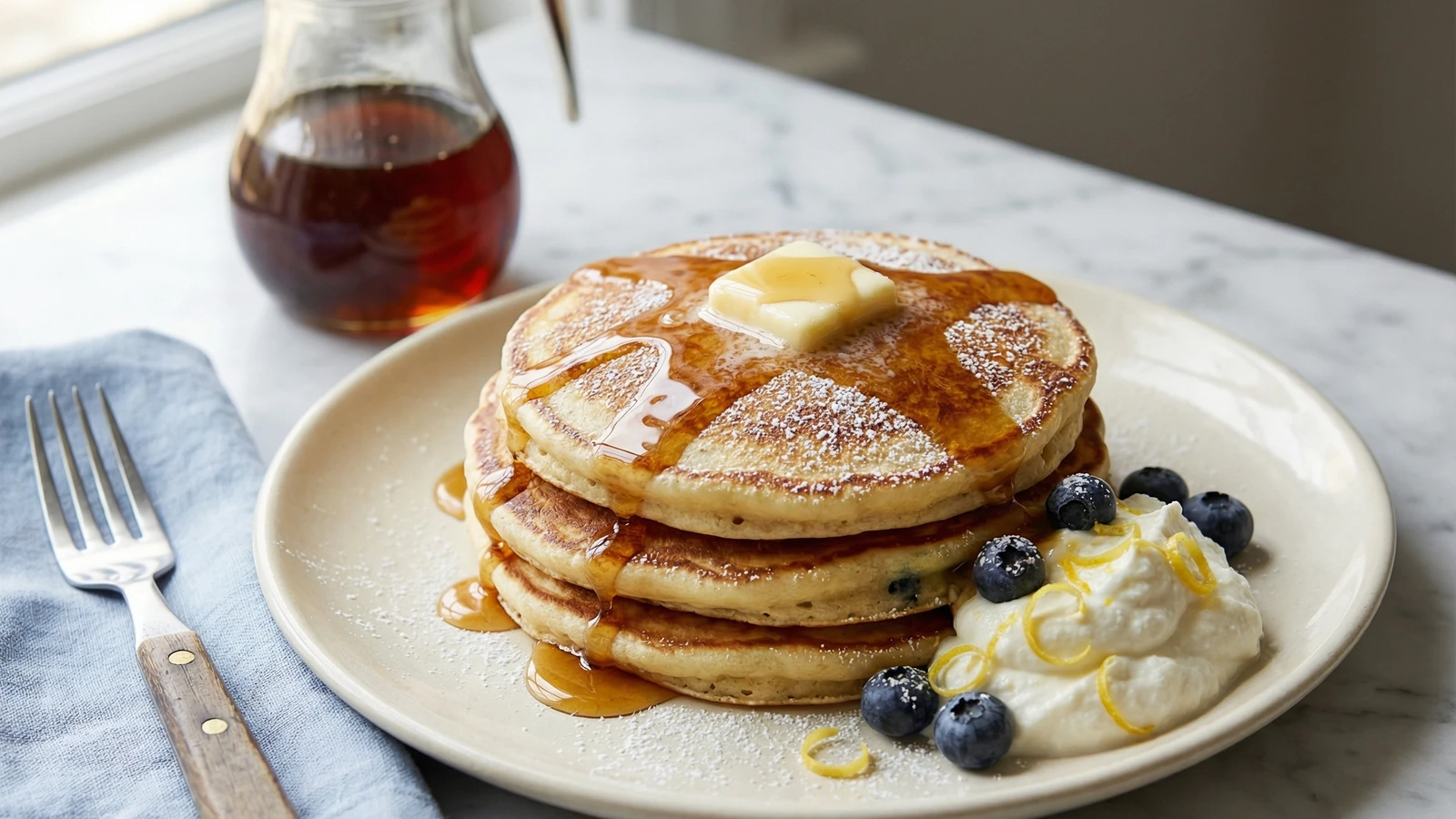
Tall, tender buttermilk pancakes bursting with summer blueberries, crowned with clouds of lemon-kissed ricotta and rivers of warm maple syrup. This is the American breakfast table at its generous best.
The pancake is America's morning poem. Every region claims its own version, but the buttermilk pancake stands as the democratic standard, found in diners from Maine to California, made by grandmothers and short-order cooks with equal devotion. The tang of cultured buttermilk does two things: it tenderizes the gluten and activates the baking soda, creating those cathedral-like air pockets that make a proper pancake lift off the plate.
Blueberries belong here. The wild ones from Maine and the Upper Peninsula of Michigan are smaller, more intense, their skins bursting with concentrated sweetness when they hit the heat. Cultivated berries work fine, but if you can find wild ones at your farmers market in July, buy them by the pint. Freeze what you don't use. They'll remind you of summer when February arrives.
The lemon ricotta is my addition to the American canon. I borrowed it from Italian breakfast tables, where fresh cheese and citrus appear alongside morning bread. A dollop of this cloud-light mixture cuts through the richness of butter and syrup, adding brightness that wakes up every bite. Make it while your griddle heats. It takes three minutes and transforms an ordinary stack into something worth getting out of bed for.
I've made these pancakes for hundreds of students over the years. The nervous ones always want to flip too soon. Patience. Wait for those bubbles to form across the surface and the edges to look set before you even think about touching that spatula.
Quantity
2 cups
Quantity
3 tablespoons
Quantity
2 teaspoons
Quantity
1 teaspoon
Quantity
1 teaspoon
Quantity
2 cups
Quantity
2
Quantity
4 tablespoons
melted and cooled slightly
Quantity
1 teaspoon
Quantity
1 1/2 cups
Quantity
1 cup
Quantity
1
zested and juiced
Quantity
2 tablespoons
Quantity
pinch
Quantity
as needed
Quantity
for serving
| Ingredient | Quantity |
|---|---|
| all-purpose flour | 2 cups |
| granulated sugar | 3 tablespoons |
| baking powder | 2 teaspoons |
| baking soda | 1 teaspoon |
| fine sea salt | 1 teaspoon |
| buttermilk, well-shaken | 2 cups |
| large eggs | 2 |
| unsalted buttermelted and cooled slightly | 4 tablespoons |
| pure vanilla extract | 1 teaspoon |
| fresh blueberries (wild preferred) | 1 1/2 cups |
| whole-milk ricotta cheese | 1 cup |
| lemonzested and juiced | 1 |
| honey | 2 tablespoons |
| fine sea salt for ricotta | pinch |
| butter for griddle | as needed |
| warm maple syrup | for serving |
In a small bowl, stir together the ricotta, lemon zest, two teaspoons of lemon juice, honey, and a pinch of salt. Taste it. The mixture should be bright and slightly sweet, not cloying. Adjust with more lemon juice if needed. Set aside at room temperature while you prepare everything else. The flavors will marry as it sits.
Whisk together the flour, sugar, baking powder, baking soda, and salt in a large bowl. Create a well in the center. This takes thirty seconds and ensures even distribution of the leavening agents throughout the flour. Lumpy batter is acceptable. Lumpy leavening distribution is not.
In a separate bowl or large measuring cup, whisk the buttermilk, eggs, melted butter, and vanilla until combined. The butter may form small clumps when it hits the cold buttermilk. This is fine. They'll disappear when everything comes together.
Pour the wet ingredients into the well of dry ingredients. Stir with a wooden spoon or spatula using broad, gentle strokes. Stop the moment the flour is incorporated. You want to see lumps. A few streaks of dry flour are acceptable. Overmixed batter produces tough, dense pancakes that no amount of syrup can redeem. The batter should look rough, almost unfinished.
Add the blueberries to the batter and fold them in with two or three gentle strokes. Some berries will remain on top. That's what you want. If using frozen berries, add them straight from the freezer without thawing. They'll leave purple streaks through the batter, which looks beautiful in the finished pancake.
Set a cast iron griddle or large skillet over medium heat. Let it warm for a full five minutes. Test the temperature by flicking a few drops of water onto the surface. They should dance and evaporate within two seconds. Too fast means your heat is too high. Too slow means the pancakes will spread and turn pale. Add a thin film of butter and swirl to coat.
Using a quarter-cup measure, pour batter onto the griddle, leaving two inches between pancakes. They'll spread. Watch the surface. Within two minutes, bubbles will begin forming around the edges. Wait. More bubbles will appear across the entire surface. When those bubbles pop and leave small holes that don't fill back in, and the edges look dry and slightly lifted, you're ready to flip. This takes three to four minutes total.
Slide a thin spatula completely under the pancake in one smooth motion. Flip decisively. Hesitation creates folded pancakes. The second side cooks faster, about ninety seconds to two minutes. Look for the edges to puff slightly. Press gently on the center with your spatula. It should spring back. Transfer finished pancakes to a wire rack set in a warm oven (200°F) while you cook the remaining batter.
Wipe the griddle clean between batches if any butter has burned. Add fresh butter, let it foam, then pour your next round. The first pancake of every batch is a test. Adjust your heat if it browns too quickly or too slowly. By the second batch, you'll have calibrated your stove perfectly.
Stack three pancakes per plate. Add a generous dollop of the lemon ricotta alongside, not on top. You want your guests to control their own portions. Drizzle warm maple syrup over the stack and place a pat of butter on the crown. Scatter a few fresh blueberries around the plate if you're feeling generous. Serve while everything is warm. Pancakes wait for no one.
1 serving (about 160g)
Culinary guides, cultural storytelling, and the editorial depth that makes cooking meaningful.
Discover Culinary ExplorerChef Dean
Tender buttermilk pancakes folded with butter-glazed apple pieces and warm cinnamon, stacked high and drowning in maple syrup. This is Sunday morning the way it ought to be.

Chef Dean
Individual breakfast packages of farm eggs nestled in smoky ham, blanketed with melted sharp cheddar, ready for Sunday morning or make-ahead weekday fuel that tastes like someone who loves you made it.

Chef Ally
Oats softened overnight in yogurt and orchard cider, then crowned with whatever fruit the morning and the season bring to your table. A breakfast that asks almost nothing of you and gives back everything.

Chef Dean
Golden, shatteringly crisp potatoes mingled with sweet roasted peppers and caramelized onions, crowned with eggs whose yolks run like liquid sunshine when you break them open.