
Chef Juliette
Bavaroise
Bavaroise turns the ribbon stage into a drink: yolks and sugar, boiling tea and milk, and Kirsch whisked into a light crown of foam. Keep the whisk moving, and the café comes home.
A cooking platform built around craft, culture, and the stories behind what we eat.
Created by
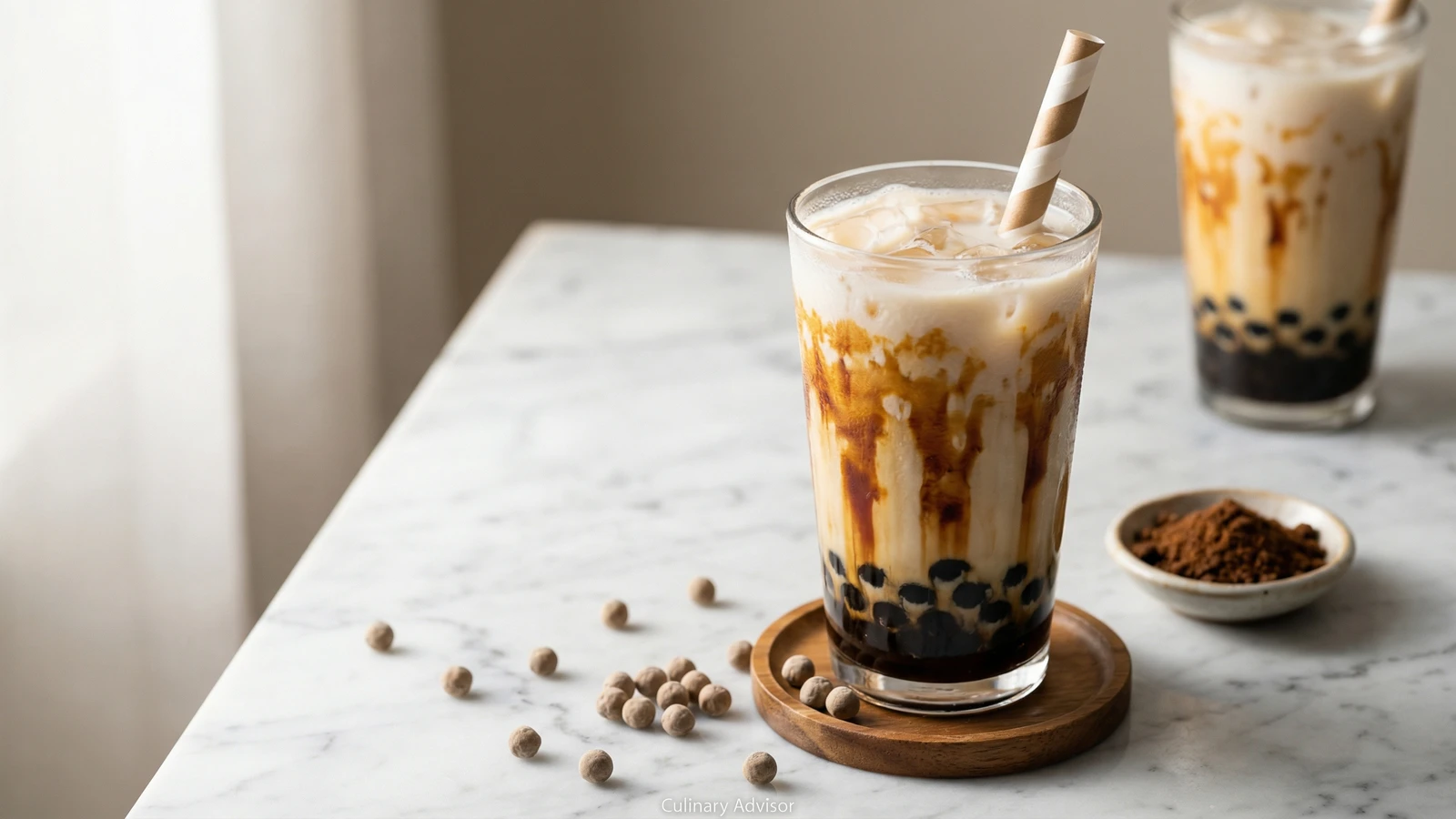
Glossy tapioca pearls glazed in molten brown sugar create dramatic tiger stripes down a frosty glass, the dark syrup mingling with cold, creamy milk tea in every long, satisfying pull through the wide straw.
This drink tells the story of Taiwan's night market innovation meeting global obsession. What started as a playful addition to traditional milk tea in Taichung during the 1980s has become one of the most photographed beverages on Earth. Those dramatic brown sugar stripes against white milk, the satisfying chew of properly cooked boba, the interplay of bitter tea, sweet caramel, and rich dairy. This is not complicated. But it demands attention to detail.
The secret lives in three places: cooking your tapioca pearls until they achieve that ideal texture between bouncy and tender, building a brown sugar syrup with enough body to cling and streak, and brewing tea strong enough to stand up to cold milk without becoming watery. Get these right and you'll produce something better than most bubble tea shops, where pre-made syrups and overcooked pearls are the norm.
I came to boba late in life, skeptical as any classically trained cook might be of a drink requiring a comically wide straw. One sip changed everything. The textural contrast, the layered sweetness, the way the cold tea and warm caramelized pearls meet on your tongue. This is a legitimate culinary experience, deserving of the same respect we give a properly made cappuccino or a well-crafted cocktail.
Quantity
1 cup (150g)
Quantity
8 cups
Quantity
1/2 cup (100g)
packed
Quantity
1/2 cup (120ml)
Quantity
4
Assam or Ceylon
Quantity
2 cups (480ml)
Quantity
2 cups (480ml)
cold
Quantity
as needed
Quantity
pinch
| Ingredient | Quantity |
|---|---|
| dried black tapioca pearls | 1 cup (150g) |
| water for boiling pearls | 8 cups |
| dark brown sugarpacked | 1/2 cup (100g) |
| water for syrup | 1/2 cup (120ml) |
| strong black tea bagsAssam or Ceylon | 4 |
| boiling water for tea | 2 cups (480ml) |
| whole milkcold | 2 cups (480ml) |
| ice cubes | as needed |
| fine sea salt | pinch |
Bring eight cups of water to a vigorous, rolling boil in a large pot. You need far more water than seems reasonable because the pearls release starch as they cook, and crowded pearls turn gummy. Add the dried tapioca pearls in one swift motion, stirring immediately to prevent clumping. The water will calm; let it return to a boil, then reduce heat to maintain a steady simmer.
Simmer the pearls for 20 to 25 minutes, stirring every few minutes to prevent sticking. The cooking time varies by brand, so start testing at 18 minutes. Bite one in half. You want uniform translucency throughout with no white, starchy center, and a texture that yields pleasantly between your teeth. When finished, they should be bouncy but not rubbery, tender but not mushy.
While the pearls cook, brew your tea strong. Pour two cups of boiling water over four tea bags in a heatproof pitcher. Steep for five full minutes. This is double strength, meant to hold its flavor against cold milk and ice. Remove the bags without squeezing them, which extracts bitter tannins. Let the tea cool to room temperature, then refrigerate until cold, about 20 minutes.
Combine dark brown sugar, half a cup of water, and a pinch of salt in a small saucepan. The salt deepens the caramel flavor without making it taste salty. Bring to a simmer over medium heat, stirring until the sugar dissolves completely. Let it bubble gently for three to four minutes until slightly thickened. The syrup should coat a spoon but still flow freely. Remove from heat.
Drain the cooked pearls thoroughly and add them directly to the warm brown sugar syrup. Stir gently to coat every pearl. Let them sit in the syrup for at least five minutes, stirring occasionally. The pearls will absorb some of the syrup, becoming glossy and deeply flavored. They should glisten like polished mahogany.
Spoon two to three tablespoons of glazed pearls into each serving glass. Using the back of the spoon, drag pearls and syrup up the sides of the glass in vertical streaks, creating those dramatic stripes. Work around the circumference. The goal is irregular, organic-looking ribbons of dark syrup against the glass. Add remaining pearls to the bottom.
Fill each striped glass with ice cubes to within an inch of the rim. Pour cold tea over the ice, filling each glass about halfway. Slowly pour cold milk down the side of the glass, letting it cascade over the ice. The milk should settle beneath some of the tea, creating a gradient. Do not stir. The swirling is the drinker's pleasure.
Insert a wide boba straw, positioning it to reach the pearls at the bottom. Serve at once. Instruct your guests to give one gentle stir before drinking to incorporate the layers, or let them discover the joy of alternating sips of pure tea, pure milk, and sweet caramelized pearls.
1 serving (about 415g)
Culinary guides, cultural storytelling, and the editorial depth that makes cooking meaningful.
Discover Culinary ExplorerChef Juliette
Bavaroise turns the ribbon stage into a drink: yolks and sugar, boiling tea and milk, and Kirsch whisked into a light crown of foam. Keep the whisk moving, and the café comes home.

Chef Juliette
Bischoff turns Champagne, tilleul, citrus, and brandy into pale-gold granité, coarse enough to sparkle under the spoon. The scraping makes the texture, and the timer becomes your smallest member of the brigade.

Chef Juliette
Café glacé is coffee taught by texture: dark, sweet, vanilla-softened, and churned only until it moves like loose snow. Stop before ice cream, pour into cold cups, and take it outside.
Chef Juliette
Zest brings perfume, juice brings acid, and three cool hours join them: a clear, lively French limonade finished with seltzer for the picnic table in the shade.