Culinary Explorer

A cooking platform built around craft, culture, and the stories behind what we eat.
Discover Culinary Explorer
Broas de Milho Doces

Broas de Milho Doces

Created by

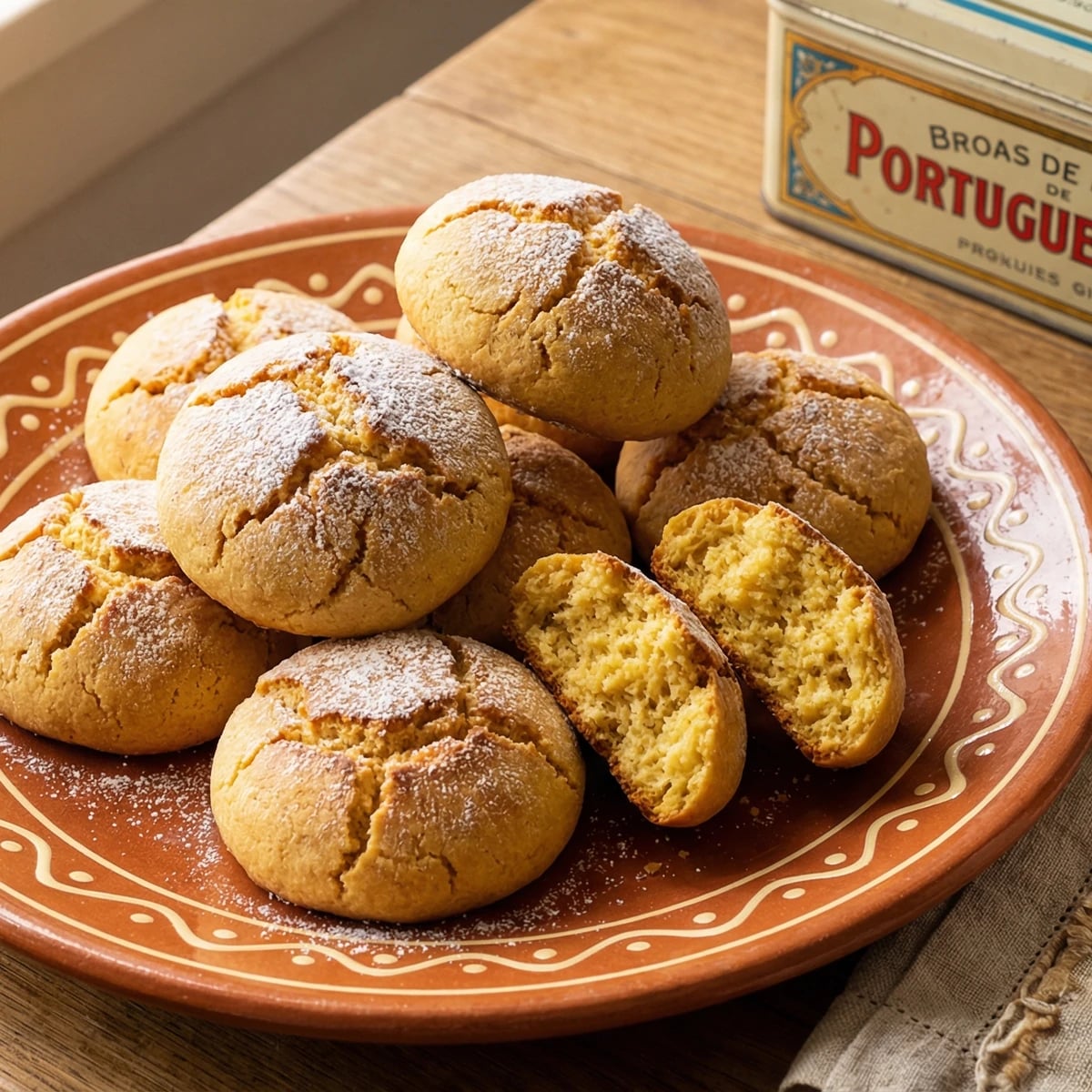
Golden corn cakes from northern Portugal, where milho has fed families for centuries. Dense, crumbly, sweetened just enough to serve with coffee or eat standing at the kitchen counter.

Pastries & Cookies
Portuguese
Comfort Food
Make Ahead
20 min
Active Time
18 min cook38 min total
Yield24 small cakes

These are the cakes my grandmother's neighbors in Minho would bring when they came to visit. Small golden rounds wrapped in cloth napkins, still warm from the oven, filling the kitchen with that unmistakable smell of toasted corn. Avó Leonor wasn't from the north, but she learned to make them because she loved them. And she taught me.

Broas de milho doces are peasant baking at its purest. Corn flour, a little wheat to hold it together, sugar, eggs, butter. That's it. The corn does the work. Good milho flour has a sweetness all its own, earthy and golden, the taste of northern Portugal in every crumb.

In Minho, corn is everything. It arrived from the Americas five centuries ago and took over the region's kitchens. Broa, the dense corn bread, is eaten at every meal. These sweet broas are the festive cousins, made for romarias, for visits, for wrapping up and taking to a neighbor who just had a baby. They're not fancy. They're not trying to be anything other than what they are.

At Mesa da Avó, I serve these with strong coffee at the end of the meal. People always ask for the recipe. They can't believe something so simple tastes so good. But that's Portuguese baking. The humblest ingredients, treated with respect, become something you can't stop eating.

Corn arrived in Portugal from the Americas in the early 16th century and transformed the agriculture of Minho, where the cool, wet climate proved ideal for cultivation. Broa became the region's daily bread, and sweet versions emerged for festivals and celebrations. These broas doces were traditionally baked in wood-fired ovens and sold at romarias (religious festivals) across northern Portugal.

The technique, the tradition, and the story behind every dish.

Discover Culinary Explorer

Ingredients

fine corn flour (farinha de milho fina)

Quantity

250g

all-purpose wheat flour

Quantity

100g

sugar

Quantity

150g

unsalted butter

Quantity

125g

softened

eggs

Quantity

3 large

lemon

Quantity

1

zested

fine sea salt

Quantity

1/2 teaspoon

baking powder

Quantity

1 teaspoon

Equipment Needed

  • Large mixing bowl
  • Baking sheet
  • Parchment paper
  • Wire cooling rack

Instructions

  1. 1

    Prepare the oven and pan

    Heat your oven to 180°C (350°F). Line a baking sheet with parchment paper. The parchment matters here because these cakes are delicate and will stick to an unlined pan.

  2. 2

    Mix the dry ingredients

    In a large bowl, whisk together the corn flour, wheat flour, sugar, salt, and baking powder. The corn flour should be fine, almost like regular flour in texture. Coarse cornmeal won't work here. You want that smooth, dense crumb that makes these cakes special.

  3. 3

    Work in the butter

    Add the softened butter to the flour mixture. Using your fingertips or a pastry cutter, work the butter into the flour until the mixture resembles coarse sand with some pea-sized pieces remaining. This is like making a crumbly pastry. Don't overwork it. The texture should be uneven.

    The butter must be soft but not melted. Room temperature. If it's too cold, you can't work it in. If it's melted, the texture will be wrong.
  4. 4

    Add eggs and lemon

    Beat the eggs lightly in a small bowl. Add the lemon zest to the eggs. Pour into the flour mixture and stir with a wooden spoon until a soft, slightly sticky dough forms. It won't be smooth. It shouldn't be. The dough will feel dense and a bit grainy from the corn flour. That's exactly right.

  5. 5

    Shape the broas

    With lightly floured hands (use corn flour for this), take small portions of dough, about 30g each, and roll into balls. Place on the prepared baking sheet, spacing them about 4cm apart. Flatten each ball slightly with your palm or the bottom of a glass dipped in flour. They should be about 1.5cm thick. Some bakers press a fork pattern into the tops. Avó Leonor never did, but do what you like.

    Don't make them too thin. These should be dense little cakes, not cookies. Thick enough to break in half and dunk in coffee.
  6. 6

    Bake until golden

    Bake for 16 to 18 minutes, until the edges turn golden and the tops develop a light golden color with a few darker spots. The centers will still look slightly pale. They firm up as they cool. Don't overbake or they'll be dry. The corn flour dries out faster than wheat.

  7. 7

    Cool and serve

    Let the broas cool on the baking sheet for 5 minutes, then transfer to a wire rack. They're best eaten the same day, still slightly warm, with a strong coffee. But they'll keep in a tin for several days, and they soften beautifully if you warm them for a few seconds before eating.

Chef Tips

  • The corn flour must be fine, not coarse polenta or cornmeal. Look for farinha de milho fina in Portuguese markets, or use the finest corn flour you can find. Some Italian markets carry finely ground corn flour that works well.
  • Traditional recipes sometimes use lard instead of butter. If you want to be truly authentic, use 100g lard. The flavor is different, earthier, and the texture even more tender.
  • These keep well in a tin for 3 to 4 days. They actually improve on day two as the flavors meld. Warm them briefly in a low oven before serving if they've been stored.
  • In Minho, they sometimes add a splash of aguardente (grape brandy) to the dough. A tablespoon won't hurt if you have it. If not, don't worry about it.

Advance Preparation

  • The dough can be made ahead and refrigerated for up to 2 days. Bring to room temperature before shaping, as cold dough will be too stiff to work with.
  • Baked broas freeze well for up to 1 month. Thaw at room temperature and warm briefly in a 150°C oven before serving.

Frequently Asked Questions

Nutrition Information

1 serving (about 30g)

Calories
125 calories
Total Fat
5 g
Saturated Fat
3 g
Trans Fat
0 g
Unsaturated Fat
2 g
Cholesterol
35 mg
Sodium
70 mg
Total Carbohydrates
17 g
Dietary Fiber
1 g
Sugars
6 g
Protein
2 g

Note: Chef personas and recipes are created with AI assistance. Cook with care: follow safe food-handling practices, check doneness with a thermometer when needed, and adapt for allergies and your kitchen.

Where cooking meets culture.

Culinary guides, cultural storytelling, and the editorial depth that makes cooking meaningful.

Discover Culinary Explorer

More from Chef Margarida's Pastries and Cookies

Browse the full collection