Chef Klaus
Allgäuer Kaspressknödel
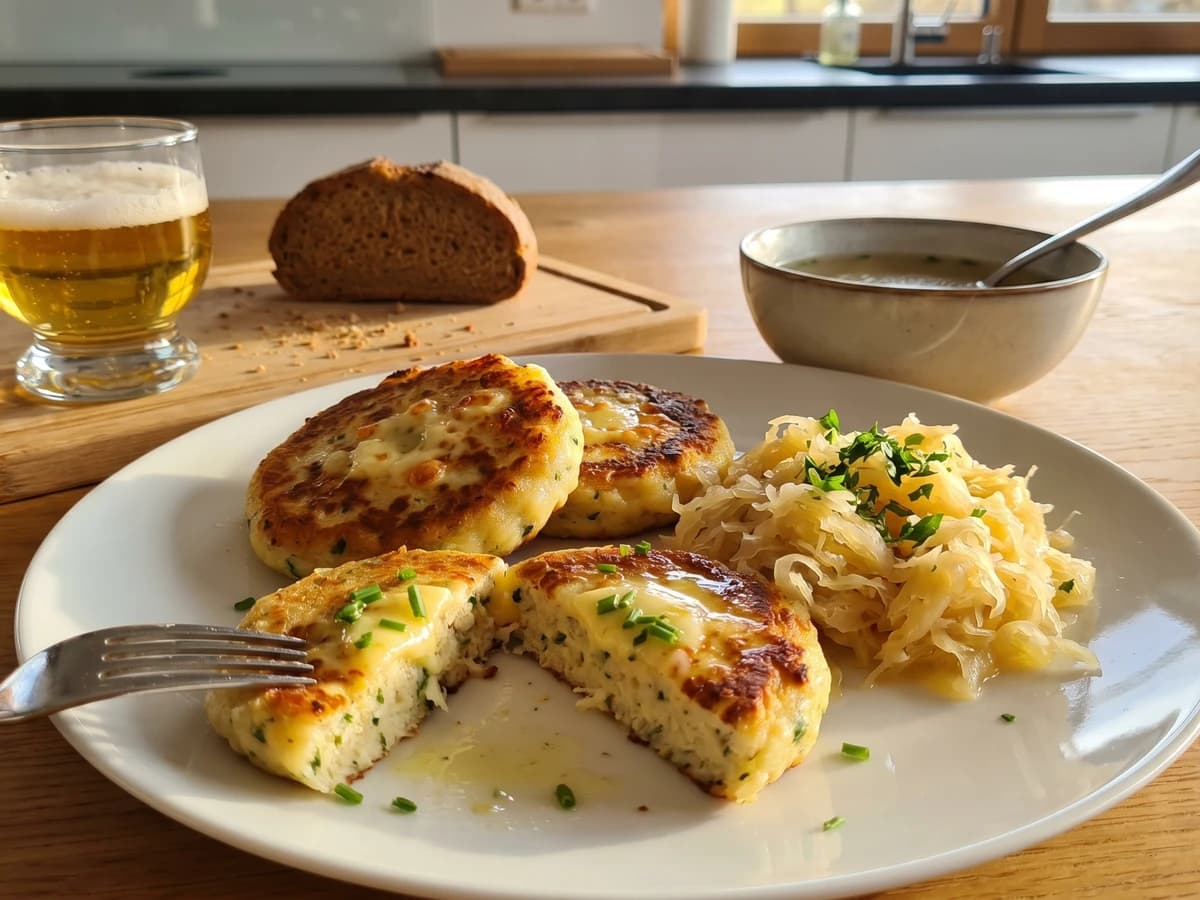
Pressed bread dumplings from the Alpine south, fried until the cheese catches at the edges and the middle stays soft enough for broth, kraut, or a weekday plate.
A cooking platform built around craft, culture, and the stories behind what we eat.
Created by
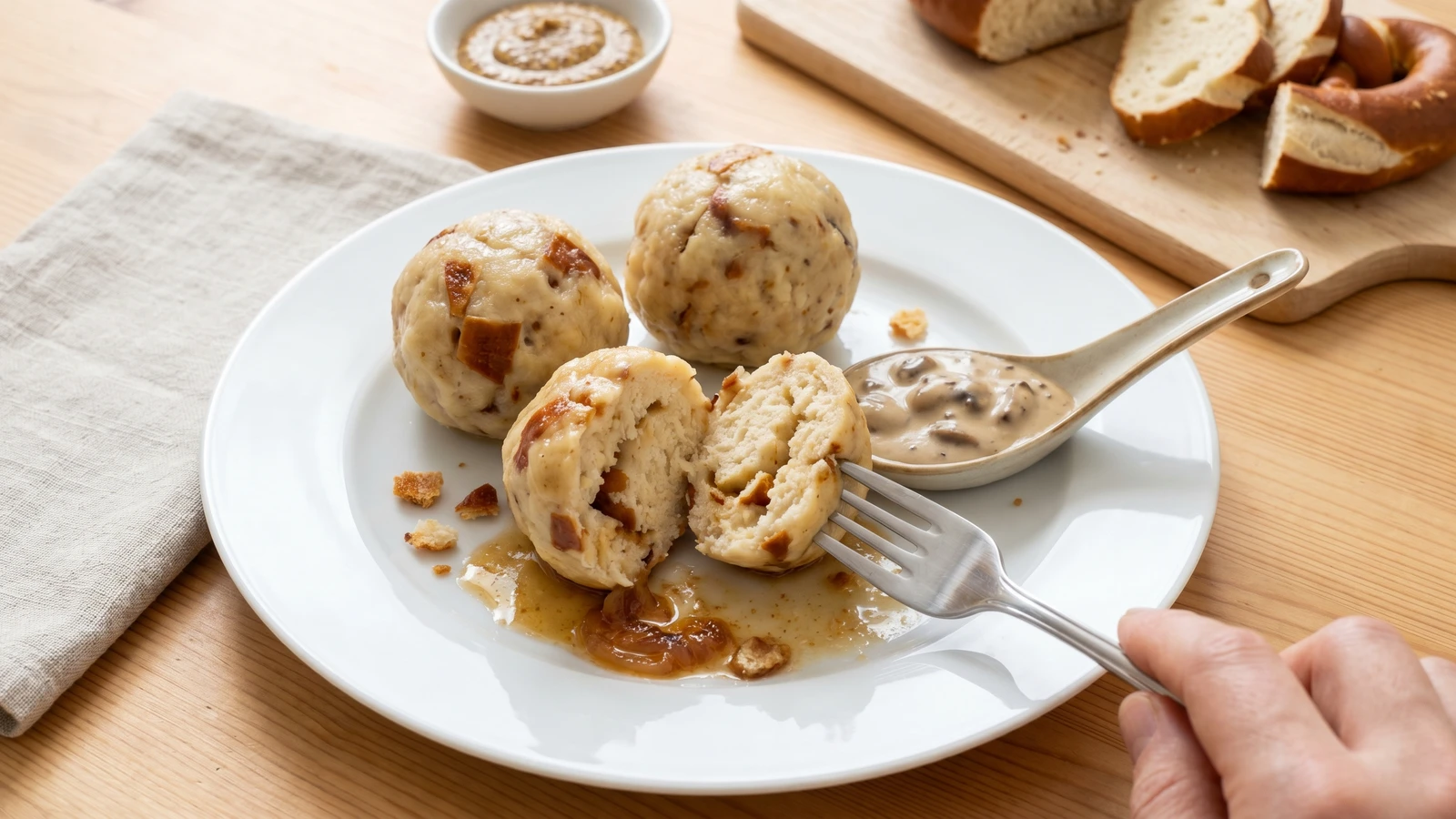
A Bavarian Knödel, dumpling, built from yesterday's pretzels: the lye crust brings salt and depth, and the texture lives or dies by the soaking.
Brezenknödel belong to the Bavarian and Alpine southern table, next to roast pork, mushroom ragout, or a dark onion sauce that was made in the pan, nicht aus dem Glas. This is larder cooking. Yesterday's Brezen, pretzels, are not waste; they are the beginning of dinner. Weggeworfen wird nichts.
In Bavaria you'll see them as round dumplings, while across the Alpine line and in many Austrian kitchens the same mixture is rolled in a cloth as Serviettenknödel, sliced at the table. Franconia keeps its own bread-dumpling habits, Swabia argues for Spätzle before dumplings enter the room. Im Norden anders, im Süden anders. This dish speaks with a southern mouth.
The technique is simple and not negotiable: cut the pretzels thin and let them drink warm milk until the middle softens but the crust still has bite. Too dry and the dumpling cracks in the water. Too wet and it slumps like porridge. The test dumpling tells you the truth before the whole batch is ruined.
Cook them in water that trembles, not boils. Boiling water beats the starch loose and tears the dumplings open. Gentle heat sets the egg, warms the bread through, and leaves you with a Knödel that cuts clean. Erst verstehen, dann kochen.
Brezenknödel grew from the same thrift logic as Semmelknödel, the bread dumplings of southern Germany and Austria, where stale bakery goods were saved and bound with milk and egg rather than thrown out. The pretzel itself is tied to medieval monastery baking and the Christian fasting calendar, with its crossed form often explained as folded arms in prayer, though regional stories differ. In Bavaria, the lye-crusted Breze gave the older bread dumpling a sharper, saltier character, and the split between round dumplings and cloth-rolled Serviettenknödel still marks local habit.
Quantity
5, about 350g
sliced thin
Quantity
300ml
Quantity
2 tablespoons
Quantity
1 small
finely diced
Quantity
2 large
Quantity
2 tablespoons
chopped
Quantity
1/2 teaspoon
Quantity
1/2 teaspoon, plus more for the water
Quantity
to taste
freshly ground
Quantity
1 to 2 tablespoons
| Ingredient | Quantity |
|---|---|
| day-old lye pretzelssliced thin | 5, about 350g |
| whole milk | 300ml |
| butter | 2 tablespoons |
| onionfinely diced | 1 small |
| eggs | 2 large |
| flat-leaf parsleychopped | 2 tablespoons |
| freshly grated nutmeg | 1/2 teaspoon |
| fine salt | 1/2 teaspoon, plus more for the water |
| black pepperfreshly ground | to taste |
| plain breadcrumbs (optional) | 1 to 2 tablespoons |
Slice the day-old Brezen as thinly as you can and put them in a wide bowl. Thin slices drink the milk evenly; thick chunks stay hard in the middle and make a dumpling that breaks where it should hold.
Warm the milk until it is hot to the finger but not boiling, then pour it over the pretzels and press them down once. Warm milk softens the crumb quickly without washing the lye crust to mush. Leave it 15 minutes, turning the slices once so every piece takes its share.
Melt the butter in a small pan and cook the onion gently until soft and pale gold, not brown. Raw onion stays sharp inside a dumpling, and browned onion makes the whole mixture taste fried before it ever reaches the water.
Add the onion and butter, eggs, parsley, nutmeg, salt, and pepper to the soaked pretzels. Mix with your hands, pressing lightly, until the mixture holds together but still shows pieces of crust. If it feels wet and loose, add breadcrumbs one spoon at a time; they are a repair, not the main ingredient.
Wet your hands and shape one small test dumpling. Lower it into salted water that trembles just below a boil and cook it 8 minutes. If it holds, shape the rest. If it frays, mix a spoon of breadcrumbs into the bowl and test again. The water tells the truth before your guests do.
Shape 8 to 10 dumplings and lower them into the same trembling water. Cook 15 to 18 minutes, turning once, until they feel set and springy. Do not boil them hard; hard bubbles tear the egg-set bread apart from the outside in.
Lift the dumplings out with a slotted spoon and let them stand a minute so the surface dries. Serve them beside roast pork, mushroom sauce, or braised cabbage. Leftovers are sliced thick and fried in butter until crisp at the edges, because yesterday's dumpling is tomorrow's better supper.
1 serving (about 155g)
Culinary guides, cultural storytelling, and the editorial depth that makes cooking meaningful.
Discover Culinary ExplorerChef Klaus
Pressed bread dumplings from the Alpine south, fried until the cheese catches at the edges and the middle stays soft enough for broth, kraut, or a weekday plate.

Chef Klaus
The Bavarian potato salad that works because warm waxy slices drink hot broth first, then oil last, until the bowl turns glossy without mayonnaise.

Chef Klaus
White cabbage shaved thin, wilted with hot caraway vinegar, and finished with crisp Speck fat: the Bavarian salad that belongs beside bread, sausages, and roast pork.

Chef Klaus
The south's sweet-sour white cabbage, cooked from fresh Kraut rather than sauerkraut, soft enough for roast pork and sharp enough to wake the plate.