
Chef Thomas
Apple Charlotte
Buttered bread baked to a deep mahogany around a filling of spiced Bramley apples, turned out at the table in a small moment of drama, cold cream poured from a jug alongside.
A cooking platform built around craft, culture, and the stories behind what we eat.
Created by Chef Thomas
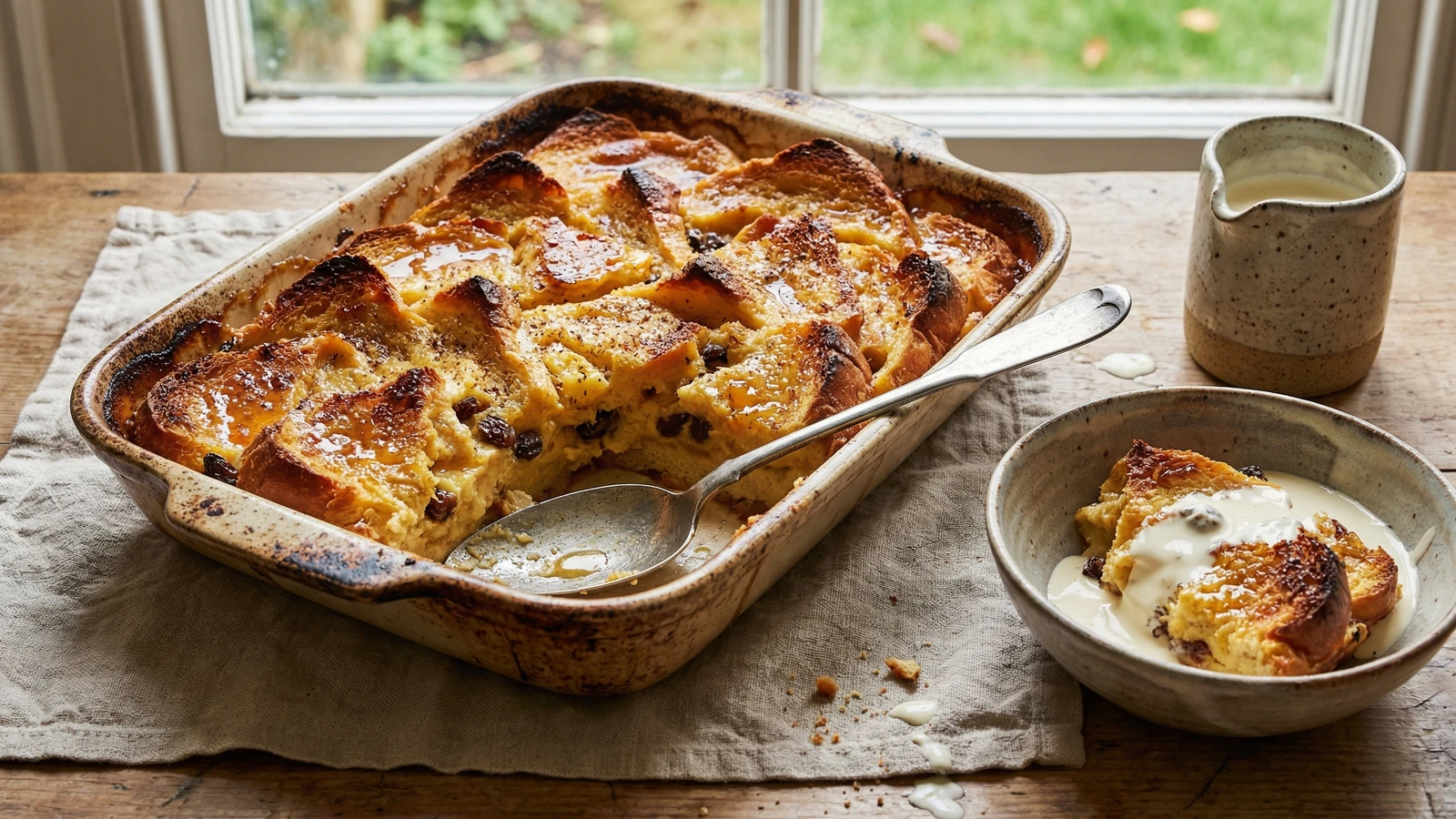
A deep dish of buttered bread, raisins, and vanilla custard baked until the top goes crackly and the middle still trembles. The quietest kind of comfort, made from almost nothing.
This is a pudding for the evenings when the light goes early and you want the kitchen to do something kind. Late autumn, all winter, the first cold nights in spring when the heating is off but probably shouldn't be. It asks for bread that's slightly past its best, a few raisins, some butter, an egg or two, and the patience to let it sit before it goes in the oven.
Bread and butter pudding was invented because people hated throwing food away. That's the whole story. Stale bread, a bit of milk, whatever dried fruit was in the cupboard, and suddenly dinner has a pudding. I love that about it. The thriftiness is built in. But somewhere along the way it stopped being a necessity and became a choice, which is almost better. Now we make it on purpose, with good bread and proper cream, and it tastes of all the attention we gave it.
The trick, if there is one, is the soak. Thirty minutes minimum. The bread needs time to drink the custard so that when it bakes, the underneath goes silky and set while the tops stay puffed and golden. Rush it and you get dry bread sitting in sweet milk. Wait, and you get something that tastes like it had to be made.
I wrote it down in the notebook years ago and the entry just says: bread, butter, custard, Tuesday. That was enough then. It's still enough now.
Quantity
8 slices
a day or two old
Quantity
75g
softened, plus extra for the dish
Quantity
100g
Quantity
1 tablespoon
Quantity
1
zest only
Quantity
3
Quantity
50g
Quantity
400ml
Quantity
150ml
Quantity
1 teaspoon
Quantity
for grating
Quantity
pinch
Quantity
1 tablespoon
warmed, for glazing
| Ingredient | Quantity |
|---|---|
| good white breada day or two old | 8 slices |
| unsalted buttersoftened, plus extra for the dish | 75g |
| raisins or sultanas | 100g |
| demerara sugar | 1 tablespoon |
| unwaxed lemonzest only | 1 |
| large eggs | 3 |
| caster sugar | 50g |
| whole milk | 400ml |
| double cream | 150ml |
| vanilla extract | 1 teaspoon |
| whole nutmeg | for grating |
| fine sea salt | pinch |
| apricot jam (optional)warmed, for glazing | 1 tablespoon |
Butter each slice of bread generously, right to the edges. Don't be mean with it. The butter is doing real work here: it's what makes the tops go crisp and golden while the underneath goes soft and silky. Cut each slice in half on the diagonal so you have triangles. Butter a shallow oven dish, something around 1.5 litres, the kind that has seen a few puddings in its time.
Arrange half the bread triangles in the dish, butter side up, overlapping like roof tiles. Scatter over half the raisins and most of the lemon zest. Lay the rest of the bread on top in the same overlapping way, tuck the remaining raisins between the slices so they don't burn on top, and finish with the demerara sugar scattered across the surface. The demerara is non-negotiable. It's what gives you that crackly, toffee-ish top.
Warm the milk and cream together in a saucepan over a gentle heat until it steams faintly and smells of warm dairy. Don't let it boil. While it warms, whisk the eggs, caster sugar, vanilla, and salt together in a bowl until just combined. Pour the warm milk over the eggs in a slow stream, whisking as you go. You're not making a hot custard, just bringing everything to the same temperature so it bakes evenly.
Pour the custard slowly over the bread, letting it seep into every corner. Press the bread down gently with the back of a spoon so the tops catch the custard too. Leave it to soak for at least thirty minutes. This is the part most people skip and it's the part that matters most. The bread needs time to drink. Grate nutmeg generously over the top. More than you think.
Heat the oven to 180C/160C fan. Sit the dish in a deeper roasting tin and pour hot water around it until it comes halfway up the sides. A bain-marie. It stops the custard from splitting and keeps everything silky. Bake for 40 to 45 minutes, until the top is deep golden and the custard is set but still trembles slightly when you give the dish a gentle shake. The edges should be puffed and bronzed, the middle just holding itself together.
Lift the dish out of the water bath. If you're glazing, brush the warm apricot jam over the top now, lightly, just to catch the light. Let the pudding rest for ten minutes before serving. It needs this. A bread and butter pudding straight from the oven is all custard and no composure. Ten minutes on the side and it pulls itself together. Serve in deep spoonfuls, with cold cream poured over the top.
1 serving (about 200g)
Culinary guides, cultural storytelling, and the editorial depth that makes cooking meaningful.
Discover Culinary ExplorerChef Thomas
Buttered bread baked to a deep mahogany around a filling of spiced Bramley apples, turned out at the table in a small moment of drama, cold cream poured from a jug alongside.

Chef Thomas
Whole Bramley apples cored and stuffed with butter, brown sugar and plump dried fruit, baked until they collapse and the kitchen fills with the smell of autumn getting on with itself.

Chef Thomas
A proper baked rice pudding, slow-cooked in whole milk with butter and nutmeg until the top sets into a freckled golden skin. The kind of pudding that makes January feel like less of a long haul.

Chef Thomas
Wild blackberries and Bramley apples collapsed together under a thick, sandy crumble, the pudding that makes September feel like it's worth staying in for.