
Chef Ally
Beef Bourguignon
Humble beef transformed by good red wine, patience, and the kind of slow cooking that fills a house with warmth and brings everyone to the table asking when dinner will be ready.
A cooking platform built around craft, culture, and the stories behind what we eat.
Created by
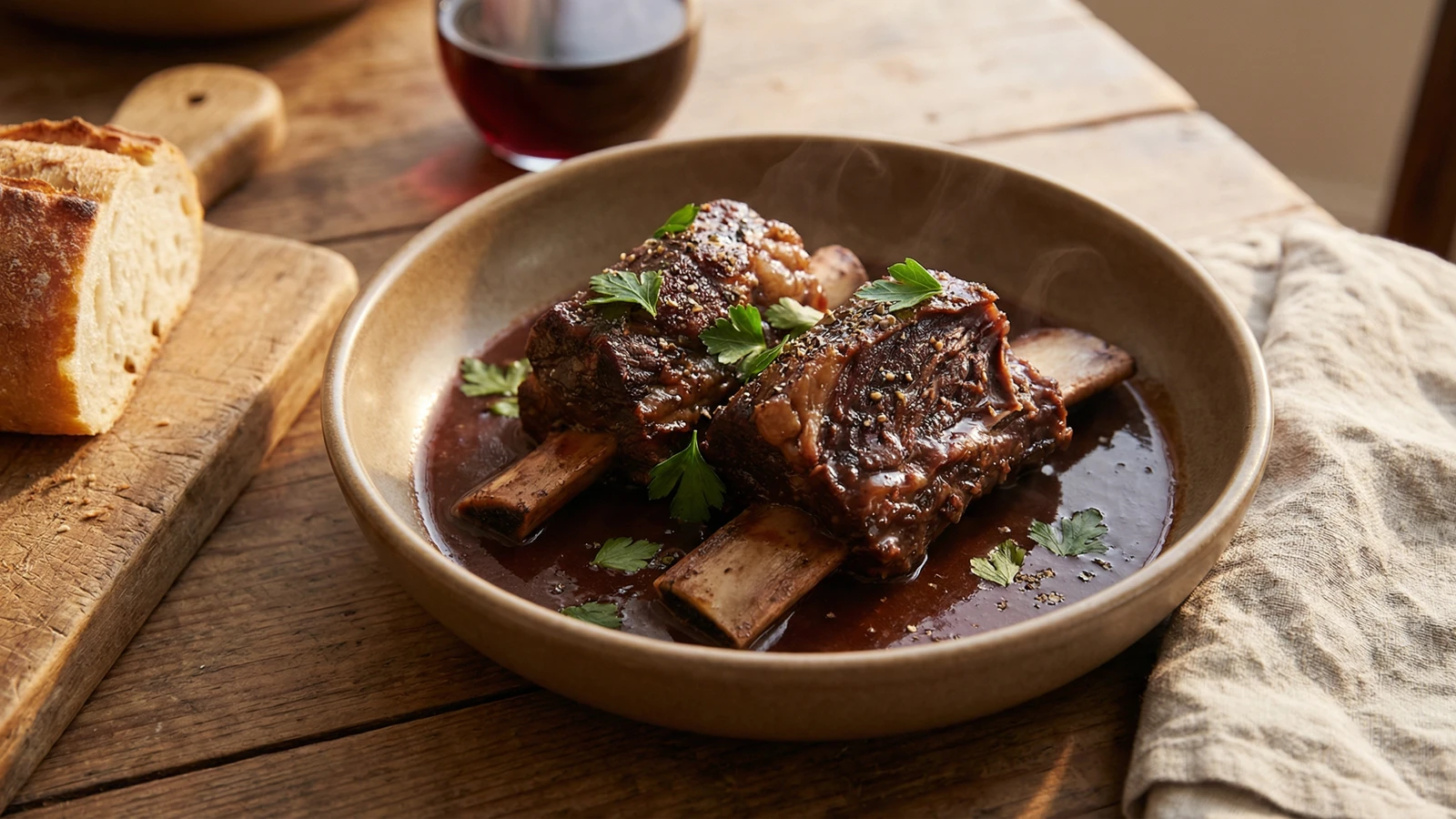
Meaty, bone-in short ribs simmered low and slow in red wine until the meat surrenders to your fork, the sauce glossy and deep, the kind of cooking that rewards patience and fills the house with promise.
Start with the beef. Bone-in short ribs from a butcher who knows the animal. You want thick cuts with generous marbling, the fat streaked through the meat like rivers on a map. This fat is not waste. It melts during the braise and gives the sauce its body, its richness, its reason for being.
The wine matters. Use something you would pour yourself a glass of while the pot simmers. A good Côtes du Rhône or a simple Burgundy. If the wine is not worth drinking, it is not worth cooking with. The alcohol burns away but the fruit and the tannins stay, building a sauce that tastes like a long afternoon.
Braising is the opposite of rushing. You brown the meat, build the aromatics, add liquid, and then you wait. The oven does the work while you read a book or take a walk or simply enjoy the smell that fills every room in the house. When the meat is ready, it will tell you. The bone will slip free with almost no effort. The fibers will pull apart at the touch of a fork.
This is a meal that improves with time. Make it a day ahead if you can. The flavors deepen overnight, and the fat rises to the surface where you can lift it away. Reheat gently. Serve with something simple to catch the sauce: polenta, mashed potatoes, crusty bread. Let the beef be the whole story.
Quantity
5 pounds
cut into 3-inch pieces
Quantity
to taste
Quantity
to taste
freshly cracked
Quantity
3 tablespoons
Quantity
2 medium
diced
Quantity
3 medium
peeled and cut into 1-inch pieces
Quantity
3
cut into 1-inch pieces
Quantity
6
smashed
Quantity
2 tablespoons
Quantity
1 bottle (750ml)
Quantity
2 cups
Quantity
6 sprigs
Quantity
2
Quantity
4 sprigs, plus chopped for serving
| Ingredient | Quantity |
|---|---|
| bone-in beef short ribscut into 3-inch pieces | 5 pounds |
| kosher salt | to taste |
| black pepperfreshly cracked | to taste |
| olive oil | 3 tablespoons |
| yellow onionsdiced | 2 medium |
| carrotspeeled and cut into 1-inch pieces | 3 medium |
| celery stalkscut into 1-inch pieces | 3 |
| garlic clovessmashed | 6 |
| tomato paste | 2 tablespoons |
| dry red wine | 1 bottle (750ml) |
| beef stock | 2 cups |
| fresh thyme | 6 sprigs |
| bay leaves | 2 |
| fresh flat-leaf parsley | 4 sprigs, plus chopped for serving |
Remove the short ribs from the refrigerator one hour before cooking. Cold meat does not brown properly. Season generously with salt and pepper on all sides. The salt draws moisture to the surface, which helps the sear, so do this right before you cook.
Set your oven to 325°F. Low and slow is the only way. Higher heat toughens the meat before the collagen has time to melt.
Heat the olive oil in a large Dutch oven over medium-high heat until it shimmers. Working in batches to avoid crowding, sear the short ribs on all sides until deeply browned, about four minutes per side. You want a mahogany crust, not gray meat. Transfer to a plate as you work. This takes time. Do not rush it.
Pour off all but two tablespoons of fat from the pot. Add the onions, carrots, and celery. Cook over medium heat, stirring occasionally, until the vegetables soften and begin to color, about eight minutes. Add the garlic and cook one minute more, until fragrant. Clear a space in the center of the pot and add the tomato paste. Let it toast in the heat for one minute, stirring it into the vegetables.
Pour in the entire bottle of wine. Use a wooden spoon to scrape up any browned bits stuck to the bottom. This is where the flavor lives. Bring to a simmer and let the wine reduce by half, about ten minutes. The raw alcohol smell will fade and the sauce will begin to concentrate.
Add the beef stock, thyme, bay leaves, and parsley sprigs. Nestle the short ribs back into the pot, bone side up, along with any juices that collected on the plate. The liquid should come about two-thirds up the sides of the meat. If needed, add more stock.
Cover the pot with a tight-fitting lid and transfer to the oven. Braise for three to three and a half hours, checking once at the two-hour mark. The meat is ready when it pulls away from the bone with no resistance and a fork slides through with almost no effort. The fibers should look silky, not stringy.
Transfer the short ribs to a deep platter and tent loosely with foil. Strain the braising liquid through a fine-mesh strainer into a fat separator or a large measuring cup. Discard the spent vegetables and herbs. They have given everything. Let the liquid settle for five minutes, then skim or pour off the fat.
Return the defatted liquid to the pot and bring to a simmer over medium heat. Reduce until the sauce coats the back of a spoon with a glossy sheen, about ten to fifteen minutes. Taste and adjust seasoning. The sauce should be deeply savory with a long wine finish.
Return the short ribs to the pot, turning them gently to coat in the sauce. Warm through for five minutes. Serve in shallow bowls over polenta, mashed potatoes, or with crusty bread. Spoon the sauce generously over the meat. Scatter with chopped parsley.
1 serving (about 285g)
Culinary guides, cultural storytelling, and the editorial depth that makes cooking meaningful.
Discover Culinary ExplorerChef Ally
Humble beef transformed by good red wine, patience, and the kind of slow cooking that fills a house with warmth and brings everyone to the table asking when dinner will be ready.

Chef Dean
Bone-in short ribs transformed through hours of gentle braising into fork-tender, wine-dark magnificence. The kind of dish that makes your house smell like a reason to come home.

Chef Ally
A whole chicken nestled among forty cloves of garlic, braised until the meat falls from the bone and the garlic becomes a sweet, spreadable treasure you will fight over at the table.

Chef Ally
Bone-in chicken pieces braised until falling-off-the-bone tender in a wine-dark sauce with golden mushrooms, sweet pearl onions, and smoky bacon. The kind of dish that makes a kitchen smell like home.