
Chef Thomas
A Proper Chicken Broth
Sunday's roast chicken, simmered slowly on Monday with carrots, celery, leeks, and thyme into a bowl of clear, golden broth that smells like the kitchen is paying attention.
A cooking platform built around craft, culture, and the stories behind what we eat.
Created by Chef Thomas
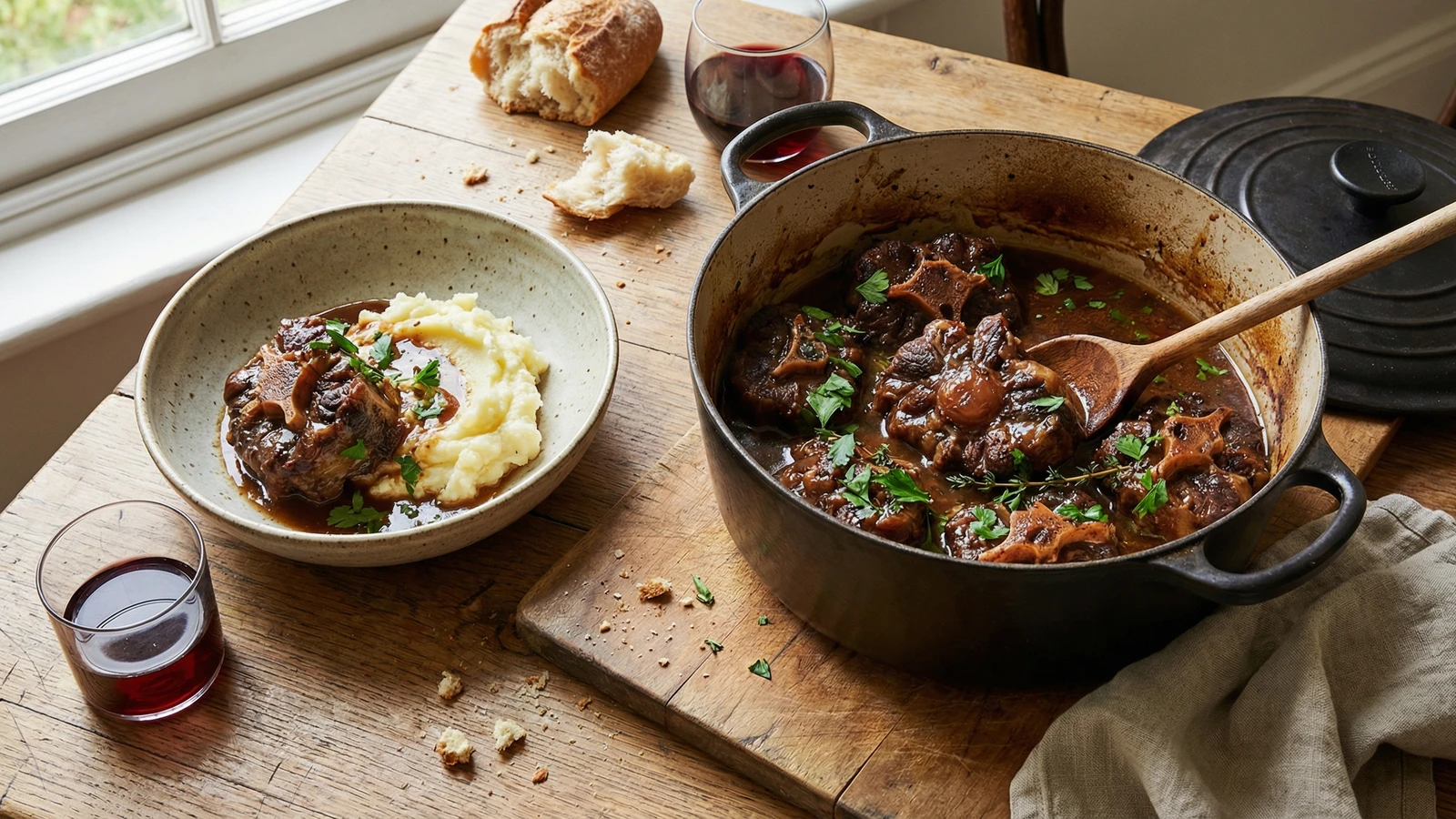
Oxtail pieces browned until dark, then surrendered to a pot of red wine and stock for four patient hours until the meat falls from the bone and the gravy turns to something close to silk.
January. The kind of evening when the windows are black by half four and the house needs warming from the inside. I came back from the market on Saturday with two lengths of oxtail, still cold from the butcher's counter, heavy in the bag. You feel the weight of them and you know this is going to be a good weekend.
Oxtail is not a quick supper. It asks for an afternoon. You brown the pieces slowly, build the base with onions and carrots and a whole bottle of red wine, and then you hand everything over to a low oven and wait. Three hours. Four, sometimes. The house fills with a smell that starts deep and savoury and builds into something almost sweet, the wine and the marrow and the herbs all folding into each other. By the time you lift the lid, the meat has given up its grip on the bone and the braising liquid has turned dark and glossy and impossibly rich. The collagen from the joints has done its quiet work.
This is the kind of cooking I believe in most. Not because it's complicated, it isn't, but because it rewards patience and good ingredients in a way that nothing quick ever quite manages. There are few better feelings than carrying a heavy pot to the table on a cold night and watching someone's face when they taste that first spoonful of gravy. I wrote it down in the notebook last winter: oxtail, red wine, Sunday, rain on the windows. That's the whole story.
Make it the day before if you can. Like most braises, it deepens overnight. The fat rises and solidifies on the surface, lifts off cleanly, and what's left underneath is pure, concentrated comfort. Right food, right evening.
Quantity
1.5kg
cut into pieces through the joint
Quantity
2 tablespoons
Quantity
to taste
Quantity
2 tablespoons
Quantity
a generous knob
Quantity
2
halved and thickly sliced
Quantity
3
peeled and cut into chunks
Quantity
2 sticks
sliced
Quantity
4 cloves
crushed but left whole
Quantity
2 tablespoons
Quantity
1 bottle
Quantity
500ml
Quantity
3
Quantity
a few sprigs
Quantity
a small handful
roughly chopped
| Ingredient | Quantity |
|---|---|
| oxtailcut into pieces through the joint | 1.5kg |
| plain flour | 2 tablespoons |
| fine sea salt and black pepper | to taste |
| olive oil | 2 tablespoons |
| butter | a generous knob |
| onionshalved and thickly sliced | 2 |
| carrotspeeled and cut into chunks | 3 |
| celerysliced | 2 sticks |
| garliccrushed but left whole | 4 cloves |
| tomato purée | 2 tablespoons |
| red wine | 1 bottle |
| beef stock | 500ml |
| bay leaves | 3 |
| thyme | a few sprigs |
| flat-leaf parsley (optional)roughly chopped | a small handful |
Take the oxtail out of the fridge a good hour before you start. Cold meat in a hot pan drops the temperature and you'll stew instead of sear. Season the pieces generously with salt and pepper, then dust them lightly in flour, shaking off the excess. Get a heavy casserole pot properly hot with the olive oil and butter. Brown the oxtail in batches, giving each piece three or four minutes a side until the surface is deep and dark, the colour of old conkers. Don't crowd the pan. This is where the flavour of the whole dish is built. Set the browned pieces aside on a plate.
Lower the heat. There will be dark, sticky residue on the bottom of the pan. Good. That's flavour. Add the onions with another knob of butter and let them soften for eight to ten minutes, stirring now and then, scraping up those dark bits as you go. The onions should turn translucent and sweet, catching some of the colour from the pan. Add the carrots, celery, and garlic. Stir through and cook for another five minutes until everything starts to smell like the beginning of something worth waiting for. Stir in the tomato purée and let it cook for a minute until it darkens and loses its raw, tinny edge.
Pour in the wine. All of it. Yes, the whole bottle. Let it come to a bubble and cook for five minutes, letting the alcohol burn off and the liquid reduce slightly. It should smell vinous and warm, not sharp. Add the stock, the bay leaves, and the thyme. Nestle the browned oxtail back into the pot. The liquid should come about two-thirds of the way up the meat, not quite covering it. If it doesn't, add a splash of water. Bring everything to a gentle simmer.
Put the lid on and slide the pot into the oven at 150C/130C fan. Then leave it alone. The oxtail needs three and a half to four hours. Open the lid once an hour to check the liquid level and give things a gentle turn, but otherwise let the oven do its work. The kitchen will start to smell extraordinary after the second hour, a deep, winy warmth that fills the house and makes everyone ask what's for dinner. You'll know it's ready when the meat has pulled back from the bone and yields to a fork with no resistance at all.
Lift the oxtail pieces carefully onto a warm dish and cover them. The braising liquid in the pot is your gravy but it needs attention. Skim the fat from the surface with a spoon. There will be a lot. Take your time. What remains should be dark, glossy, and rich enough to coat the back of the spoon. If it's too thin, set the pot on the hob over a medium heat and let it reduce for ten minutes, uncovered, until it thickens to something that feels like it means business. Taste it. Season again if it needs it. Return the oxtail to the pot, scatter over the parsley, and bring the whole thing to the table.
1 serving (about 500g)
Culinary guides, cultural storytelling, and the editorial depth that makes cooking meaningful.
Discover Culinary ExplorerChef Thomas
Sunday's roast chicken, simmered slowly on Monday with carrots, celery, leeks, and thyme into a bowl of clear, golden broth that smells like the kitchen is paying attention.
Chef Thomas
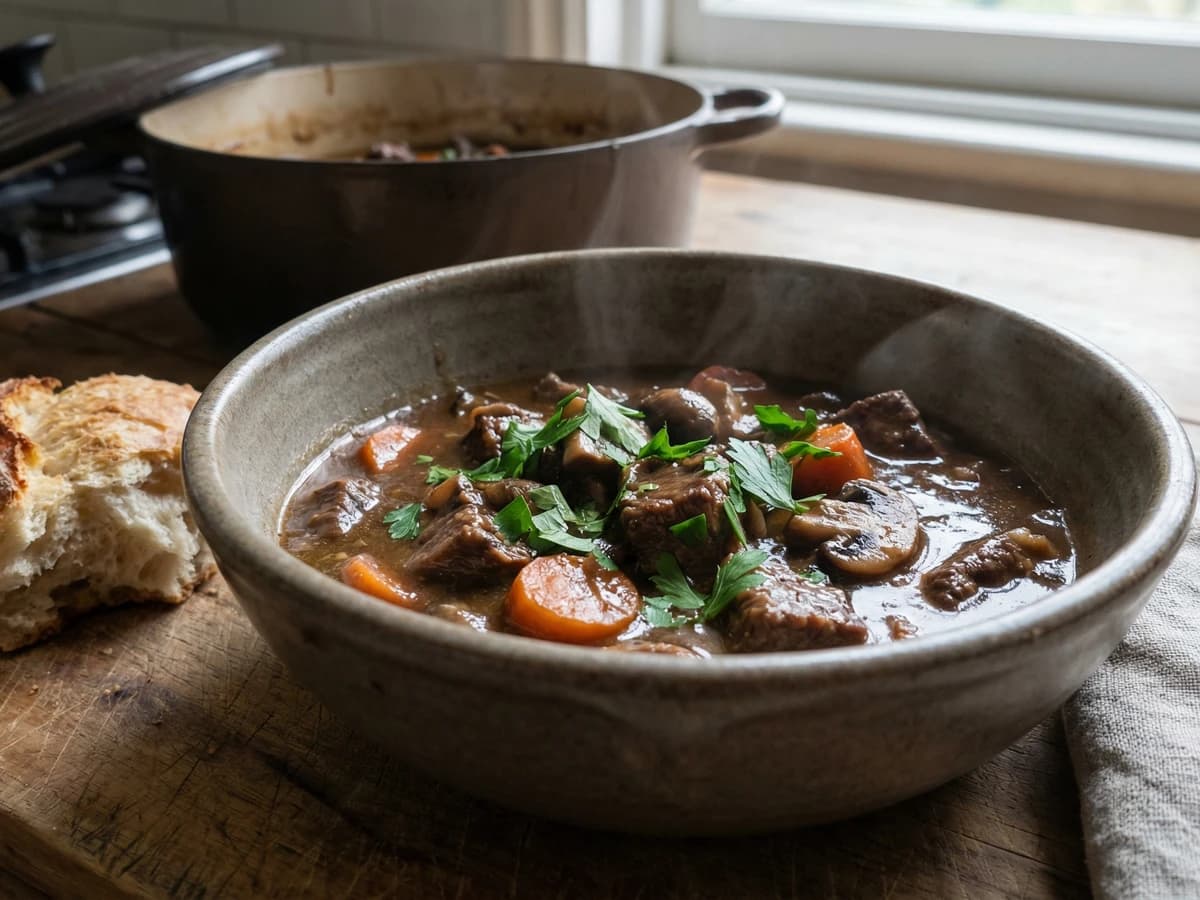
Braising steak surrendered to dark ale and slow time, with onions and mushrooms, until the gravy turns thick and malty and the kitchen smells like the kind of evening you want to stay in for.

Chef Thomas
Beef shin and pearl barley simmered low and slow with root vegetables until the meat gives way and the broth thickens into something between a soup and a stew, the kind of bowl that steadies you on a cold night.
Chef Thomas
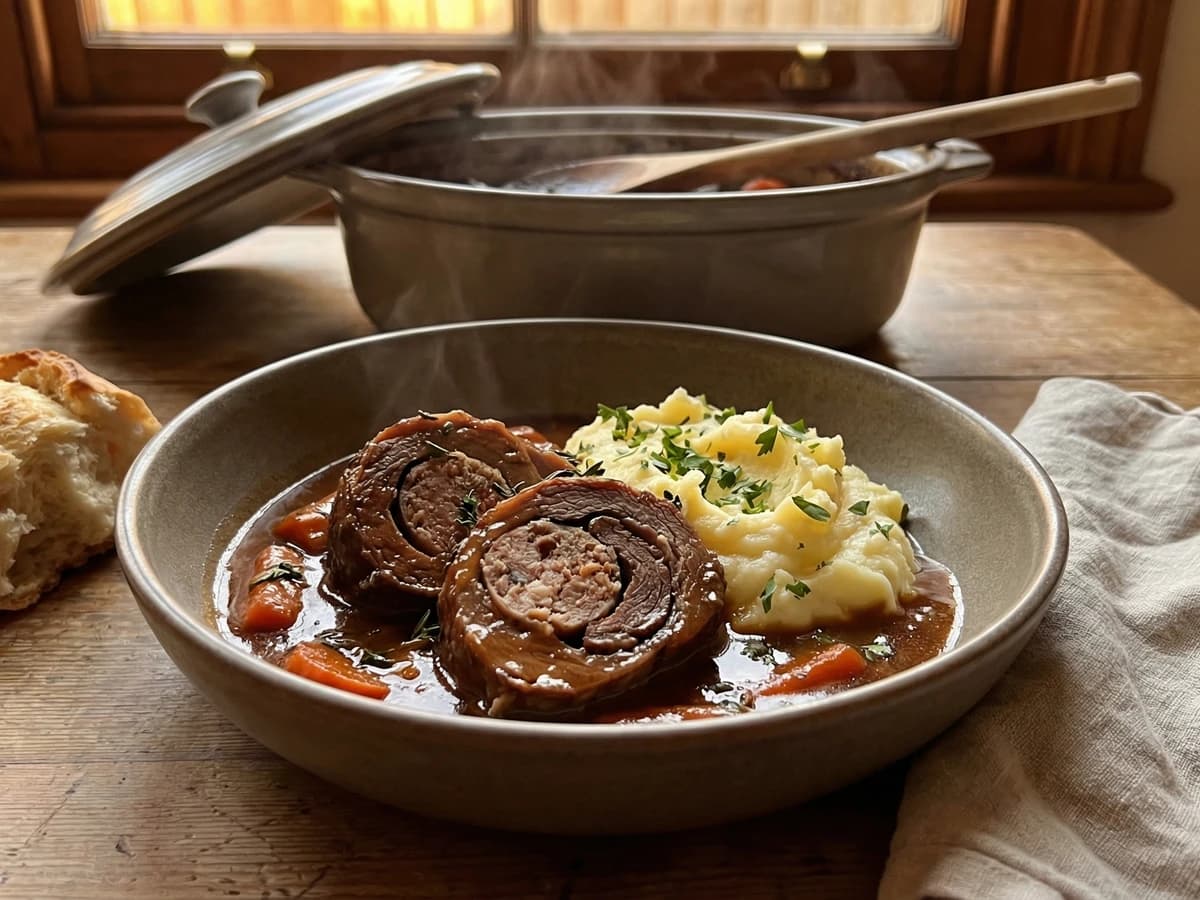
Thin slices of beef rolled around a stuffing of sausage meat and herbs, browned in butter, and braised for two patient hours until the meat yields and the gravy turns dark and rich and worth mopping up with bread.