Chef Lesia
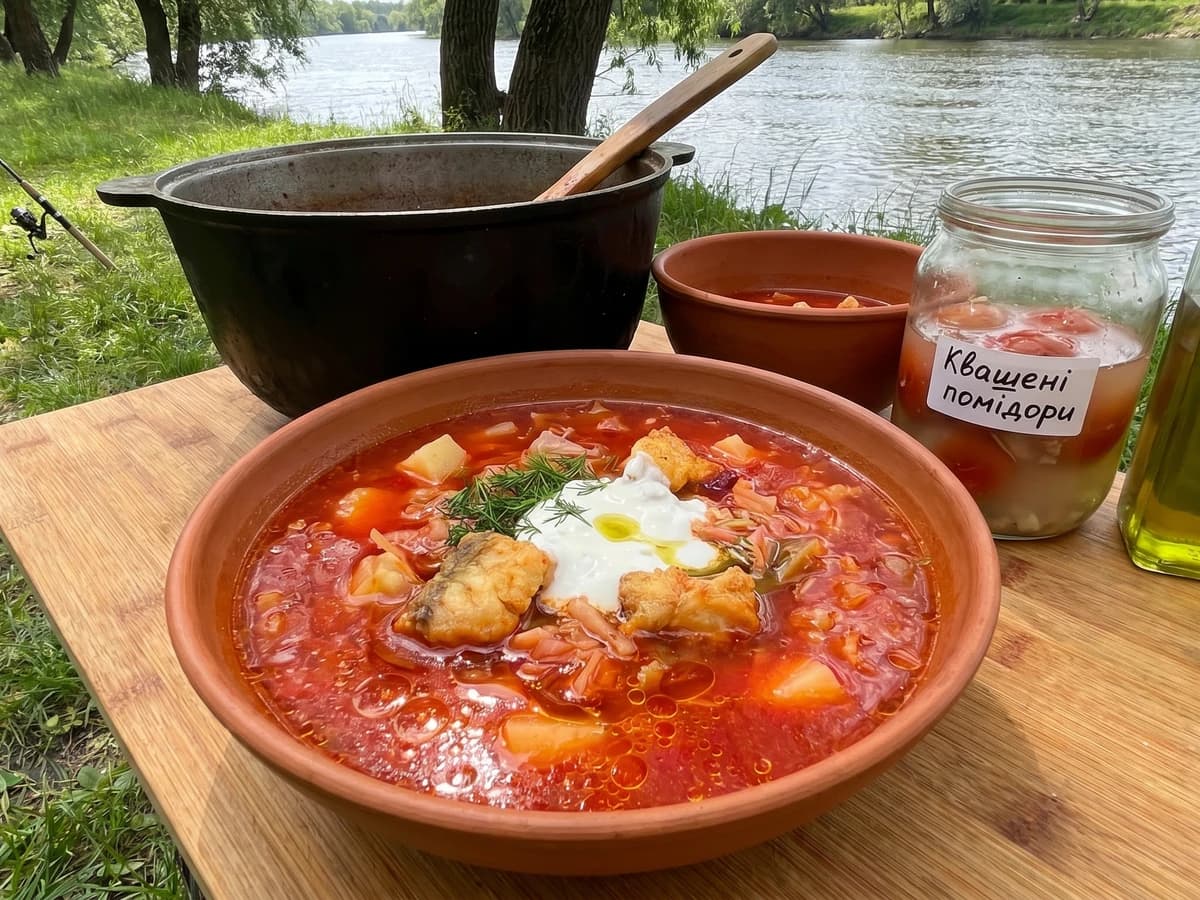
Bessarabskyi Borshch (бессарабський борщ, fish borshch)
The catch goes into the pan before it ever meets the pot, so Danube fish stays whole in a tomato-red broth sour enough to wake the table.
A cooking platform built around craft, culture, and the stories behind what we eat.

Created by
Beets hit slow-sweated zasmazhka and the broth goes dark ruby, sour from beet zakwas, sweet from bone and garden, thick enough for the spoon to stand up straight.
The whole pot turns stained-glass red before you taste a thing. Onion, carrot, and beet have been sweating together in green sunflower oil, the tomato mors has gone dark and glossy, and suddenly the kitchen looks as if someone opened a church window over the stove. That is the argument. Not grey, not timid, not anybody else's soup: borshch, and the spelling matters.
At my table this is a big winter pot with southern summer hiding inside it: fermented tomato mors from the litnya kuhnia, the summer kitchen, beet zakwas from the jar that stains your fingers, cabbage cut fine, potatoes soft at the edges, dill waiting till the end. In August we'd be drowning in tomatoes; in January we open a jar instead. That's not a substitute. That's the actual tradition.
The one why that decides the dish is the zasmazhka, the slow-sweated flavour base. Let the onion and carrot go soft first, then the grated beets, and add it near the end so its sweetness sits brightly on top of the broth instead of flattening into the stock. Aunt Nadia's letter says only "until the smell changes", which is maddening and correct; the beets stop smelling raw and start smelling round, almost bread-sweet.
Make a big pot. Enough for eight guests or one hungry Ukrainian. The first bowl is comfort, the second day is celebration, and the spoon must stand up straight.
Borshch is Ukrainian, and the proof is its regional variation: Polissia has mushroom and green sorrel pots, Halychyna and Podillia lean on beans, and the lower Dnipro and Black Sea steppe keep tomatoes, peppers, fish, and ferment brines close. UNESCO listed the culture of Ukrainian borshch cooking as intangible cultural heritage in need of urgent safeguarding in 2022. The southern steppe souring in this recipe comes from the litnya kuhnia, the summer kitchen, the same preservation world that put whole watermelons and stuffed aubergines into four to five percent brines while Soviet canteens tried to flatten local pots into one approved recipe.
Quantity
1.2 kg
Quantity
3.5 litres
plus more as needed
Quantity
1 large
halved
Quantity
1
snapped in half
Quantity
2
Quantity
1 teaspoon
Quantity
1 large bunch
stalks and fronds separated
Quantity
3 medium
scrubbed, tails left on
Quantity
2 tablespoons
plus more to finish if you like
Quantity
1 large
finely diced
Quantity
2 large
coarsely grated
Quantity
1
finely diced
Quantity
2 tablespoons
Quantity
250g chopped tomatoes plus brine, or 200ml mors
Quantity
3 medium
peeled and cut into rough cubes
Quantity
1/2 small
finely shredded
Quantity
200ml
plus more to taste
Quantity
4 cloves
smashed to a paste with a pinch of salt
Quantity
to taste
Quantity
to taste
Quantity
to serve
Quantity
to serve
| Ingredient | Quantity |
|---|---|
| pork ribs, beef short ribs, or beef shin on the bone | 1.2 kg |
| cold waterplus more as needed | 3.5 litres |
| onion for the brothhalved | 1 large |
| carrot for the brothsnapped in half | 1 |
| bay leaves | 2 |
| black peppercorns | 1 teaspoon |
| dillstalks and fronds separated | 1 large bunch |
| beetsscrubbed, tails left on | 3 medium |
| unrefined sunflower oilplus more to finish if you like | 2 tablespoons |
| onionfinely diced | 1 large |
| carrotscoarsely grated | 2 large |
| red sweet pepperfinely diced | 1 |
| thick tomato mors or tomato paste | 2 tablespoons |
| fermented tomatoes or fermented tomato mors | 250g chopped tomatoes plus brine, or 200ml mors |
| potatoespeeled and cut into rough cubes | 3 medium |
| white cabbagefinely shredded | 1/2 small |
| beet zakwasplus more to taste | 200ml |
| garlicsmashed to a paste with a pinch of salt | 4 cloves |
| fine sea salt | to taste |
| black pepper | to taste |
| smetana (sour cream) (optional) | to serve |
| pampushky or dark rye bread (optional) | to serve |
Put the bones in a 6 to 8 litre pot and cover with the cold water. Bring it up slowly until the first small bubbles break, then skim the grey foam as it gathers. Add the halved onion, snapped carrot, bay leaves, peppercorns, dill stalks if your bunch gave you good ones, and a light hand of salt. Keep it at the gentlest movement, what my grandmother Vira called "spirit", until the meat loosens from the bone and the broth smells clean, sweet, and meaty.
While the broth murmurs, put the whole beets in a separate pot, cover with water, and cook until a knife slides through without forcing. Let them cool just enough to handle, then slip off the skins and grate them coarsely. Keep the tails on while they cook; they hold the colour where you want it, inside the beet and then inside the borshch.
Lift the bones from the broth and strain the liquid back into the pot. Pull the meat from the bones in generous pieces and return it to the broth. You want about 2.5 to 3 litres of broth now; if the pot has cooked down hard, add a little water. It should taste meaty but still leave room for the vegetables and ferment.
Add the potatoes to the broth and let them cook until the edges yield when pressed with a spoon. Add the cabbage after that and cook until it bends into the broth but still tastes green. Don't boil the life out of it. Borshch should be thick and full, not tired.
Warm the sunflower oil in a wide pan over low heat. Add the diced onion and let it turn translucent before the grated carrot and sweet pepper join it. You're not browning anything. You're coaxing sweetness out slowly, until the oil goes orange and the pan smells like the start of dinner from the hallway.
Stir the grated beets into the zasmazhka, then add the thick tomato mors or tomato paste and the fermented tomatoes with a spoonful of their brine. Let everything move together until the colour deepens and the raw-earth smell of the beet changes into something round and sweet. If your beets taste dull, add the smallest pinch of sugar, but make them prove they need it first.
Scrape the whole red zasmazhka into the broth once the potatoes and cabbage are tender. Add about 150ml of beet zakwas first, then taste before adding the rest. Bring the pot back to hot, but don't hammer it with a hard boil after the zakwas goes in; you want its clean sourness and colour to stay bright. Stir in the garlic, most of the chopped dill, and black pepper.
Turn off the heat and let the borshch sit before serving, long enough for the beet, cabbage, meat, and souring to stop shouting over each other. Taste again for salt and zakwas. The spoon must stand up straight. Serve in deep bowls with smetana, more dill, a thread of green sunflower oil if you like, and pampushky or rye bread for dragging through the crimson edges.
1 serving (about 650g)
Culinary guides, cultural storytelling, and the editorial depth that makes cooking meaningful.
Discover Culinary ExplorerChef Lesia
The catch goes into the pan before it ever meets the pot, so Danube fish stays whole in a tomato-red broth sour enough to wake the table.

Chef Lesia
The fish leaves the pot before the soup reaches the table: broth in the bowl, river fish on a platter, garlic salamur waiting to wake both.

Chef Lesia
Brick-red paprika blooms in bacon fat, beef darkens at the edges, and potatoes thicken the cauldron until it stands between soup and stew. This is comfort with a fire under it.
Chef Lesia
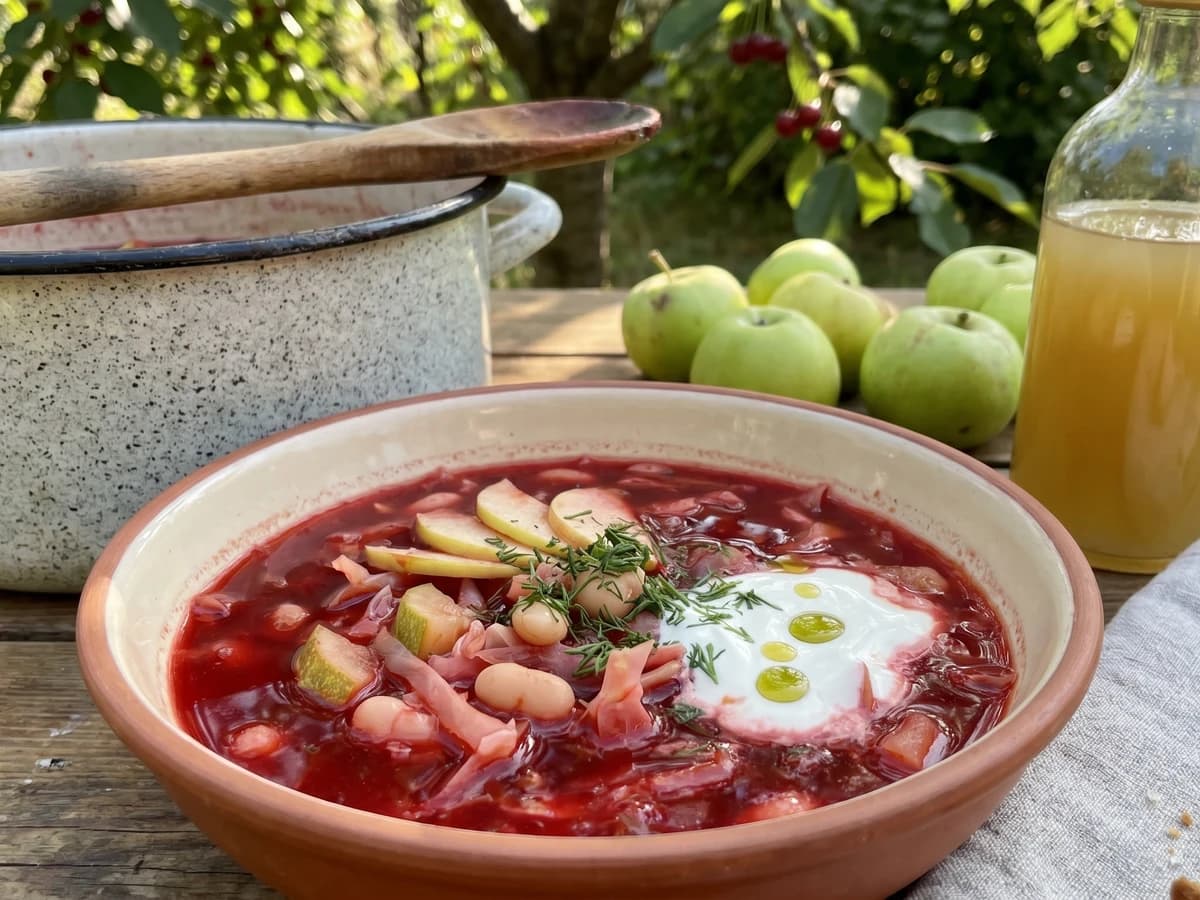
A northern summer borshch should taste like the garden leaned over the pot: beet-crimson, bean-thick, sharpened by tart apple, with courgette softening into the broth.