
Chef Jeong-sun
Baechu-geotjeori (Fresh Napa Cabbage Salad)
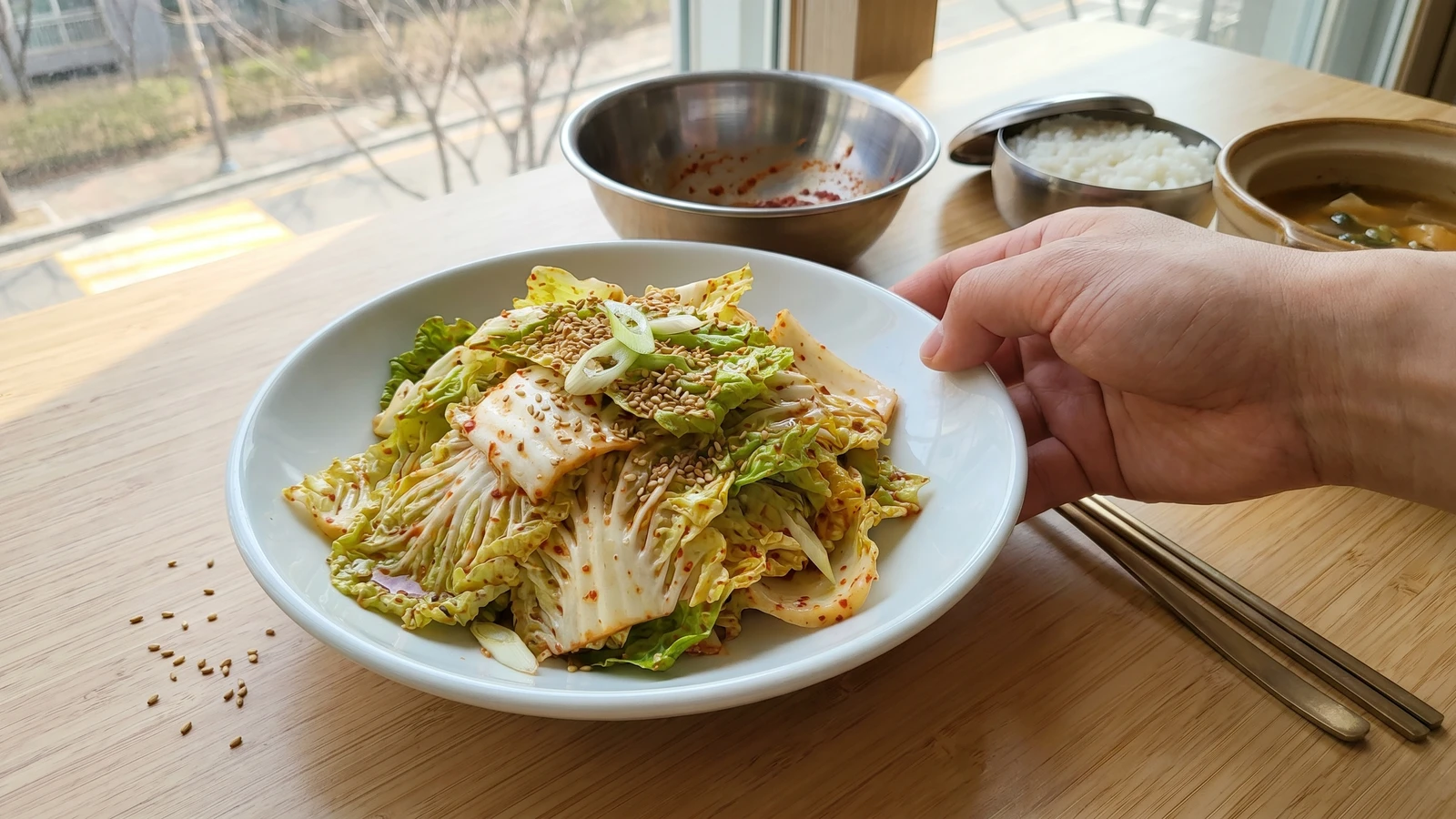
Fresh napa cabbage tossed with chili and fermented anchovy sauce, made for the hour when winter kimchi has gone too sour and the table needs something bright.
A cooking platform built around craft, culture, and the stories behind what we eat.
Created by
The first flat cabbage of spring, torn by hand and tossed at the last minute with chili, fish sauce, garlic, and sesame so each leaf stays sweet and alive.
Bomdong arrives when winter has loosened its fist but spring is still shy. In the market it lies flat and open, not tight like winter napa cabbage, with leaves that spread like someone pressed them gently with both palms. Cook the month you're standing in. This dish belongs to that early thaw.
Bomdong is a flat, loose-heading spring cabbage grown and eaten in Korea in late winter and early spring, especially prized before heavier spring greens fully arrive. Geotjeori means freshly seasoned kimchi or salad, not long-fermented kimchi; it became a natural way to eat tender seasonal cabbages quickly, with the seasoning mixed just before the meal. In Korean home cooking it sits with banchan, giving a sharp fresh counterpoint to rice, soup, and grilled or pan-fried dishes.
Quantity
450g, about 2 small heads
outer leaves separated, washed, dried, and torn bite-size
Quantity
1 teaspoon
use only if the stem ends are thick
Quantity
2
thinly sliced on the diagonal
Quantity
1 tablespoon
medium-coarse
Quantity
1 tablespoon
anchovy or sand lance
Quantity
1 teaspoon
Quantity
2 teaspoons
Quantity
1 teaspoon
or use 1/2 teaspoon sugar
Quantity
1 1/2 teaspoons
Quantity
1 small clove
finely minced
Quantity
1 tablespoon
lightly crushed
| Ingredient | Quantity |
|---|---|
| bomdong (spring cabbage)outer leaves separated, washed, dried, and torn bite-size | 450g, about 2 small heads |
| coarse sea salt (optional)use only if the stem ends are thick | 1 teaspoon |
| scallionsthinly sliced on the diagonal | 2 |
| gochugaru (Korean chili flakes)medium-coarse | 1 tablespoon |
| fish sauce (aekjeot)anchovy or sand lance | 1 tablespoon |
| soup soy sauce (guk-ganjang) or regular soy sauce | 1 teaspoon |
| rice vinegar | 2 teaspoons |
| maesil-cheong (green plum syrup) (optional)or use 1/2 teaspoon sugar | 1 teaspoon |
| toasted sesame oil | 1 1/2 teaspoons |
| garlicfinely minced | 1 small clove |
| toasted sesame seedslightly crushed | 1 tablespoon |
Separate the bomdong leaves and rinse them well where soil hides near the base. Dry them thoroughly in a salad spinner or between towels. Water left on the leaves thins the seasoning and makes the bowl taste tired before it reaches the table.
Taste a stem end. If it is thick and stiff, sprinkle the leaves with 1 teaspoon coarse sea salt, toss once, and let them sit 8 minutes. Rinse quickly and dry hard. If the leaves are tender and sweet, skip this. Good bomdong does not need punishment.
Tear the cabbage by hand into pieces about 2 inches wide, keeping some pale stem and green leaf in each piece when you can. A knife bruises the thin leaves more than your hands do, and hand-torn edges catch the dressing without making the salad limp.
In a large bowl, stir together the gochugaru, fish sauce, soy sauce, rice vinegar, maesil-cheong, sesame oil, minced garlic, and half the sesame seeds. Let it stand 3 minutes so the chili flakes bloom and soften. This small wait keeps the gochugaru from sitting on the leaves like dry dust.
Add the bomdong and scallions to the bowl and toss gently with your hands, lifting from the bottom and turning the leaves over themselves. Stop when the leaves are lightly stained red and glossy, not collapsed. Taste one leaf. It should be sweet cabbage first, then chili, salt, sesame, and garlic behind it.
Transfer to a shallow bowl and scatter the remaining sesame seeds over the top. Serve within 20 minutes, before the salt pulls too much water from the cabbage. This belongs beside hot rice, grilled fish, doenjang-jjigae, or a simple fried egg on a weeknight.
1 serving (about 135g)
Culinary guides, cultural storytelling, and the editorial depth that makes cooking meaningful.
Discover Culinary ExplorerChef Jeong-sun
Fresh napa cabbage tossed with chili and fermented anchovy sauce, made for the hour when winter kimchi has gone too sour and the table needs something bright.

Chef Jeong-sun
A fresh garlic chive muchim tossed at the last minute, sharp with soy and vinegar, lightly red with gochugaru, and made to stand beside bossam or grilled pork.

Chef Jeong-sun
A mountain-root salad with snap and bite: deodeok gently pounded, never shredded, then dressed in chili vinegar so its resinous sweetness still speaks clearly.

Chef Jeong-sun
Bellflower root torn by hand, salt-rubbed until its harsh edge softens, then dressed red and sharp so the bitterness remains clean beside rice, not hidden.