
Chef Juliana
Açaí com Camarão do Pará
You think açaí belongs with banana and granola because that's the version that traveled. In Pará, thick unsweetened açaí sits beside shrimp, rice, and farinha. Anota aí: same fruit, different meal.
A cooking platform built around craft, culture, and the stories behind what we eat.
Created by
You think tough meat and wine mean "isso não é pra mim." Wrong. Brown the cheeks properly, build a real refogado, and let time turn a cheap cut into dinner that behaves like silk.
You know that little voice: "isso não é pra mim." It sees beef cheek at the butcher, hears wine, and starts acting like dinner needs a diploma. No. Cozinhar não é dom, é um aprendizado. This is cheap meat, a heavy pot, onion, garlic, wine, and patience. Anota aí, because that is not fancy. That's arithmetic.
I learned to cook as a grown woman, which means I have personally committed many crimes against onions. Burned them, rushed them, salted them like revenge. So I don't teach from a cloud. I teach receitas que funcionam: dry the meat so it browns, leave space in the pan so it doesn't boil grey in its own water, build a real refogado so the sauce tastes like food and not like a packet pretending to help.
Beef cheek is tough because it worked for a living. That's the good news. Tough meat has collagen, and collagen plus low heat plus time becomes a sauce with body, the kind that clings to rice and makes the whole plate make sense. You don't fight the cut. You give it the cooking it asked for.
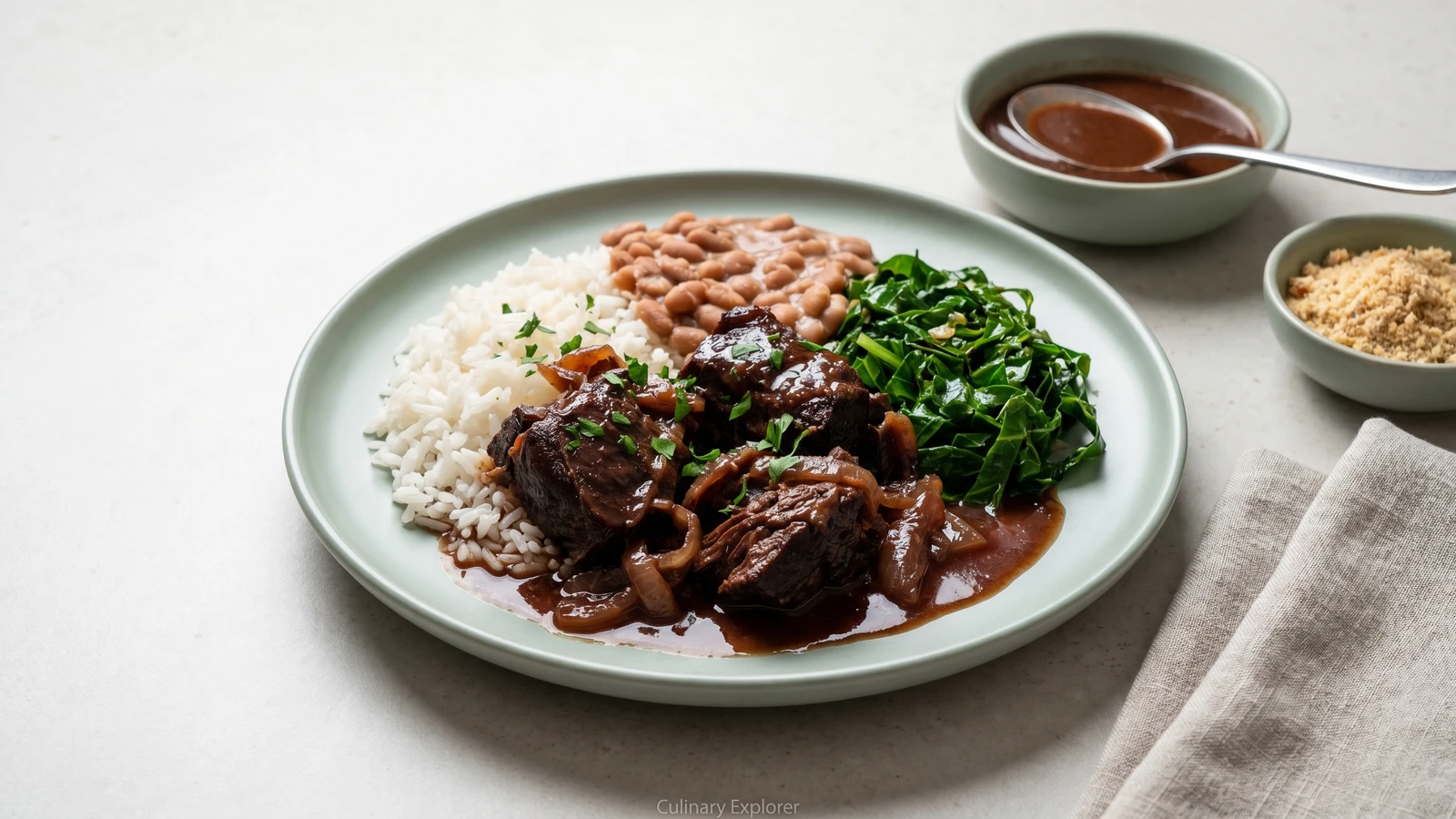
Serve this beside arroz soltinho, feijão cremoso, and couve refogada, and there it is: the pê-efe, rice and beans and meat and something green. The plate that quietly holds a country together. No drama. Just comida de verdade, taught properly, and very much within your hands.
Bochecha de boi is a secondary cut from whole-animal butchery, the kind of meat Brazilian cooks often bought because price, not fashion, decided the pot. Its red-wine treatment belongs to the Portuguese and broader European habit of using wine, onion, garlic, and bay to soften and season tough cuts, a method that settled naturally into Brazilian refogados. The surprise is anatomical, not romantic: the cheek works constantly while the animal chews, so it is full of collagen, and slow moist cooking turns that toughness into a sauce with body.
Quantity
3 pounds
trimmed of thick silver skin
Quantity
1 1/2 teaspoons, plus more to taste
Quantity
1/2 teaspoon
Quantity
3 tablespoons
Quantity
2 medium, about 2 cups
finely chopped
Quantity
1 small, about 1/2 cup
finely diced
Quantity
5 cloves
minced
Quantity
2 tablespoons
Quantity
1 teaspoon
Quantity
2 cups
Quantity
1 cup, plus more as needed
Quantity
2
Quantity
1/4 cup
chopped
Quantity
as needed
for serving
| Ingredient | Quantity |
|---|---|
| beef cheekstrimmed of thick silver skin | 3 pounds |
| fine salt | 1 1/2 teaspoons, plus more to taste |
| black pepper | 1/2 teaspoon |
| oil or rendered beef fat | 3 tablespoons |
| onionsfinely chopped | 2 medium, about 2 cups |
| carrotfinely diced | 1 small, about 1/2 cup |
| garlicminced | 5 cloves |
| tomato paste | 2 tablespoons |
| colorau or sweet paprika | 1 teaspoon |
| dry red wine | 2 cups |
| water | 1 cup, plus more as needed |
| bay leaves | 2 |
| parsley (optional)chopped | 1/4 cup |
| arroz branco, feijão cremoso, and couve refogadafor serving | as needed |
Pat the beef cheeks very dry with paper towels, then season them all over with the salt and black pepper. Let them sit while you chop the onion, carrot, and garlic, about 20 minutes. Dry meat browns. Wet meat boils, and then you stand there wondering why the pan looks sad.
Heat the oil in a heavy 5- to 6-liter pot over medium-high heat. Add the beef cheeks in batches, leaving space between the pieces, and brown them hard on all sides, about 3 to 4 minutes per side. Look for a deep brown crust and dark spots on the bottom of the pot. That's flavor. Crowd the pan and the meat releases water, the heat drops, and you steam the beef grey instead of dourar properly.
Lower the heat to medium. Add the onion and carrot to the same pot with a pinch of salt, scraping the brown bits from the bottom as they soften. Cook until the onion murcha, soft and lightly golden, about 8 minutes. Add the garlic and stir for 1 minute, just until you smell it. Then add the tomato paste and colorau and stir for another minute. The paste loses its raw edge, the colorau wakes up in the fat, and the sauce starts tasting like food before the wine even arrives.
Pour in the red wine and scrape the bottom of the pot again. Let it simmer briskly for 5 to 8 minutes, until the sharp alcohol smell softens and the liquid reduces by about a third. This matters. If you trap the wine in the pot too soon, the sauce tastes harsh instead of round.
Return the beef cheeks and their juices to the pot. Add the water and bay leaves. The liquid should come about halfway up the meat, not drown it. Bring it to a gentle simmer, cover, and cook over very low heat for 2 1/2 to 3 hours, turning the pieces once or twice, until a spoon slides into the meat with almost no effort. Keep it gentle. A hard boil bangs the meat around, clouds the sauce, and tightens the outside before the inside has time to surrender.
Lift the tender cheeks onto a plate and cover them loosely. Remove the bay leaves. Skim off excess fat if there is a thick layer on top, then simmer the sauce uncovered for 10 to 15 minutes, until it looks glossy and coats the back of a spoon. Taste and adjust the salt. This is pegar ponto: not watery, not muddy, just thick enough to cling to rice.
Return the beef cheeks to the pot and spoon the sauce over them until they shine. Sprinkle with parsley if you're using it. Serve with arroz branco, feijão cremoso, and couve refogada, letting the sauce run into the rice. That's not decoration. That's the pê-efe doing its job.
1 serving (about 600g)
Culinary guides, cultural storytelling, and the editorial depth that makes cooking meaningful.
Discover Culinary ExplorerChef Juliana
You think açaí belongs with banana and granola because that's the version that traveled. In Pará, thick unsweetened açaí sits beside shrimp, rice, and farinha. Anota aí: same fruit, different meal.

Chef Juliana
You think savory açaí is not for you. I understand. Then you taste the cold, dark bowl beside hot fried fish, rice, greens, and farinha, and dinner gets very quiet.

Chef Juliana
You think salted beef and rice sound like trouble. Anota aí: soak the charque, brown it properly, build the refogado, and this one pot resolves dinner.

Chef Juliana
You think a Maranhão green rice belongs to somebody else's clever hands. It doesn't. Wilt the vinagreira, build the refogado, fold it through arroz soltinho, and dinner gets bright, coastal, and yours.