
Chef Isabel
Almussafes Valenciano
Almussafes is Valencian bar-counter food: a crusty roll filled with sobrasada, cheese, and onion, then pressed on the plancha until the bread crisps and the filling runs together.
A cooking platform built around craft, culture, and the stories behind what we eat.
Created by
The bocadillo de chorizo belongs to the plain Castilian school of bread and cured pork: good chorizo, fresh barra, and just enough heat to wake the pimentón fat.
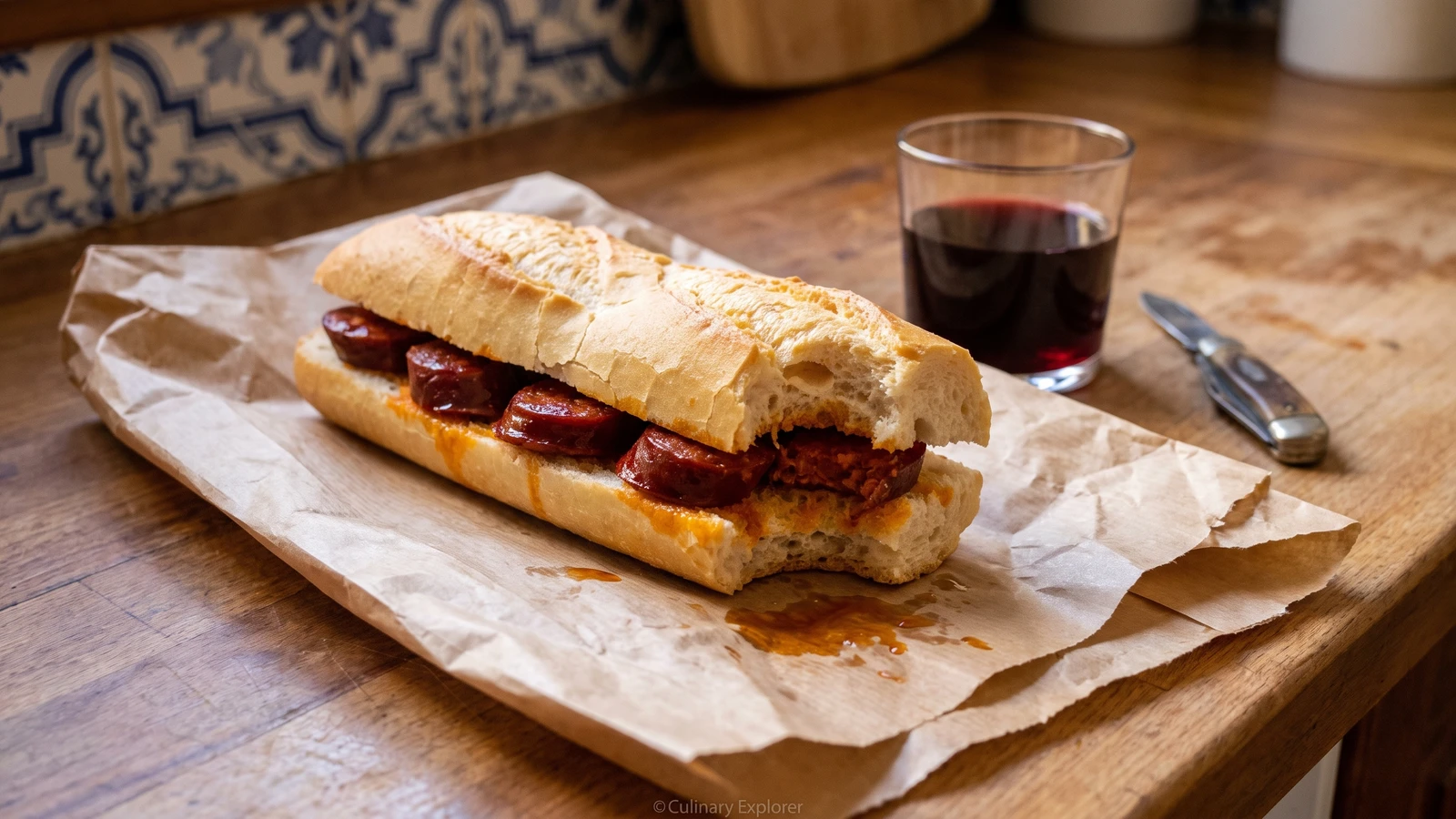
Bocadillo de chorizo is Castilian in this version, made with chorizo de Cantimpalos from Segovia or another firm cured chorizo from the central tablelands. It is not a dressed sandwich. It is bread and cured sausage, and the thing that makes it work is the fat stained red with pimentón, the smoked paprika that gives chorizo its colour and smell.
You can eat the chorizo raw, thinly sliced, and many homes do. But for this bocadillo I warm it briefly in a dry pan, just until it shines and loosens a little red oil. Do not fry it hard. If the slices curl, darken, and turn leathery, you have cooked the pleasure out of them. The bread should catch that oil, not drown in it.
If you are far from Spain, look for a dry-cured Spanish-style chorizo with pimentón, not soft Mexican chorizo, which is a fresh sausage and a different thing entirely. Portuguese chouriço is the closest useful substitute; it is usually a little smokier and firmer, so slice it thinner and warm it less. No hace falta haber pisado España. Buy the right sausage, use good bread, and keep your hands off it. Siempre sale, si lo sigues.
The bocadillo de chorizo belongs to Spain's everyday cured-pork larder, especially in the Castilian interior where matanza, the household pig slaughter, filled storerooms with sausages seasoned with garlic and pimentón. Cantimpalos in Segovia became one of the best-known names for cured chorizo, tied to the dry air and plain bread of the central plateau. The sandwich spread well beyond the region because it needed no kitchen at all: a barra, a knife, and a sausage that was already preserved.
Quantity
1 loaf, about 250g
cut into two lengths
Quantity
160g
sliced 3mm thick
Quantity
1 teaspoon
only if the chorizo is very lean
| Ingredient | Quantity |
|---|---|
| fresh barra or narrow baguette-style loafcut into two lengths | 1 loaf, about 250g |
| dry-cured Spanish chorizosliced 3mm thick | 160g |
| extra virgin olive oil (optional)only if the chorizo is very lean | 1 teaspoon |
Cut the barra into two equal lengths, then split each one lengthwise without cutting all the way through. Leave the hinge if you can; it holds the chorizo and catches the red oil better than two loose halves.
Peel the casing if it is tough, then slice the chorizo into thin coins, about 3mm thick. Pésalo, no lo adivines: 80g per bocadillo is enough to taste full without turning greasy.
Set a dry frying pan over medium-low heat and lay in the chorizo slices in one layer. Warm them for 45 to 60 seconds on each side, only until they glisten and a little pimentón-red oil appears. This is the whole trick. You are loosening the fat, not cooking a sausage.
Lay the warm chorizo straight into the split bread and spoon over any red oil left in the pan. Press the bread closed with your palm for a few seconds so the crumb drinks it in. Eat at once, while the fat is glossy and the bread is still fresh.
1 serving (about 205g)
Culinary guides, cultural storytelling, and the editorial depth that makes cooking meaningful.
Discover Culinary ExplorerChef Isabel
Almussafes is Valencian bar-counter food: a crusty roll filled with sobrasada, cheese, and onion, then pressed on the plancha until the bread crisps and the filling runs together.

Chef Isabel
The Murcian bicicleta is the anchovy-free cousin of the marinera: ensaladilla rusa mounded on a crisp rosquilla de pan. Keep the salad cold and the bread dry until the last minute.

Chef Isabel
The Barcelona bikini is Catalan bar food at its plainest: white bread, jamón dulce, melting cheese, butter, and gentle heat until the crust crisps and the middle runs.

Chef Isabel
This is the bocadillo of the northern pantry: good tuna in olive oil, sweet piquillo peppers from Navarra, and a crusty barra that stays clean if you drain the tin properly.