Culinary Explorer

A cooking platform built around craft, culture, and the stories behind what we eat.
Discover Culinary Explorer
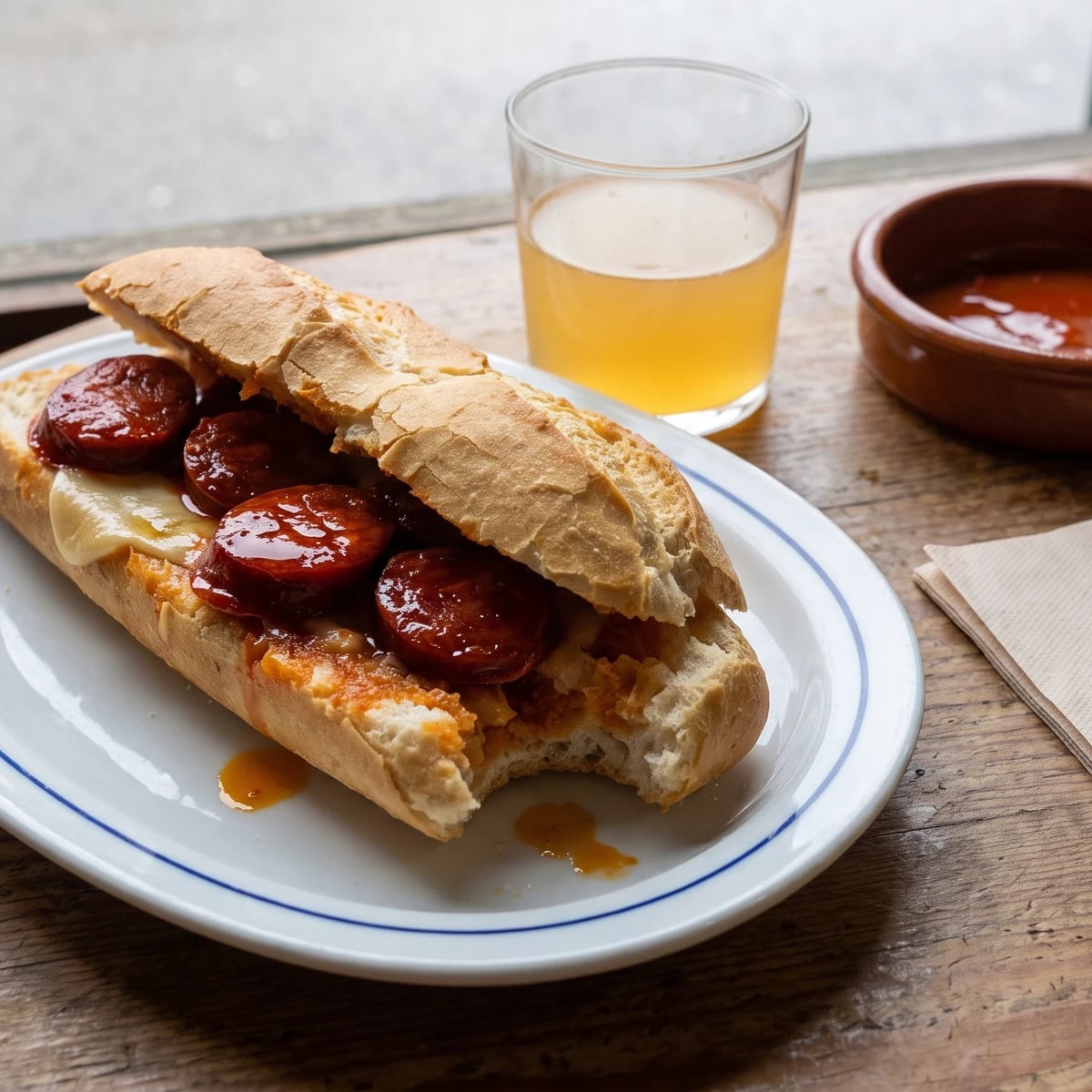
Bocadillo de Chorizo a la Sidra Asturiano

Bocadillo de Chorizo a la Sidra Asturiano

Created by

Asturias puts chorizo in natural cider until the sausage swells, sweetens, and stains the pan red, then tucks it into bread for a bocadillo that needs no fuss.

Sandwiches & Wraps
Spanish
Weeknight
Comfort Food
10 min
Active Time
25 min cook35 min total
Yield4 bocadillos

Bocadillo de chorizo a la sidra is Asturian: cooking chorizo simmered in the region's sharp natural cider, split into crusty bread with the red, glossy juices spooned over. Esto es de Asturias, no de "España" a secas. What makes it this dish is the cider, not wine, not beer, not a sweet bottled drink pretending to be sidra.

The method that decides it is the simmer. Prick the chorizos, cover them halfway with dry cider, and let them bubble gently until they plump and give their pimentón fat to the pan. Too hard a boil toughens the skin and throws the fat out in a greasy rush. Low and steady gives you a sausage that cuts cleanly and a sauce that soaks the bread instead of drowning it.

If you're far from Asturias, buy Spanish cooking chorizo if you can, the fresh or semi-cured kind meant for the pan. Fully dry slicing chorizo is not the same; it will be firmer and saltier, so simmer it less and slice it thin. For the cider, choose a dry, tart hard cider with no added sweetness. No hace falta haber pisado España. With good chorizo, dry cider, and bread with a real crust, siempre sale, si lo sigues.

Chorizo a la sidra belongs to Asturias, where cider houses and village espichas built meals around sidra natural, cured pork, bread, and cheese from the same wet northern larder. The dish uses the region's two plain strengths: pig meat preserved with pimentón and garlic, and tart apple cider that cuts through the fat while perfumeing the sausage. Tucking it into bread is the home and bar-room way of making the same cazuela travel in the hand without losing the red cider juices.

The technique, the tradition, and the story behind every dish.

Discover Culinary Explorer

Ingredients

Asturian cooking chorizos or Spanish fresh cooking chorizos

Quantity

4, about 360g total

dry natural cider or dry hard cider

Quantity

500ml

bay leaf

Quantity

1

small crusty barra rolls or bocadillo rolls

Quantity

4, about 100g each

Afuega'l Pitu, Cabrales, or another Asturian cheese (optional)

Quantity

80g

thinly sliced

extra virgin olive oil (optional)

Quantity

1 tablespoon

only if toasting the bread in a pan

Equipment Needed

  • Small heavy saute pan or cazuela, 24cm
  • Tongs
  • Serrated bread knife

Instructions

  1. 1

    Prick the chorizo

    Prick each chorizo three or four times with the tip of a knife. Don't stab it to pieces; you only want small exits so the cider can get in and the pimentón fat can come out slowly. Put the chorizos in a small, heavy pan where they fit snugly in one layer.

  2. 2

    Add the cider

    Pour in the dry cider and add the bay leaf. The cider should come about halfway up the chorizos; if your pan is wide and shallow, add a little more. Bring it just to a lively bubble over medium heat, then lower the heat right away.

  3. 3

    Simmer gently

    Simmer the chorizos gently for 20 to 25 minutes, turning them once or twice, until they are plump and the cider has reduced to a glossy red sauce. This is the whole trick. Boil hard and the skins tighten, the fat breaks out, and the sauce turns harsh. Keep it steady and the cider tames the sausage.

    If using fully cured dry chorizo because that is all you can get, simmer for 10 to 12 minutes only, then slice it thin. It will taste stronger and chew firmer, so spoon on more of the reduced cider.
  4. 4

    Toast the bread

    Split the rolls lengthwise without cutting all the way through. Toast them lightly in a dry pan, under a grill, or in the same pan with a thin film of olive oil if you want the cut faces crisp. The bread needs a crust and a firm crumb, because soft sandwich bread gives up before the first bite.

  5. 5

    Build the bocadillos

    Lift the chorizos out and slice each one lengthwise, or into thick coins if you prefer a tidier bite. Tuck one chorizo into each roll, spoon over a tablespoon or two of the reduced cider juices, and add the cheese if using. Eat while the bread is still crisp at the edges and stained red inside.

Chef Tips

  • Buy chorizo meant for cooking, not thin dry chorizo made for slicing onto a board. Fresh or semi-cured Spanish chorizo has enough fat and moisture to swell in the cider and give you the red sauce the bread wants.
  • Use dry cider. Asturian sidra natural is sharp and cloudy, not sweet. If you're outside Spain, a dry hard cider works; a sweet cider will make the sauce sticky and dull.
  • The cheese is optional, but keep it Asturian in spirit. Afuega'l Pitu gives tang without bullying the chorizo. Cabrales is stronger, so use less, or the bocadillo becomes Cabrales with sausage under it.

Advance Preparation

  • The chorizos can be simmered up to 2 days ahead and kept covered in their reduced cider juices in the refrigerator.
  • Reheat gently in a covered pan with 2 tablespoons of cider or water until glossy again, then build the bocadillos just before eating so the bread keeps its crust.

Frequently Asked Questions

Nutrition Information

1 serving (about 190g)

Calories
600 calories
Total Fat
30 g
Saturated Fat
11 g
Trans Fat
0 g
Unsaturated Fat
17 g
Cholesterol
80 mg
Sodium
1310 mg
Total Carbohydrates
57 g
Dietary Fiber
3 g
Sugars
4 g
Protein
25 g

Note: Chef personas and recipes are created with AI assistance. Cook with care: follow safe food-handling practices, check doneness with a thermometer when needed, and adapt for allergies and your kitchen.

Where cooking meets culture.

Culinary guides, cultural storytelling, and the editorial depth that makes cooking meaningful.

Discover Culinary Explorer

More from Bocadillos

Browse the full collection