
Chef Isabel
Almussafes Valenciano
Almussafes is Valencian bar-counter food: a crusty roll filled with sobrasada, cheese, and onion, then pressed on the plancha until the bread crisps and the filling runs together.
A cooking platform built around craft, culture, and the stories behind what we eat.
Created by
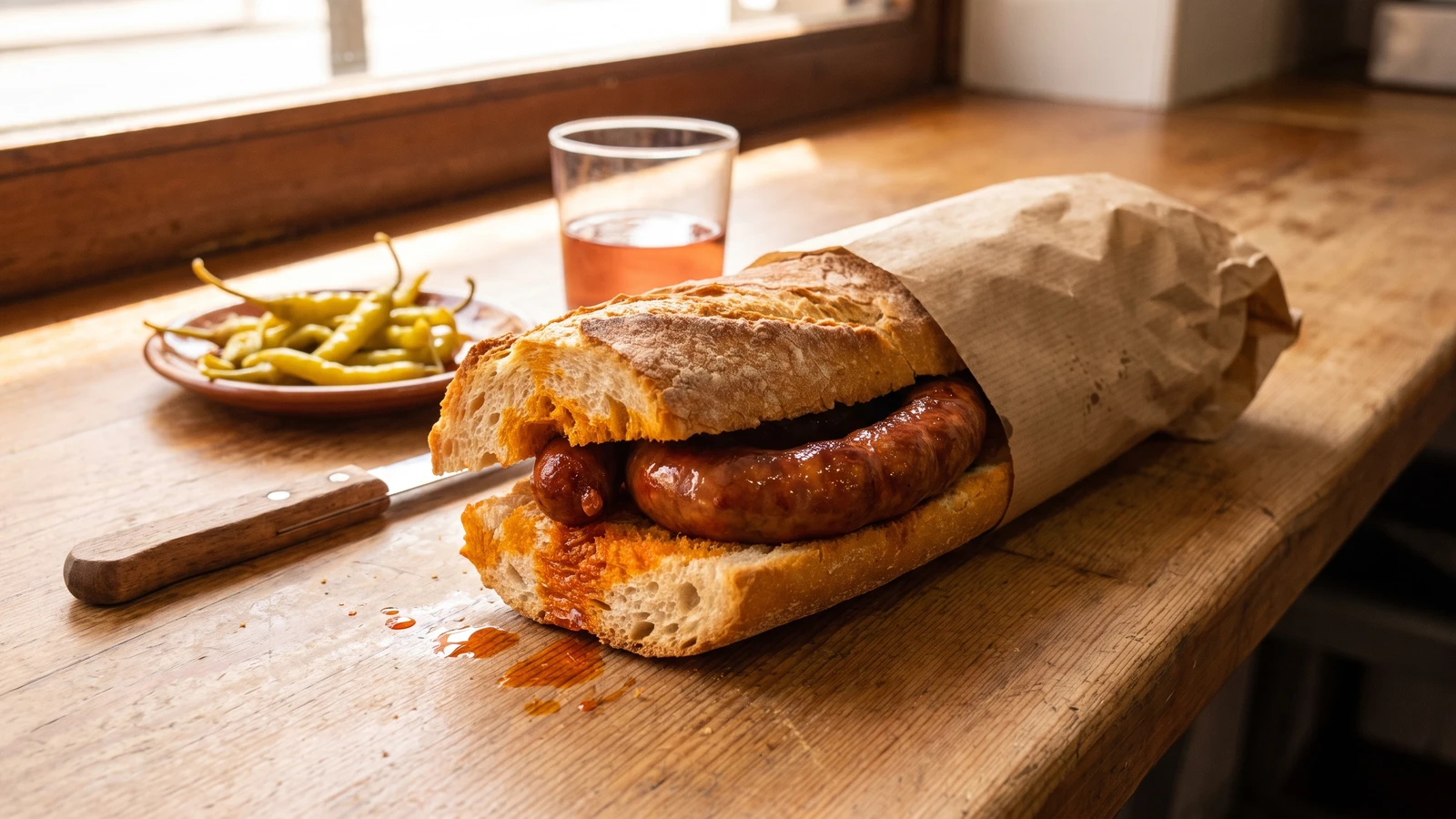
Navarra's bocadillo de chistorra is thin paprika sausage cooked until its red fat runs, then folded into crusty barra. The trick is gentle heat, not a hard scorch.
Bocadillo de chistorra is Navarra's bread-and-sausage lunch, plain as a market counter and very good when you don't fuss with it. Chistorra is thin, fresh, fast-cured pork sausage, red with pimentón and garlic, and the bread is not decoration. It catches the fat. That's the dish.
The method that decides it is the heat. Cook the chistorra over medium heat until the casing tightens, browns in spots, and gives up its red oil into the pan. Too fierce and the skin burns before the inside is hot. Too timid and the fat stays trapped. Split the barra, lay it cut-side down for a moment in that pimentón oil, then tuck the sausage in. Siempre sale, si lo sigues.
If you can't find chistorra where you are, look for txistorra or the thinnest fresh Spanish chorizo you can buy, not dry slicing chorizo. A thicker fresh chorizo will need a slower cook and the bite will be heavier, but it will still give the bread that red oil. No hace falta haber pisado España. You do need the right sausage and bread with a crust that can stand up to it.
In the Margin beside this one I wrote only this: no sauces. The sausage has the salt, the garlic, and the pimentón. Ketchup, cheese, salad, all of that makes another sandwich. This one is Navarra, tal como se hace allí.
Chistorra belongs especially to Navarra and the Basque-speaking north, where the same sausage is also called txistorra: a thin pork sausage seasoned with garlic and pimentón, cured only briefly so it cooks quickly on a griddle or in a pan. Its quick cooking made it natural food for fairs, market mornings, and feast days, often served simply in bread so the rendered red fat was not lost. The bocadillo keeps the dish in its most practical form: sausage, barra, and the oil the pan gives back.
Quantity
400g
cut into 4 lengths
Quantity
4 rolls, about 120g each
split lengthwise
Quantity
1 teaspoon
only if the pan is dry
Quantity
4
served alongside, not inside
| Ingredient | Quantity |
|---|---|
| chistorra or txistorracut into 4 lengths | 400g |
| small crusty barra rolls, or 1 large barrasplit lengthwise | 4 rolls, about 120g each |
| olive oil (optional)only if the pan is dry | 1 teaspoon |
| pickled guindilla peppers (optional)served alongside, not inside | 4 |
Split the barra pieces lengthwise, leaving one hinge if the bread allows it. Set them close to the stove. This is a fast bocadillo, and the bread wants the chistorra oil while it is still glossy in the pan.
Put a heavy frying pan or plancha over medium heat. Add the teaspoon of olive oil only if the pan is very dry, then lay in the chistorra in a single layer. Do not prick it all over; one small nick is enough if the casing threatens to burst. You want the fat to render slowly, not run out before the sausage has cooked.
Cook for 6 to 8 minutes, turning often, until the sausage is browned in patches, firm to the touch, and has left a shallow pool of red pimentón oil in the pan. Keep the heat honest. If the oil smokes or the paprika darkens too fast, lower it at once, because scorched pimentón turns bitter.
Lift the chistorra to one side of the pan. Lay the split bread cut-side down in the red oil for 20 to 30 seconds, just long enough for the crumb to drink a little fat and turn orange at the edges. Pésalo, no lo adivines matters for stews; here, watch the bread. It should glisten, not collapse.
Put one length of chistorra into each piece of bread, spoon over a little more of the pan oil if any remains, and close the bocadillo. Serve at once, with a guindilla on the side if you like its sharp bite. No sauces. The sausage has already done the work.
1 serving (about 205g)
Culinary guides, cultural storytelling, and the editorial depth that makes cooking meaningful.
Discover Culinary ExplorerChef Isabel
Almussafes is Valencian bar-counter food: a crusty roll filled with sobrasada, cheese, and onion, then pressed on the plancha until the bread crisps and the filling runs together.

Chef Isabel
The Murcian bicicleta is the anchovy-free cousin of the marinera: ensaladilla rusa mounded on a crisp rosquilla de pan. Keep the salad cold and the bread dry until the last minute.

Chef Isabel
The Barcelona bikini is Catalan bar food at its plainest: white bread, jamón dulce, melting cheese, butter, and gentle heat until the crust crisps and the middle runs.

Chef Isabel
This is the bocadillo of the northern pantry: good tuna in olive oil, sweet piquillo peppers from Navarra, and a crusty barra that stays clean if you drain the tin properly.