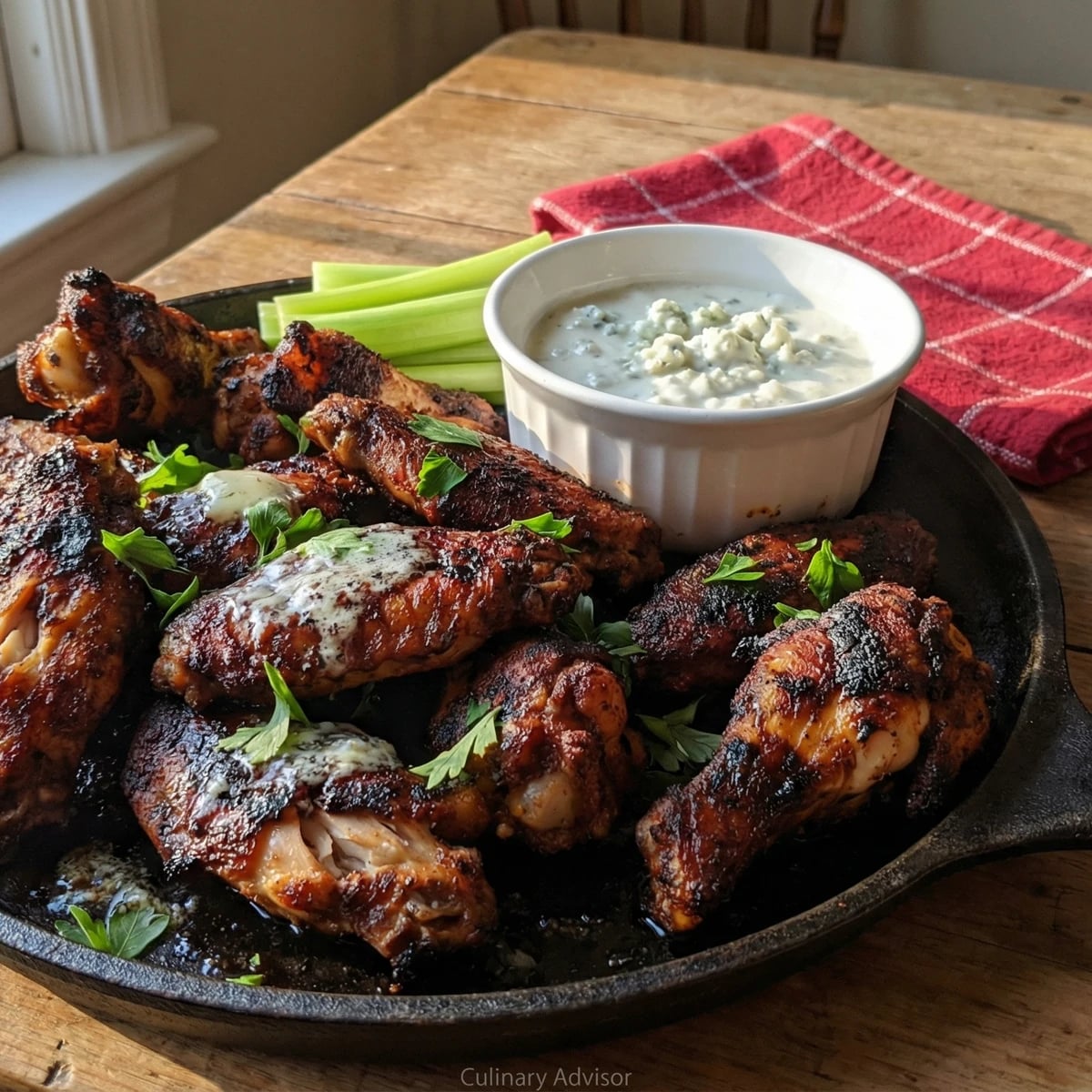
Chicken wings kissed by fire and coated in a bold blackening spice crust, charred in a screaming hot cast iron skillet until the edges crackle, served alongside a cool, tangy blue cheese dip that tames the heat just enough to make you reach for another.
Appetizers & Snacks
Cajun
Game Day
Super Bowl
BBQ
25 min
Active Time
25 min cook•50 min total
Yield4-6 servings
The blackening technique is pure Louisiana magic. You take good protein, coat it in spices, and sear it in a cast iron skillet so hot it would make lesser cooks nervous. The spices bloom and caramelize against the butter, forming a crust that looks almost burnt but tastes like heaven. I've been blackening fish and chicken at Lagniappe for over twenty years, and let me tell you: this method was made for wings.
Most folks think of buffalo wings when they think game day. Nothing wrong with that. But down here, we do things a little different. We build flavor in layers. Season the wings before they ever see the pan. Let that spice blend get friendly with the meat. Then hit them with screaming hot cast iron and good butter until the outside is charred and crackling while the inside stays juicy.
The blue cheese isn't just a dipping sauce. It's a partner. That cool, tangy richness cuts through the heat and char, resetting your palate so every bite feels like the first. My grandmother Evangeline would have called this balance. I call it the bayou way.
You'll set off your smoke alarm. Open the windows, turn on the exhaust fan, and don't apologize. Good cooking makes noise and smoke sometimes. That's how you know something real is happening in that pan.
The technique, the tradition, and the story behind every dish.
Combine the paprika, garlic powder, onion powder, cayenne, thyme, oregano, black pepper, salt, and white pepper in a small bowl. Whisk until everything is evenly distributed. This is your blackening blend, and you should make extra because you'll want it for everything. Taste a tiny bit on your fingertip. It should be bold, aromatic, and make you want to cook something immediately.
The cayenne level here is moderate. If you like more heat, add another half teaspoon. If you're cooking for folks who run from spice, cut it to half a teaspoon. Trust your palate and know your guests.
2
Prepare the wings
Pat the wings completely dry with paper towels. This step is not optional. Moisture is the enemy of a good sear. Wet wings steam instead of blacken, and you'll end up with a sad, steamed mess instead of that beautiful char. Toss the dried wings with two tablespoons of melted butter, then add the blackening spice blend and toss again until every piece is coated evenly. Let them sit at room temperature for fifteen minutes while you make the blue cheese.
3
Make the blue cheese dip
In a medium bowl, combine the crumbled blue cheese, sour cream, mayonnaise, buttermilk, lemon juice, and minced garlic. Stir with a fork, mashing some of the blue cheese chunks while leaving others whole for texture. Season with salt and pepper, then taste. The dip should be tangy, creamy, and assertive enough to stand up to the spiced wings. Refrigerate until ready to serve.
Good blue cheese matters here. Look for domestic varieties like Maytag or Point Reyes, or a quality Gorgonzola. The pre-crumbled stuff in plastic tubs won't give you the same punch.
4
Heat the skillet
Set your largest cast iron skillet over high heat for a full five minutes. You want it screaming hot. Add one tablespoon of the remaining butter and watch it foam and sizzle. The butter will brown quickly at this temperature, and that's exactly what you want. The browned milk solids add another layer of flavor to the char.
Open your windows and turn on the exhaust fan before you start. This technique produces serious smoke. That's not a mistake; that's blackening.
5
Blacken the wings in batches
Working in batches of about eight pieces, lay the wings in the hot skillet in a single layer. Do not crowd the pan. You should hear an aggressive sizzle the moment they hit the iron. Let them cook undisturbed for three to four minutes until the bottom develops a dark, charred crust. Flip and cook another three to four minutes on the second side. The spices should be deeply browned, almost black in spots, but not burnt. Transfer to a wire rack and repeat with remaining wings, adding more butter between batches as needed.
If your wings aren't sizzling aggressively, your pan isn't hot enough. Let it recover between batches. Patience here is everything.
6
Rest and serve
Let the wings rest for two minutes on the wire rack. This lets the juices redistribute and the crust set up properly. Pile them on a big platter, scatter the chopped parsley over the top if you like, and serve with the blue cheese dip and plenty of celery sticks on the side. Put out extra napkins. These are messy in the best possible way.
Chef Tips
•Cast iron is non-negotiable for this technique. Nothing else holds heat the way cast iron does, and you need that sustained high temperature to get proper blackening without burning.
•Buy whole wings and break them down yourself if you can. You'll get fresher product and save money. Freeze the wing tips for stock.
•The blue cheese dip improves after an hour in the refrigerator. The flavors meld together and the garlic mellows. Make it first and let it rest while you work the wings.
•Leftover blackening spice keeps for months in a sealed jar. Use it on fish, pork chops, shrimp, or anything else that needs some Louisiana love.
Advance Preparation
•The blackening spice blend can be made weeks ahead and stored in an airtight container.
•Blue cheese dip can be made up to two days ahead and refrigerated. The flavor actually improves overnight.
•Wings can be seasoned up to four hours ahead and refrigerated. Bring them to room temperature for thirty minutes before cooking.
Frequently Asked Questions
Nutrition Information
1 serving (about 280g)
Calories
850 calories
Total Fat
65 g
Saturated Fat
25 g
Trans Fat
0 g
Unsaturated Fat
38 g
Cholesterol
270 mg
Sodium
1230 mg
Total Carbohydrates
7 g
Dietary Fiber
1 g
Sugars
1 g
Protein
56 g
Where cooking meets culture.
Culinary guides, cultural storytelling, and the editorial depth that makes cooking meaningful.