
Chef Graziella
Cannoli Siciliani
The crown jewel of Sicilian pastry: shatteringly crisp shells filled at the last moment with sweetened ricotta, studded with pistachios from Bronte and jewels of candied citron. There are no shortcuts worth taking.
A cooking platform built around craft, culture, and the stories behind what we eat.

Created by
The queen's cookies of Sicily, encrusted in sesame seeds that toast golden in the oven. Not too sweet, perfect for dipping, and proof that Arab influence left Sicily with treasures beyond architecture.
These are the cookies that sit in glass jars on the counters of every pasticceria in Palermo. Biscotti Regina, the queen's biscuits, though which queen they honor depends on who tells the story. What matters is the cookie itself: a tender, lightly sweet dough encased in a crust of toasted sesame seeds that shatter when you bite.
The sesame is not decoration. It is the point. Sicily sat at the crossroads of Mediterranean trade for centuries, and the Arab merchants who ruled the island from the ninth to eleventh centuries left behind more than mosques and irrigation systems. They left sesame, almonds, citrus, and a taste for sweets that still defines Sicilian baking.
These cookies require no special skill, only attention. The dough must not be overworked. The butter must stay cold. The sesame must coat every surface. Sicilian grandmothers made these by the hundreds for feast days and weddings, stacking them in towering pyramids. You will make three dozen. That should be enough, unless you taste one while they are still warm from the oven. Then you may need to make more.
Sesame arrived in Sicily with Arab traders during the emirate period (827-1091 CE), transforming the island's cuisine permanently. Biscotti Regina emerged from this fusion, combining European butter-cookie technique with the Middle Eastern love of sesame. The 'regina' title appeared later, possibly honoring a Bourbon queen's fondness for the cookies, though Palermitani have argued about this for generations.
Quantity
2 1/2 cups
Quantity
1/2 cup
Quantity
1 1/2 teaspoons
Quantity
1/4 teaspoon
Quantity
8 tablespoons
cold, cut into small cubes
Quantity
2
Quantity
1 teaspoon
Quantity
1 teaspoon
finely grated
Quantity
1/2 cup
Quantity
1 1/2 cups
| Ingredient | Quantity |
|---|---|
| all-purpose flour | 2 1/2 cups |
| granulated sugar | 1/2 cup |
| baking powder | 1 1/2 teaspoons |
| fine sea salt | 1/4 teaspoon |
| unsalted buttercold, cut into small cubes | 8 tablespoons |
| large eggs | 2 |
| pure vanilla extract | 1 teaspoon |
| lemon zestfinely grated | 1 teaspoon |
| whole milk | 1/2 cup |
| sesame seeds | 1 1/2 cups |
In a large bowl, whisk together the flour, sugar, baking powder, and salt until evenly distributed. These cookies are not overly sweet. The restraint is intentional. Sicilian palates expect the sesame to balance the sugar, not compete with it.
Add the cold butter cubes to the flour mixture. Using your fingertips or a pastry cutter, work the butter into the flour until the mixture resembles coarse sand with some pea-sized pieces remaining. This takes three to four minutes by hand. The butter must stay cold. If your hands run warm, work quickly.
In a small bowl, beat the eggs lightly with the vanilla and lemon zest. Pour into the flour mixture and stir with a fork until a shaggy dough forms. Use your hands to bring it together into a ball. The dough should be smooth but not sticky. If it clings to your hands, dust them with flour. Do not add more flour to the dough itself.
Divide the dough into three equal portions. Roll each portion into a rope about 12 inches long and one inch in diameter. The thickness matters for even baking. Cut each rope into 12 pieces, each about one inch wide. Roll each piece between your palms to smooth the edges into a small log shape.
Pour the milk into a shallow bowl. Spread the sesame seeds on a plate. One at a time, dip each cookie into the milk, turning to coat all sides, then immediately roll in the sesame seeds, pressing gently so they adhere. The seeds should cover the cookie completely. Place on parchment-lined baking sheets, spacing one inch apart.
Bake in the center of an oven preheated to 375°F until the cookies are golden and the sesame seeds are lightly toasted, 18 to 20 minutes. The bottoms should be golden brown, not pale. Rotate the pan halfway through baking for even color. Remove to a wire rack to cool completely.
Allow the cookies to cool on the baking sheet for five minutes before transferring to a rack. They will firm as they cool. Do not stack them until completely cooled or the sesame coating will stick and pull away. These keep beautifully in an airtight container. They are even better the second day, when the flavors have melded.
1 serving (about 25g)
Culinary guides, cultural storytelling, and the editorial depth that makes cooking meaningful.
Discover Culinary ExplorerChef Graziella
The crown jewel of Sicilian pastry: shatteringly crisp shells filled at the last moment with sweetened ricotta, studded with pistachios from Bronte and jewels of candied citron. There are no shortcuts worth taking.

Chef Graziella
The ancient almond cookies of Sicily, where Arab and Italian traditions meet in a confection so pure that each ingredient must be perfect. There is nowhere for mediocrity to hide.

Chef Juliette
A pale short-paste shell holds silken, lightly sweet carrot purée beneath neat glazed half-discs, their butter syrup catching the light: a classical tart poised between vegetable course and sweet.
Chef Juliette
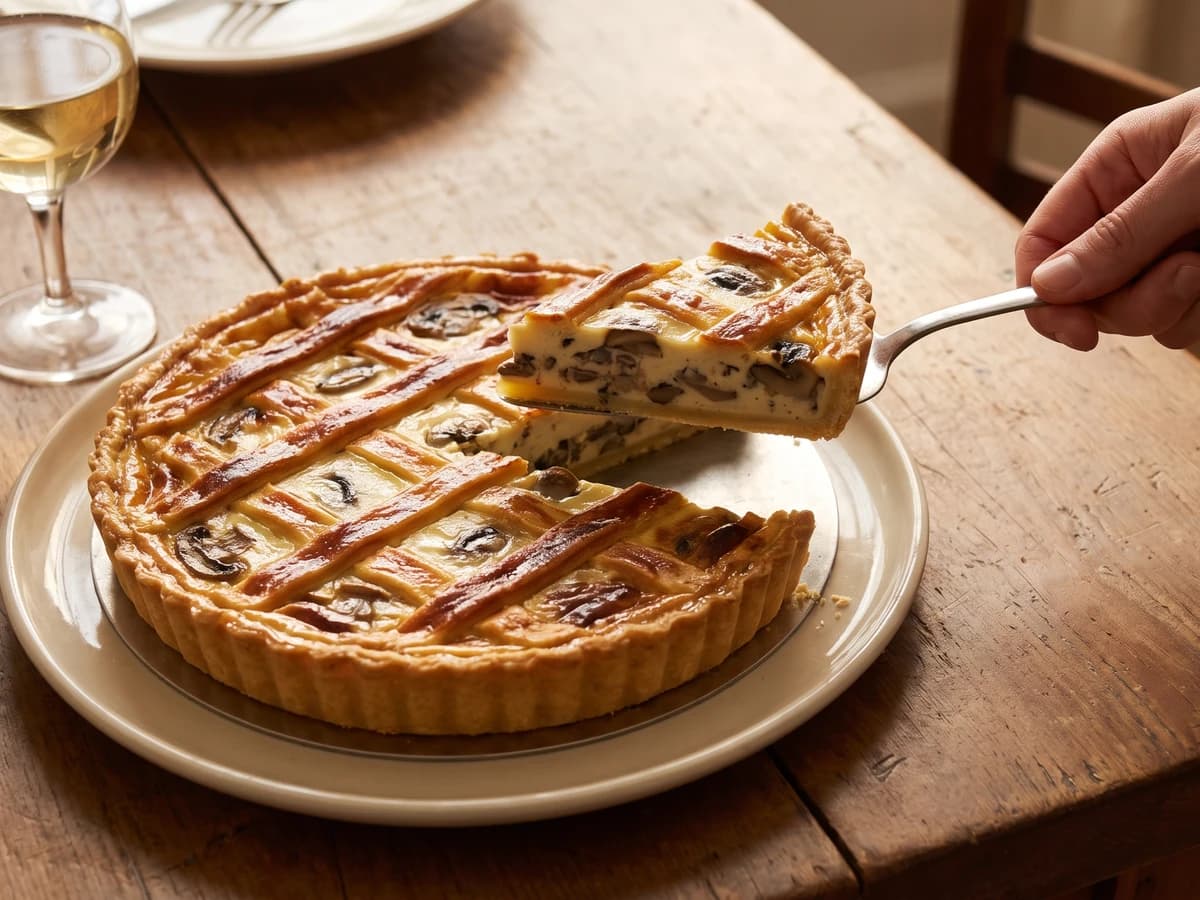
A hot mushroom flan under a butter-gold lattice, with cream reduced close around barely opened caps and a crisp short-paste base protected by one discipline: cool the filling completely.