
Chef Lesia
Borshch (борщ, red beet soup)
Beets hit slow-sweated zasmazhka and the broth goes dark ruby, sour from beet zakwas, sweet from bone and garden, thick enough for the spoon to stand up straight.
A cooking platform built around craft, culture, and the stories behind what we eat.
Created by
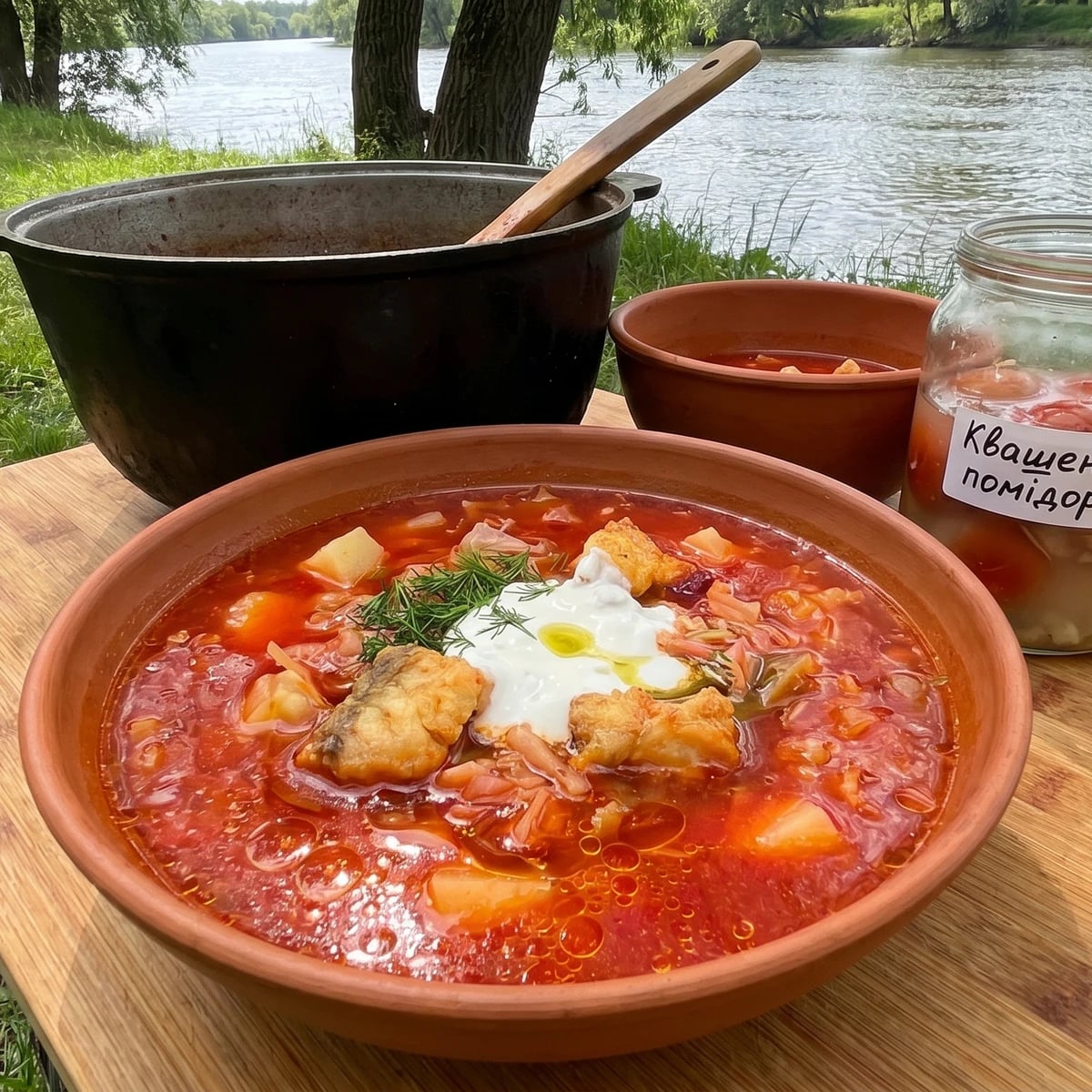
The catch goes into the pan before it ever meets the pot, so Danube fish stays whole in a tomato-red broth sour enough to wake the table.
The fish is fried before the soup is even soup. That is the Danube lesson: set the catch in sunflower oil first, let the edges go gold and firm, then lower it into tomato-red broth so it stays in pieces instead of sighing itself apart. The pot tastes of riverbank boards, golden fish skin, dill stems, and tomatoes so ripe they sour the back of your mouth before you reach for any vinegar.
Bessarabia cooks by border and season, not by one tidy rule. In August the tomatoes do the souring; in January we open a jar of kvasheni pomidory and use the mors, the fermented tomato liquor, because that is not a substitute, that's the tradition doing its winter work. The beet is small here, more witness than boss; the color belongs mostly to tomato.
The one thing to respect is the order. The zasmazhka, onion and carrot sweated slowly until the oil goes orange, goes in near the end so its sweetness sits brightly on the broth instead of disappearing into the stock. Aunt Nadia would have written "until it sounds right" beside the final simmer, and she would have meant the smallest tremble around the fish, not a boil. Make a big pot. There is no tradition of a small one.
Bessarabia, especially the Budjak steppe and the Danube mouths of today's Odesa region, has long been a contact kitchen: Ukrainian, Moldovan, Bulgarian, Gagauz, Jewish, and Lipovan communities traded fish, peppers, tomatoes, and souring habits through the same markets. Lipovan Old Believer communities settled around Vylkove and the Danube delta from the eighteenth century, and their fish soups helped shape this borshch, where freshwater catch is often fried before simmering and the sour note comes from summer tomatoes or fermented tomato mors. It is a southern Ukrainian answer to the canteen idea that borshch must be one beet-and-meat formula.
Quantity
1.1 kg
skin on if possible
Quantity
500g
gills removed, for stock
Quantity
2 litres
use instead of fish bones and water
Quantity
2.4 litres
Quantity
2 medium
1 halved and 1 finely diced
Quantity
2 medium
1 chunked and 1 coarsely grated
Quantity
2
Quantity
1 teaspoon
Quantity
1 large bunch
stems reserved and leaves chopped
Quantity
1 small
peeled and coarsely grated
Quantity
400g
peeled and cut into bite-size chunks
Quantity
250g
finely shredded
Quantity
1
thinly sliced
Quantity
800g
grated, skins discarded
Quantity
150-250ml
to taste
Quantity
6 tablespoons
preferably unrefined green sunflower oil for the zasmazhka and finishing
Quantity
2 tablespoons
for dusting the fish
Quantity
3
crushed
Quantity
to taste
Quantity
to serve
Quantity
to finish
| Ingredient | Quantity |
|---|---|
| firm freshwater fish steaks or thick filletsskin on if possible | 1.1 kg |
| fish heads, frames, or fins (optional)gills removed, for stock | 500g |
| light fish stock (optional)use instead of fish bones and water | 2 litres |
| cold water (optional) | 2.4 litres |
| onions1 halved and 1 finely diced | 2 medium |
| carrots1 chunked and 1 coarsely grated | 2 medium |
| bay leaves | 2 |
| black peppercorns | 1 teaspoon |
| dillstems reserved and leaves chopped | 1 large bunch |
| beetpeeled and coarsely grated | 1 small |
| potatoespeeled and cut into bite-size chunks | 400g |
| white cabbagefinely shredded | 250g |
| red sweet pepperthinly sliced | 1 |
| ripe summer tomatoesgrated, skins discarded | 800g |
| fermented tomato mors or brine from fermented tomatoesto taste | 150-250ml |
| sunflower oilpreferably unrefined green sunflower oil for the zasmazhka and finishing | 6 tablespoons |
| plain flour or fine cornmeal (optional)for dusting the fish | 2 tablespoons |
| garlic clovescrushed | 3 |
| sea salt and black pepper | to taste |
| smetana (sour cream) (optional) | to serve |
| extra dill and unrefined sunflower oil (optional) | to finish |
Cut the fish into pieces large enough that each serving gets one. Salt both sides and leave them on a plate while you start the broth; the salt firms the flesh and seasons the bone. If you have heads or frames, remove the gills because they make broth bitter.
Put the fish heads or frames in a big pot with the cold water, halved onion, chunked carrot, bay leaves, peppercorns, and dill stems. Bring it up slowly and skim the foam as it gathers. Keep it at the smallest tremble, not a hard boil, until the broth smells clean, sweet, and fish-rich, then strain it. If you're using bought stock, warm it with the same aromatics and dill stems so it tastes like it came from your kitchen.
Pat the salted fish pieces dry. Dust them lightly with flour or cornmeal if you want extra hold, shaking off anything loose. Heat three tablespoons of sunflower oil in a wide pan until it shines, then fry the fish in one layer until the edges are golden and the surface is set. The middle should still be underdone. Lift the pieces out gently and keep them nearby.
Return the strained broth to the pot. Add the potatoes and grated beet first. When the potatoes begin to soften at the edges, add the cabbage and sweet pepper. Grate in the tomatoes once the potatoes are nearly tender, then let the pot go gently until the tomato smell changes from raw leaf to round summer sweetness.
Wipe the frying pan if the flour has darkened, then add two tablespoons of sunflower oil, the diced onion, and a pinch of salt. Cook low and slow until the onion turns translucent. Add the grated carrot and keep it moving until the carrot softens and the oil goes orange. This is zasmazhka, the slow-sweated flavour base.
Stir the zasmazhka into the soup, then add the crushed garlic and fermented tomato mors a ladle at a time. Taste as you go. You want bright sourness behind the tomato, not a sharp slap. Salt carefully, because the mors brings its own salt.
Slide the fried fish pieces into the pot and spoon broth over them instead of stirring hard. Keep the surface barely moving until the fish turns opaque and lifts from the bone or flakes under a fork. Turn off the heat, add most of the chopped dill and black pepper, and let the pot sit covered so the fish finishes gently. This is tomato-led and looser than a winter meat borshch, but every spoonful should catch fish, potato, cabbage, and dill.
Ladle carefully so each bowl gets a whole piece of fish. Finish with more dill, a thin thread of green sunflower oil, and smetana if you like the cool cream against the sour tomato broth. Serve with black bread or pampushky, and put the pot back on the table because someone will ask for more.
1 serving (about 470g)
Culinary guides, cultural storytelling, and the editorial depth that makes cooking meaningful.
Discover Culinary Explorer
Chef Lesia
Beets hit slow-sweated zasmazhka and the broth goes dark ruby, sour from beet zakwas, sweet from bone and garden, thick enough for the spoon to stand up straight.

Chef Lesia
A northern summer borshch should taste like the garden leaned over the pot: beet-crimson, bean-thick, sharpened by tart apple, with courgette softening into the broth.

Chef Lesia
This western borshch is not thick. It is ruby-clear, sour from beet kvass, sweet from slow roots, and clean enough that people in Halychyna drink it as much as eat it.

Chef Lesia
Dried porcini stain the pot almost black before the beets turn it crimson. This is fasting borshch with no apology in it: deep, sour, dill-green, and rich without a bone.