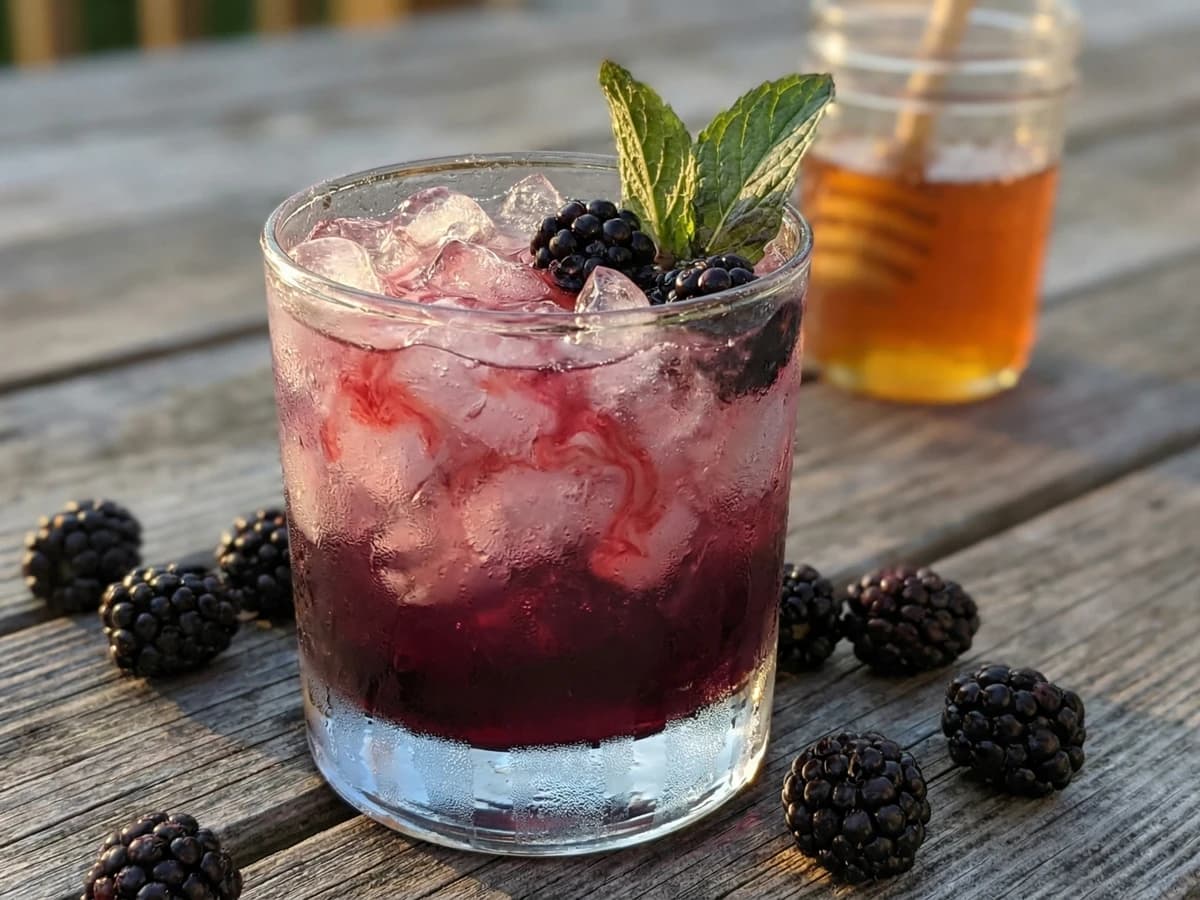
A stunning ruby-red tea that marries tart hibiscus flowers with bold black tea and Louisiana cane sugar, kissed with cinnamon and served ice-cold on sweltering bayou afternoons the way my grandmother Evangeline made it.
Beverages
Cajun
Potluck
Make Ahead
Outdoor Dining
15 min
Active Time
10 min cook•25 min total
Yield1 gallon (8-10 servings)
My grandmother Evangeline learned this recipe from a woman at the Opelousas farmers market back when I was barely tall enough to see over her kitchen counter. She called it her secret weapon for Louisiana summers, when the air hangs so thick and hot you feel like you're breathing through a wet towel. One sip of this tea and the world gets a little cooler, a little kinder.
The hibiscus flower does the heavy lifting here. That dried flower, the same one they use for agua fresca in Mexico, steeps into a liquid the color of garnets, tart and bright and full of life. Grandmother always said it tasted like someone put a flower garden and a lemon into a glass together. She wasn't wrong. The black tea gives it body, the cinnamon adds warmth without heat, and the cane sugar smooths everything into something you can drink glass after glass.
At Lagniappe, we keep a pitcher of this in the kitchen for the staff on hot service nights. The servers fight over it. I've seen grown men nearly come to blows over the last glass. That's how you know a recipe is worth keeping. Four generations of Boudreaux cooks have passed this one down, and now I'm passing it to you.
The technique, the tradition, and the story behind every dish.
Pour 4 cups of water into a large saucepan and bring to a rolling boil. Remove from heat and add the dried hibiscus flowers, cinnamon stick, cloves, and orange peel. Cover and let steep for 10 minutes. The liquid will turn a magnificent ruby red, deep as a Louisiana sunset. That color is telling you something good is happening.
Find dried hibiscus flowers at Latin grocery stores, labeled flor de jamaica, or in the bulk herb section. They keep for a year in a cool, dark place.
2
Add the tea
After 10 minutes, add your tea bags to the hibiscus mixture. Let them steep together for exactly 5 minutes, no longer. Over-steeped tea turns bitter and will fight the hibiscus instead of dancing with it. You want partners here, not rivals.
3
Strain and sweeten
Remove the tea bags, squeezing gently to extract their essence. Strain the liquid through a fine-mesh strainer into a gallon pitcher, pressing on the hibiscus flowers to release every drop of that gorgeous color. Discard the solids. While the concentrate is still warm, stir in the cane sugar until completely dissolved. Taste it now. It should be tart, floral, and just sweet enough to make you want another sip.
Louisiana cane sugar has a subtle molasses note that white sugar lacks. If you cannot find it, light brown sugar works beautifully.
4
Dilute and chill
Add the remaining 4 cups of cold water to the pitcher and stir well. This is your moment to taste and adjust. More sugar if you prefer it sweeter, or leave it tart if that suits your palate. Refrigerate for at least 2 hours until thoroughly chilled. The flavors will meld and mellow as it rests.
5
Serve with generosity
Fill tall glasses with ice, pour the tea until it nearly overflows, and garnish with a sprig of fresh mint and an orange slice. Watch the light catch that ruby color. This is hospitality in a glass, the kind my grandmother served on her porch to anyone who stopped by. At Lagniappe, we make this by the barrel for summer crawfish boils.
Chef Tips
•For a crowd, double or triple this recipe without hesitation. It scales perfectly and tastes even better the second day when the flavors have married.
•Add a splash of bourbon to individual glasses for an adult version that will have your guests asking what your secret is. That's what we do at Lagniappe for our boozy brunch service.
•If you prefer less sweetness, start with half the sugar and add more to taste. The hibiscus is naturally tart, so some sweetness helps balance, but your palate is your guide.
•This tea stains everything it touches. Use a glass pitcher and be mindful of white countertops. The color is beautiful in a glass but less beautiful on your grandmother's tablecloth.
•Freeze some of the finished tea in ice cube trays. Use those cubes instead of regular ice so your tea stays strong as it chills.
Advance Preparation
•This tea improves after resting overnight in the refrigerator. The flavors meld and the tartness softens beautifully.
•Keeps refrigerated for up to one week. The color may deepen slightly but the flavor remains excellent.
•For large gatherings, make the concentrate (steps 1-3) up to three days ahead. Add cold water and chill on the day of serving.
Frequently Asked Questions
Nutrition Information
1 serving (about 420g)
Calories
85 calories
Total Fat
0 g
Saturated Fat
0 g
Trans Fat
0 g
Unsaturated Fat
0 g
Cholesterol
0 mg
Sodium
5 mg
Total Carbohydrates
23 g
Dietary Fiber
0 g
Sugars
22 g
Protein
0 g
Where cooking meets culture.
Culinary guides, cultural storytelling, and the editorial depth that makes cooking meaningful.