Chef Zohra
Bocadillo Marocain de Tanger
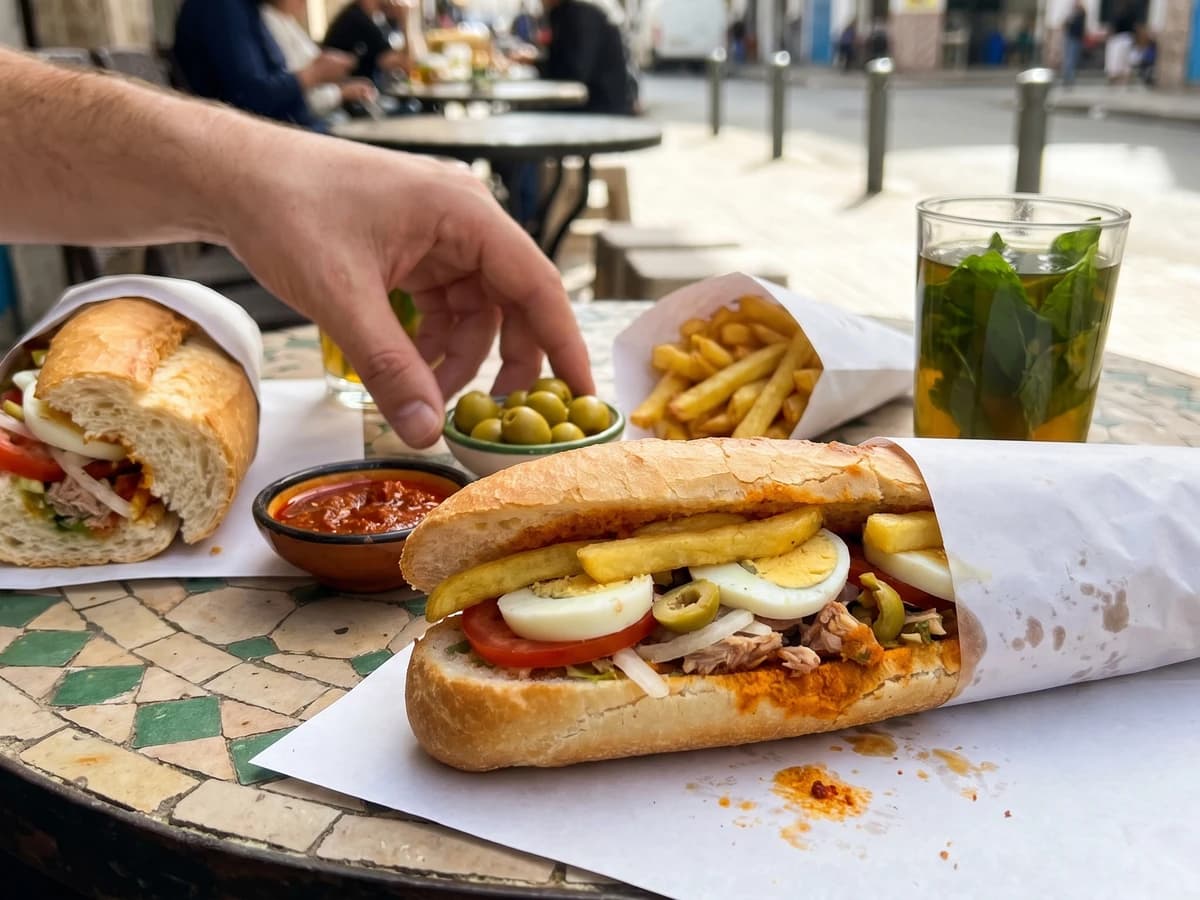
The northern street sandwich: crisp bread opened wide, harissa rubbed into the crumb, tuna or kefta, egg, olives, and hot fries pushed right in so supper can travel in one hand.
A cooking platform built around craft, culture, and the stories behind what we eat.
Created by
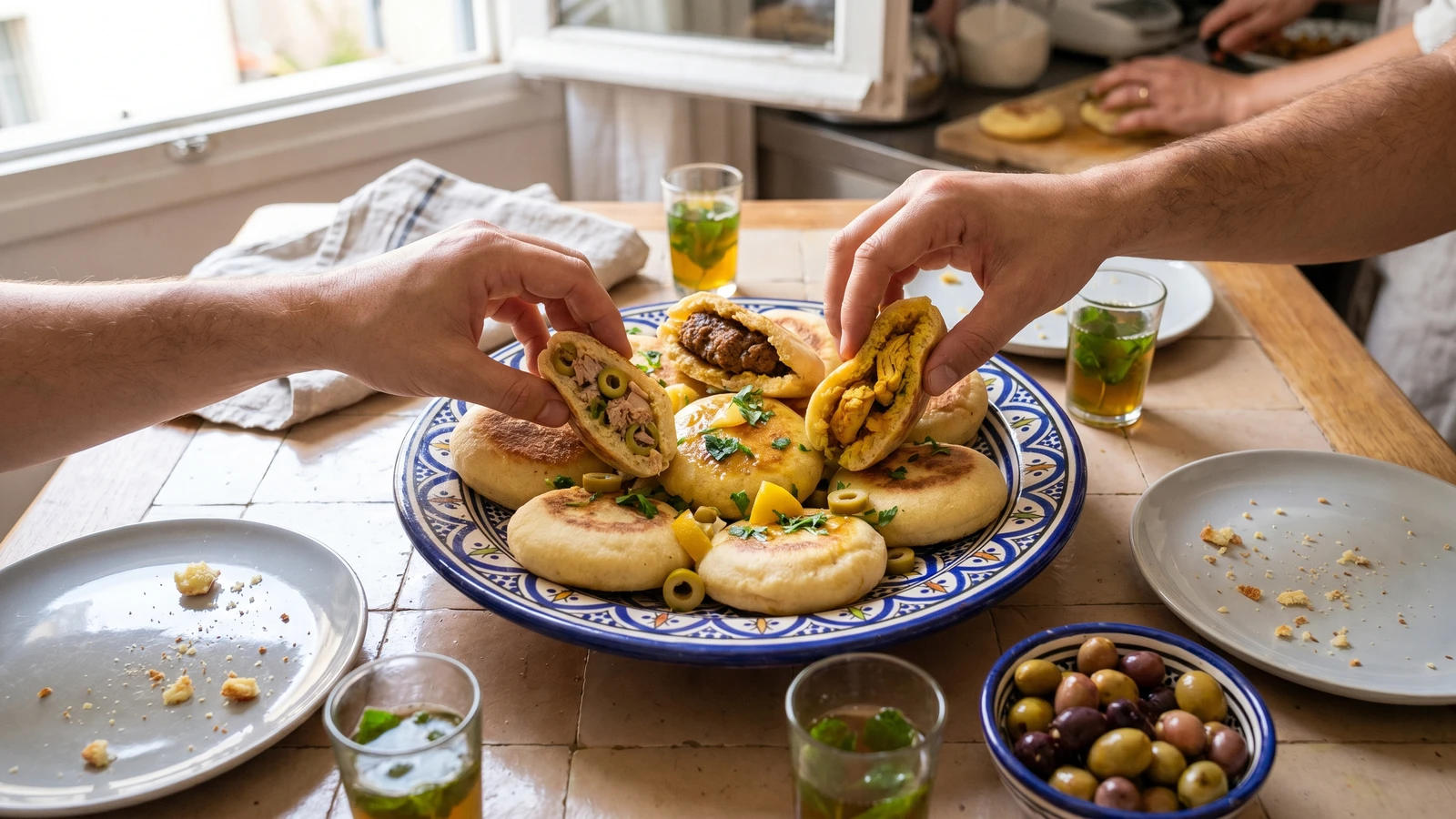
Small semolina breads cooked in a pan until they puff, then split and filled generously. Batbout farci is the sandwich you make for picnics, school bags, and one more guest.
Everything here turns on the puff. Batbout isn't baked in an oven like khobz; it cooks on a hot pan, and if the dough is rested well and rolled evenly, it swells into a pocket you can open with your fingers. That pocket is the gift. Tear it too soon and it collapses. Give it time, and it becomes a little door for tuna, kefta, chicken, herbs, olives, and whatever the house has ready.
This is street food, yes, but also kitchen food. Mothers make a tray of small batbout for school lunches, for a picnic, for Ramadan evenings when something soft and filled disappears faster than anyone admits. The dough asks for patience, not ceremony: knead until it feels alive, let it rise until light, and cook it over steady heat so the outside freckles gold while the inside opens.
For the filling, don't pretend there is only one truth. Il n'y a pas une cuisine marocaine, mais des cuisines marocaines, not one Moroccan cuisine, but many. Tuna with preserved lemon and olives belongs easily to the modern Moroccan pantry; kefta brings cumin, paprika, parsley, and coriander; chicken takes saffron if you have real threads. Fill them warm or room temperature, wrap them for later, and make more than you think. A table is a door you leave open.
Batbout belongs to the wider Maghrebi family of pan-cooked semolina breads, related to matlouh in Algeria and to griddle breads found across Amazigh and urban Moroccan households. Its stuffed form became especially visible in late 20th-century Moroccan home kitchens and street stalls, where small breads could be filled ahead for travel, school, work, and Ramadan tables. Exact dating is hard to prove because this is household bread, carried by hands more than books, but the semolina-and-griddle technique is older than the modern sandwich form.
Quantity
300g
plus more for dusting
Quantity
250g
Quantity
2 tsp
Quantity
1 tsp
Quantity
1 1/2 tsp
Quantity
2 tbsp
Quantity
300ml
plus a little more if needed
Quantity
2 x 160g tins
drained lightly
Quantity
2 tbsp
Quantity
1 small
finely chopped
Quantity
1 small
rinsed and finely chopped
Quantity
80g
pitted and chopped
Quantity
2 tbsp
chopped
Quantity
2 tbsp
chopped
Quantity
1 tsp
Quantity
1/2 tsp
Quantity
1 tbsp
Quantity
1 tsp
Quantity
to taste
Quantity
300g
cooked with cumin, paprika, parsley, and coriander
Quantity
300g
cooked with bloomed saffron threads, onion, and olives
| Ingredient | Quantity |
|---|---|
| fine semolinaplus more for dusting | 300g |
| all-purpose flour | 250g |
| instant yeast | 2 tsp |
| sugar | 1 tsp |
| fine sea salt | 1 1/2 tsp |
| olive oil | 2 tbsp |
| warm waterplus a little more if needed | 300ml |
| tuna in olive oildrained lightly | 2 x 160g tins |
| olive oil from the tuna tin or fresh olive oil | 2 tbsp |
| red onionfinely chopped | 1 small |
| preserved lemon peelrinsed and finely chopped | 1 small |
| green olivespitted and chopped | 80g |
| fresh parsleychopped | 2 tbsp |
| fresh corianderchopped | 2 tbsp |
| ground cumin | 1 tsp |
| sweet paprika | 1/2 tsp |
| lemon juice (optional) | 1 tbsp |
| harissa or Moroccan hot pepper paste (optional) | 1 tsp |
| salt and black pepper | to taste |
| kefta filling (optional)cooked with cumin, paprika, parsley, and coriander | 300g |
| shredded chicken filling (optional)cooked with bloomed saffron threads, onion, and olives | 300g |
Mix the semolina, flour, yeast, sugar, and salt in a wide bowl. Add the olive oil and most of the warm water, then gather it with your hand until you have a soft dough, not sticky soup and not a hard lump. Knead 8 to 10 minutes, adding water by the spoon if it feels tight. The dough should become smooth and spring back under your palm.
Rub the dough with a little oil, cover it, and let it rise until light and swollen, about 1 hour in a warm kitchen. This rest matters because the pocket comes from relaxed dough meeting steady heat. Rush it and the batbout stays dense.
Turn the dough onto a semolina-dusted surface and divide it into 12 pieces. Roll each piece into a round about 10cm wide and 5mm thick. Keep the thickness even from center to edge; a thin spot tears before the pocket forms. Cover the rounds with a cloth and rest them 20 minutes.
Heat a heavy skillet or griddle over medium heat. Lay on a few rounds without crowding and cook until pale gold spots appear underneath, then turn. Keep turning every minute or so until each batbout puffs and freckles on both sides, 4 to 6 minutes total. Press only at the edges if a pocket needs encouragement. Don't squash the middle, that's where the filling will live.
Flake the tuna into a bowl with the olive oil, red onion, preserved lemon, olives, parsley, coriander, cumin, paprika, and harissa if you're using it. Taste before salting, because preserved lemon and olives already speak loudly. Add lemon juice only if the filling needs brightness.
For kefta, cook the seasoned minced meat until browned and juicy, then let it cool until warm, not wet. For chicken, fold shredded cooked chicken with softened onion, olives, and saffron threads bloomed in warm water. Use real saffron threads, not yellow powder. La balance est dans les yeux, the scale is in the eyes, but the filling should be moist enough to hold together and dry enough not to soak the bread.
When the batbout are cool enough to handle, cut each one halfway open with a small knife, making a pocket without splitting it in two. Spoon in the filling generously, but don't pack it so hard the bread tears. Serve at room temperature or lightly warm, stacked on a platter so people can reach for the one they want.
1 serving (about 100g)
Culinary guides, cultural storytelling, and the editorial depth that makes cooking meaningful.
Discover Culinary ExplorerChef Zohra
The northern street sandwich: crisp bread opened wide, harissa rubbed into the crumb, tuna or kefta, egg, olives, and hot fries pushed right in so supper can travel in one hand.

Chef Zohra
A northern street sandwich with a Spanish name and a Moroccan hand: harissa, tuna or kefta, sliced egg, olives, salad, and hot fries pressed into one generous baguette.

Chef Zohra
From Rissani comes a buried bread for guests: thin dough sealed around spiced meat, onions, herbs, and almonds, baked hot so the crust browns while the filling stays generous.

Chef Zohra
A Tafilalet bread sealed around spiced meat, onions, almonds, and herbs, baked until the crust turns gold and the filling perfumes the whole table.