
Chef Klaus
Allgäuer Krautkrapfen
The Allgäu pan dish that makes a meal from noodle dough, winter kraut, onion, and fat: brown the cut sides first, then cook gently so the rolls hold.
A cooking platform built around craft, culture, and the stories behind what we eat.
Created by
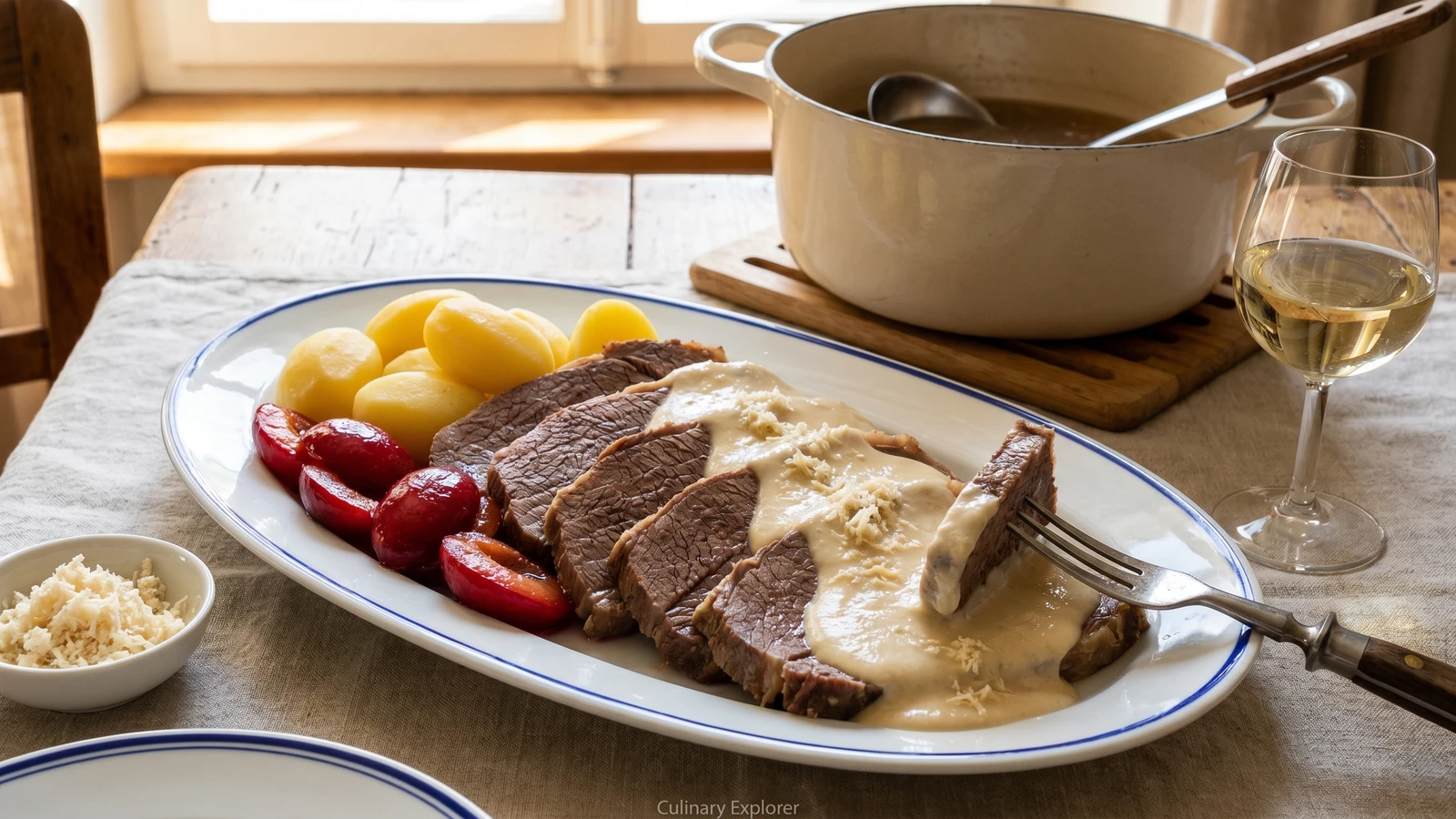
Baden's festive boiled beef works only at a quiet tremble: brisket softens, broth stays clear, and that same broth becomes the pale horseradish sauce with sweet-sour plums at the side.
Badisches Ochsenfleisch mit Meerrettichsoße is Upper Rhine feast food: Baden wedding, Kirchweih, and Sunday table, especially from autumn into winter when the root cellar is doing its work. Ox brisket gives gelatin, fat, and a clear broth if you treat it quietly. I put sweet-sour Zwetschgen beside it because the larder belongs on the plate, not in a story.
Every region takes a different road to boiled beef. Baden softens fresh Meerrettich, horseradish, in a pale stock sauce and brings fruit to the table; Franconia and Bavaria call the root Kren and serve it sharper, often with apple; Vienna turns Tafelspitz into its own full service with spinach and chive sauce. Im Norden anders, im Süden anders. This is Baden, so the broth in the pot becomes the sauce. Weggeworfen wird nichts.
The whole dish lives on the simmer. The pot must only tremble, never roll, because a hard boil tightens brisket before the collagen has melted and it clouds the stock you need for the sauce. Skim at the beginning, then leave it alone. Das braucht seine Zeit.
At the end I grate the horseradish fresh and stir most of it into the sauce off a hard boil. Heat drives off the sharp mustard oils, and prepared horseradish from the glass arrives tired and vinegary before you start. Nicht aus dem Glas. Slice the meat across the grain, moisten it with its own broth, and put the plums next to the pale sauce.
After the Grand Duchy of Baden was formed in 1806 on the Upper Rhine, its cooking sat between Alsatian sauce habits and Swabian-Alemannic Siedfleisch, boiled meat served from the soup pot. By the nineteenth century, Baden inn and wedding meals used that pot twice, first as clear broth and then as sliced beef with Meerrettichsoße, a thrifty sequence for an expensive animal. Horseradish cultivation in the Rhine plain and the Ortenau, especially around Urloffen and Appenweier, explains the local sauce; farther east, Franconian, Bavarian, and Austrian cooks often call the root Kren and serve it hotter or grated with apple.
Quantity
1.8kg
in one piece
Quantity
1 marrow bone or 500g
Quantity
3 litres
or enough to cover
Quantity
1 large
halved, cut sides browned in a dry pan
Quantity
2
roughly chopped
Quantity
1
washed and cut into short lengths
Quantity
250g
peeled and chopped
Quantity
1
chopped
Quantity
2
Quantity
1 teaspoon
Quantity
6
lightly crushed
Quantity
2
Quantity
1 small bunch or 1 sprig
Quantity
1 tablespoon, plus more to finish
Quantity
300g
Quantity
250ml
Quantity
75ml
Quantity
2 tablespoons
Quantity
1
Quantity
2
Quantity
1 strip
Quantity
1kg
peeled
Quantity
40g
Quantity
35g
Quantity
600ml
Quantity
150ml
Quantity
80g, plus extra
peeled and finely grated just before use
Quantity
1 teaspoon
Quantity
1 teaspoon
Quantity
to taste
| Ingredient | Quantity |
|---|---|
| ox brisket or well-marbled beef brisketin one piece | 1.8kg |
| beef marrow bone or beef soup bones | 1 marrow bone or 500g |
| cold wateror enough to cover | 3 litres |
| onionhalved, cut sides browned in a dry pan | 1 large |
| carrotsroughly chopped | 2 |
| leekwashed and cut into short lengths | 1 |
| celeriacpeeled and chopped | 250g |
| parsley root (optional)chopped | 1 |
| bay leaves | 2 |
| black peppercorns | 1 teaspoon |
| juniper berrieslightly crushed | 6 |
| whole cloves for the broth | 2 |
| parsley stems or lovage | 1 small bunch or 1 sprig |
| fine salt | 1 tablespoon, plus more to finish |
| dried pitted Zwetschgen or Backpflaumen | 300g |
| dry Baden red wine or beef broth | 250ml |
| red wine vinegar | 75ml |
| sugar for the plums | 2 tablespoons |
| cinnamon stick | 1 |
| whole cloves for the plums | 2 |
| lemon peel | 1 strip |
| waxy potatoespeeled | 1kg |
| butter | 40g |
| plain flour | 35g |
| hot strained beef broth from the pot | 600ml |
| cream | 150ml |
| fresh horseradish rootpeeled and finely grated just before use | 80g, plus extra |
| lemon juice or mild white wine vinegar | 1 teaspoon |
| sugar for the sauce | 1 teaspoon |
| white pepper | to taste |
Put the dried plums in a small pan with the wine or broth, vinegar, sugar, cinnamon, cloves, lemon peel, and a pinch of salt. Bring to a quiet simmer and cook 15 to 20 minutes, until the plums swell and the liquid turns syrupy but still runs from a spoon; stop before jam, because the beef needs fruit with bite, not dessert. Let them stand in their syrup while the meat cooks so the sweet-sour goes all the way through.
Put the brisket and bone in a heavy pot and cover with cold water by about 3cm. Bring it slowly toward a simmer over medium heat. The slow climb pulls gelatin and flavour from the bone and meat into the broth; rush it to a boil and the grey foam breaks apart before you can skim it. Skim until the surface is clean.
Add the browned onion, carrots, leek, celeriac, parsley root if using, bay, peppercorns, juniper, cloves, parsley stems or lovage, and salt. Lower the heat until the liquid only trembles, about 85 to 90C, and cook partly covered for 2 1/2 to 3 hours, topping up with hot water if the meat shows above the surface. Runter mit der Temperatur: a rolling boil tightens brisket and muddies the broth, while a quiet simmer melts connective tissue and leaves stock clear enough for sauce.
About 30 minutes before the beef is done, put the peeled potatoes in cold salted water and bring them up gently. Starting cold lets the potatoes cook through evenly, so the outside doesn't split before the centre is tender. Drain them when a knife slips in cleanly, then keep them covered.
Lift the meat into a shallow dish and ladle a little broth over it, then cover loosely. Resting in its own liquid keeps the slices moist while you make the sauce; on a dry board, boiled beef cools and tightens. Strain the broth through a fine sieve, skim off excess fat, keep 600ml for the sauce, and save the rest for soup. Weggeworfen wird nichts.
Melt the butter in a saucepan, stir in the flour, and cook it for 2 minutes without browning. This pale roux takes away the raw flour taste while keeping the sauce light. Whisk in the hot strained broth a little at a time, because hot liquid loosens the roux without lumps, then simmer 8 minutes and stir in the cream.
Take the sauce off a hard boil and stir in the freshly grated horseradish, lemon juice or vinegar, sugar, salt, and white pepper. Don't boil after the horseradish goes in; heat drives off the sharp mustard oils and leaves the root flat and cabbagey. Taste in order: salt first, then acid, then extra horseradish. Würzen, Fett, Salz zum Schluss.
Slice the brisket across the grain into 1cm slices. Cut with the grain and the fibres eat long, even when the meat is tender. Lay the slices on a warm platter, spoon the horseradish sauce over, set the potatoes and sweet-sour plums beside them, and pass extra grated horseradish at the table. The broth made the sauce, the fruit cuts it, and the beef tastes of itself. Schön ist, was schmeckt.
1 serving (about 520g)
Culinary guides, cultural storytelling, and the editorial depth that makes cooking meaningful.
Discover Culinary ExplorerChef Klaus
The Allgäu pan dish that makes a meal from noodle dough, winter kraut, onion, and fat: brown the cut sides first, then cook gently so the rolls hold.

Chef Klaus
Swabian egg pasta turned toward the apple cellar: fresh Spätzle tossed with browned butter, tart apples, cinnamon, and enough restraint to stay supper, not cake.

Chef Klaus
Hesse's pork goulash belongs to Apfelwein country: shoulder, onions, and tart cider cooked low until the cheap cut turns soft and the sauce lands sweet-sour, not sour-sweet.

Chef Klaus
The old sweet supper that saves yesterday's loaf: stale bread drinks eggy milk, the pan stays moderate, and butter browns the outside only after the centre has set.