
Chef Dimitra
Athenian Kalamaki Hoirino se Pita (Καλαμάκι Χοιρινό σε Πίτα)
Athens calls it kalamaki: pork cubes charred on skewers, slid into warm pita with tomato, onion, and tzatziki. The meat needs a little fat, or the grill punishes it.
A cooking platform built around craft, culture, and the stories behind what we eat.
Created by
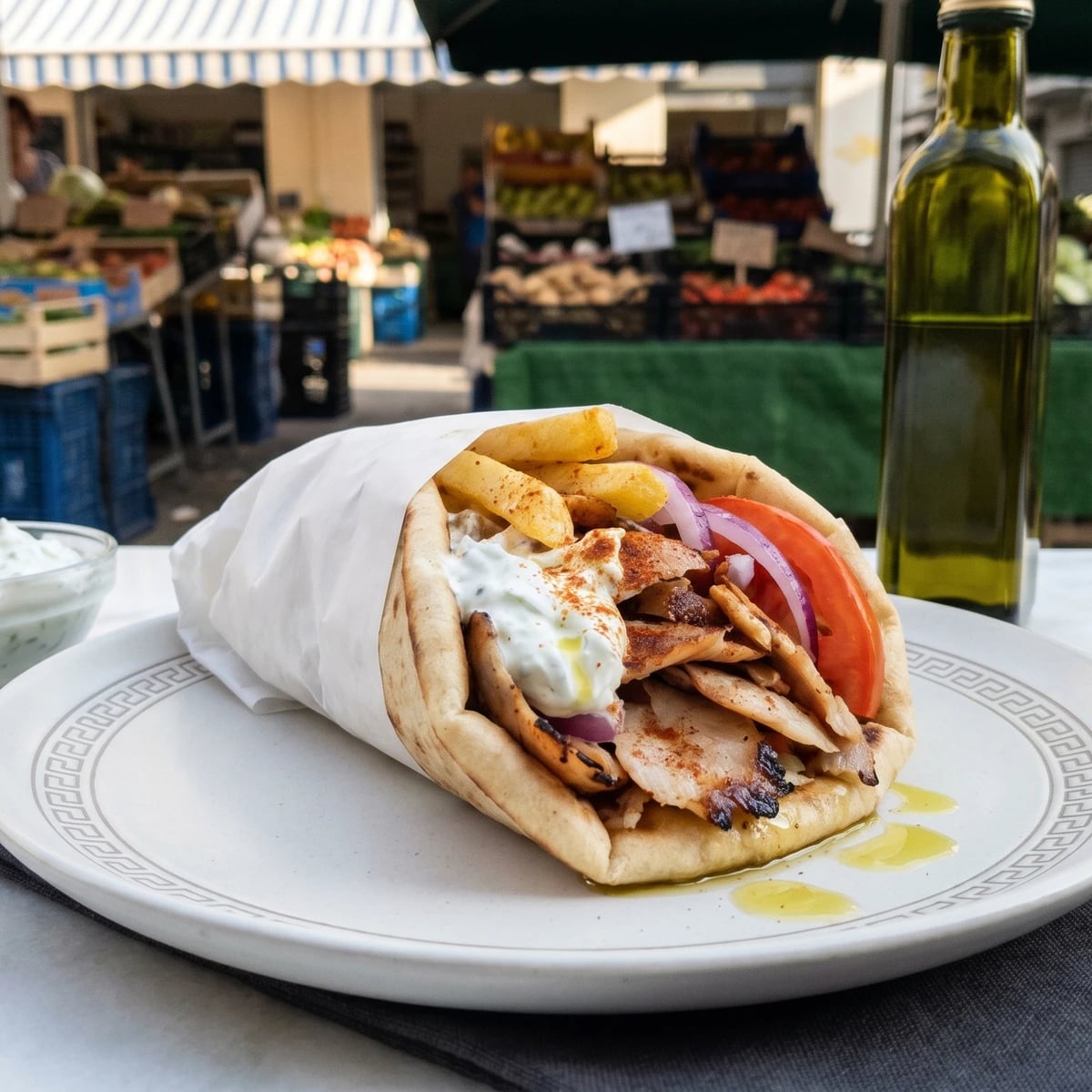
Athens psistaria chicken gyros belongs in a soft, warm pita: thigh meat charred at the edges, cold tzatziki, ripe tomato, sharp onion, and just enough potato if you like it.
Gyros kotopoulo se pita is Athens street-grill food: slices of chicken from hard heat, tucked into warm, soft pita with tzatziki, tomato, onion, and, when the shop is generous, a few thin fries. It is the psistaria in one hand, quick, salty, bright with yogurt and tomato.
The method that decides it is the meat. Use thigh, never breast, and cook it in broad pieces before you shave it thin. Breast dries before it takes color; thigh can stand the heat and keep its juices, so the edges char while the middle stays tender. That is why the bite feels like gyros and not grilled chicken in bread.
At home I don't pretend the oven is a rotating spit. I use the grill pan or broiler for the same hard contact, then slice the chicken as thin as the knife allows and let the cut edges catch once more in the pan. Warm the pita until it bends without cracking, fill it, wrap it tight in paper, and eat it while the tzatziki is still cold against the meat.
In Thessaloniki we argue over sauce the way families argue over football, but the Athens wrap with tzatziki is settled in its habits. The region is the dish's surname, even when the region is a noisy city corner.
Gyros belongs to the Greek city grill shop, not the village pot: the vertical rotisserie is tied to the meat-roasting traditions that Asia Minor refugees brought into Athens and Thessaloniki after 1922, then to the postwar psistaria. The word gyros means "turning" in Greek and became the settled shop name in the twentieth century for meat shaved from a rotating spit into pita. Chicken gyros is younger than pork gyros, common in late twentieth-century Athens, but the serving pattern stayed the same: warm pita, tomato, onion, tzatziki, and often potatoes.
Quantity
800g
Quantity
45ml
for the chicken
Quantity
20ml
for warming the pites
Quantity
20ml
Quantity
15ml
Quantity
10g
Quantity
2
finely grated
Quantity
60g
finely grated
Quantity
3g
Quantity
3g
Quantity
1g
Quantity
8g
for the chicken
Quantity
1g
Quantity
300g
Quantity
150g
coarsely grated
Quantity
1 small
finely grated, for the tzatziki
Quantity
10ml
for the tzatziki
Quantity
20ml
for the tzatziki
Quantity
2g
for the tzatziki
Quantity
5g
Quantity
4
17 to 19cm
Quantity
250g
thinly sliced
Quantity
80g
thinly sliced
Quantity
300g
Quantity
2g
for finishing
| Ingredient | Quantity |
|---|---|
| boneless, skinless chicken thighs | 800g |
| extra virgin Koroneiki olive oilfor the chicken | 45ml |
| extra virgin Koroneiki olive oilfor warming the pites | 20ml |
| fresh lemon juice | 20ml |
| red wine vinegar | 15ml |
| mild mustard | 10g |
| garlic clovesfinely grated | 2 |
| yellow onionfinely grated | 60g |
| dried Greek oregano | 3g |
| sweet paprika | 3g |
| dried thyme | 1g |
| fine sea saltfor the chicken | 8g |
| freshly ground black pepper | 1g |
| full-fat strained Greek yogurt | 300g |
| cucumbercoarsely grated | 150g |
| garlic clovefinely grated, for the tzatziki | 1 small |
| red wine vinegarfor the tzatziki | 10ml |
| extra virgin Koroneiki olive oilfor the tzatziki | 20ml |
| fine sea saltfor the tzatziki | 2g |
| chopped dill (optional) | 5g |
| Greek pites, no pocket17 to 19cm | 4 |
| ripe tomatoesthinly sliced | 250g |
| red onionthinly sliced | 80g |
| thin fried potatoes (optional) | 300g |
| sweet paprika (optional)for finishing | 2g |
Put the grated cucumber in a clean towel and squeeze hard over the sink until it stops dripping. Mix the yogurt, cucumber, grated garlic, vinegar, olive oil, salt, and dill if using. Keep it cold while the chicken cooks. Wet cucumber gives you a loose sauce and a tired pita, and we don't need that trouble.
In a bowl, mix the olive oil, lemon juice, vinegar, mustard, grated garlic, grated onion, oregano, paprika, thyme, salt, and black pepper. Add the chicken thighs and coat them well, opening each piece flat so the seasoning reaches the folds. Cover and refrigerate for 30 minutes, or up to 24 hours.
Heat a heavy cast-iron grill pan over high heat until very hot, about 5 minutes. If using the oven broiler, set the rack about 10cm from the heat and heat a heavy tray or griddle under it. Gyros needs hard heat, not a shy pan.
Lift the thighs from the marinade, letting the excess drip back into the bowl. Lay them broad and flat on the hot pan, working in batches if needed so they don't crowd. Cook 6 to 7 minutes on the first side and 5 to 7 minutes on the second, until browned hard in spots and the thickest part reaches 74C.
Rest the chicken for 5 minutes, then slice it very thinly across the grain. Return the sliced meat to the hot pan with any resting juices and toss for 1 to 2 minutes, just until some cut edges catch and gloss. Stop there. Juicy meat with charred edges is the point.
Brush the pites lightly with olive oil and warm them on the hot pan for 30 to 45 seconds per side, until flexible and spotted with color. Use Greek pites without a pocket. A pocket pita splits and sulks; it was made for a different job.
Spread each warm pita with tzatziki, then add chicken, tomato, onion, and a small handful of fried potatoes if using. Dust with a little paprika if you like the shop-counter finish. Fold the bottom up, roll the sides tight, and wrap in paper or foil so the last bite holds together.
1 serving (about 510g)
Culinary guides, cultural storytelling, and the editorial depth that makes cooking meaningful.
Discover Culinary Explorer
Chef Dimitra
Athens calls it kalamaki: pork cubes charred on skewers, slid into warm pita with tomato, onion, and tzatziki. The meat needs a little fat, or the grill punishes it.

Chef Dimitra
The pocketless pita of the Athenian souvlaki shop is soft, oiled, and griddled fast, made to bend around meat, tomato, onion, tzatziki, and fries without splitting.

Chef Dimitra
Athens grill-house skepasti is the covered pita: gyros, kasseri, tomato, onion, tzatziki, and fries pressed between two pitas until the cheese binds it together.

Chef Dimitra
Attica's weeknight pita wrap lives by timing: lemon-and-oregano chicken browned hard on the skewer, then folded with tomato, onion, and a cool spoon of tzatziki.