Chef Isabel
Abanico Ibérico a la Plancha
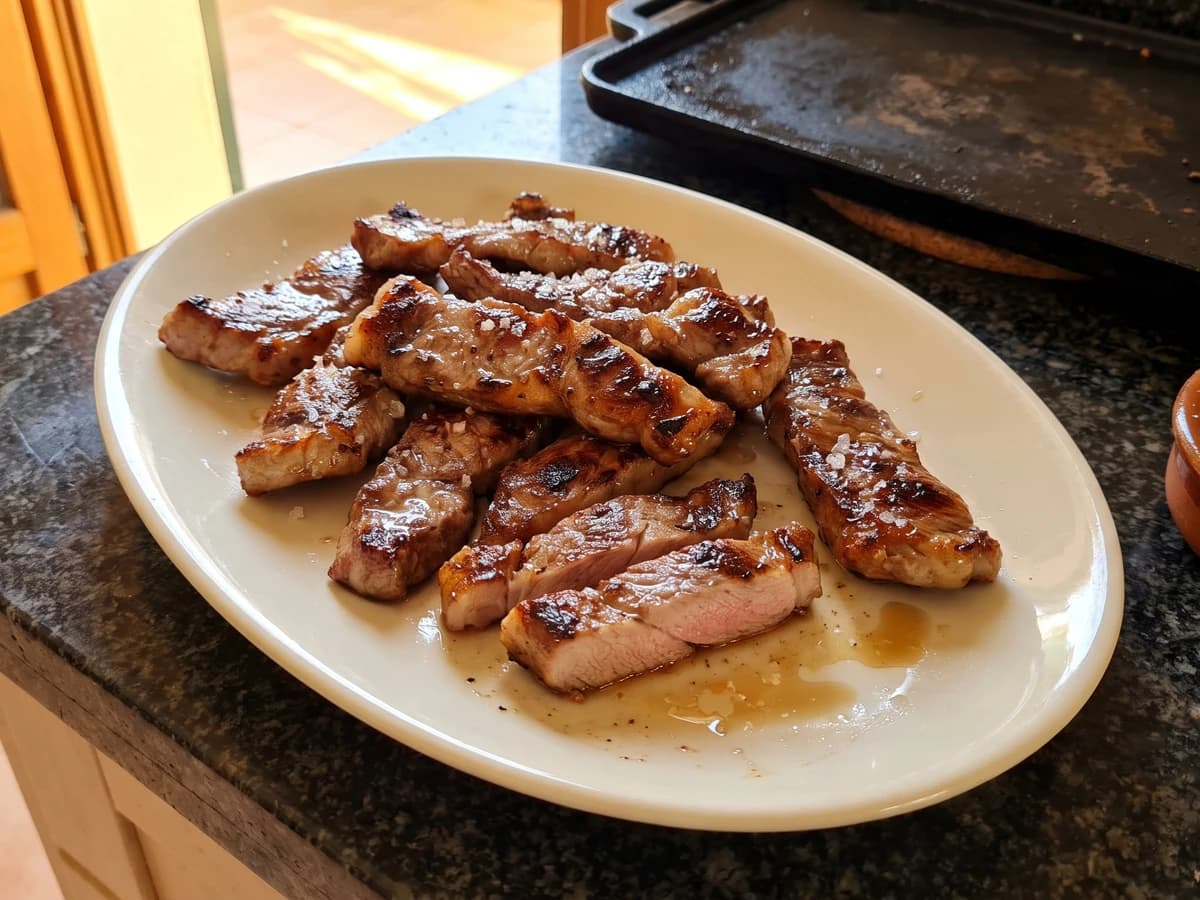
Extremadura's dehesa gives us this fan-shaped, marbled rib cut: salt it at the last moment, lay it on a fierce plancha, and count in seconds so the centre stays juicy.
A cooking platform built around craft, culture, and the stories behind what we eat.
Created by
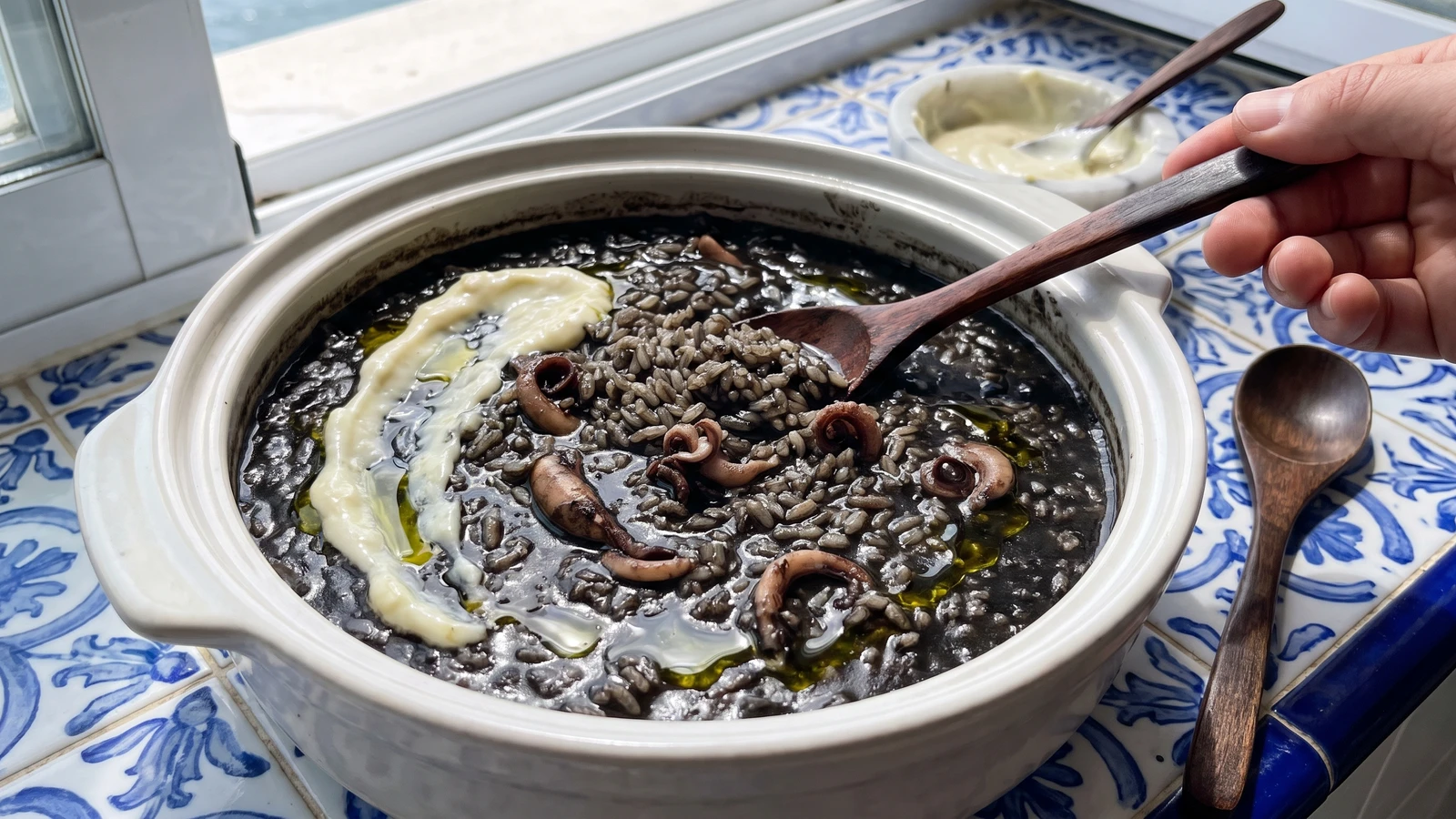
A Levantine coastal arroz, not a paella: short rice cooked loose in fish stock blackened with squid ink, chipirones, and a dark sofrito, then finished with allioli at the table.
Arroz negro caldoso con chipirones is Levantine, from the eastern coast where Valencia and Catalonia cook rice with what the boats bring in. It is black from squid ink, sweet with small squid, and loose enough to eat with a spoon. That last part matters. This is an arroz caldoso, not a paella, so if it finishes dry you have made a different rice.
The method that decides it is the sofrito, the slow onion, pepper, garlic, tomato, and ñora base. Cook it low until it turns dark, sweet, and almost sticky before the rice sees the pan. That little paste is what carries the ink and keeps the broth tasting deep instead of simply black. Then the ink goes into hot fish stock, the rice goes in once, and you hold it lively enough to cook but loose enough to spoon.
If you are far from the Levante coast, use frozen cleaned chipirones or small squid and commercial squid-ink sachets. There is no shame in that. Fresh ink is lovely, but a good sachet is steadier and clean; what changes is only the sharp sea taste, so you make up for it with honest fish stock. Bomba or Calasparra rice is best. Arroz redondo works. Arborio at a pinch, but it gives a creamier bowl and needs a gentler hand.
Serve it as soon as it rests, with allioli, garlic and oil beaten together, at the table. My Margin for this one says: loose at the table, not loose in the pot ten minutes ago. Caldoso keeps drinking. Have hot stock beside you and don't be proud about adding a ladle. Siempre sale, si lo sigues.
Arroz negro belongs to the maritime rice cooking of the eastern coast, especially Valencia, Alicante, and Catalonia, where cuttlefish and squid came into the pot with their ink rather than losing it at the cleaning board. In the rice vocabulary of those coasts, seco means dry, meloso means creamy, and caldoso means brothier, made for a spoon rather than a dry finish. The allioli served beside it comes from the same garlic-and-oil family of Catalan and Valencian sauces, a plain way to round the iodine edge of the ink.
Quantity
500g
bodies cut into 2cm rings, tentacles left whole
Quantity
320g
Quantity
1.5 liters
kept hot
Quantity
16g
about 4 sachets
Quantity
45ml
Quantity
150g
finely chopped
Quantity
100g
finely chopped
Quantity
3
finely chopped
Quantity
200g fresh or 180g canned
grated if fresh
Quantity
2 dried or 20g paste
soaked, seeded, and scraped if dried
Quantity
1/2 teaspoon
Quantity
to taste
Quantity
2
Quantity
150ml
Quantity
1 teaspoon
| Ingredient | Quantity |
|---|---|
| cleaned chipirones or small squidbodies cut into 2cm rings, tentacles left whole | 500g |
| bomba, Calasparra, or Spanish arroz redondo | 320g |
| good fish stockkept hot | 1.5 liters |
| squid inkabout 4 sachets | 16g |
| extra virgin olive oil | 45ml |
| onionfinely chopped | 150g |
| Italian green pepperfinely chopped | 100g |
| garlic cloves, for the sofritofinely chopped | 3 |
| ripe tomatoes, or canned crushed tomato out of seasongrated if fresh | 200g fresh or 180g canned |
| dried ñoras or ñora pastesoaked, seeded, and scraped if dried | 2 dried or 20g paste |
| sweet pimentón de la Vera | 1/2 teaspoon |
| fine sea salt | to taste |
| garlic cloves, for the allioli | 2 |
| mild extra virgin olive oil, for the allioli | 150ml |
| lemon juice or vinagre de Jerez, for the allioli (optional) | 1 teaspoon |
Put the 2 garlic cloves for the allioli and a good pinch of salt in a mortar and pound them to a smooth paste. Add the 150ml mild olive oil drop by drop at first, turning the pestle without stopping, then in a thin thread once it begins to thicken. Stir in the lemon juice or sherry vinegar only if you want a sharper edge. If it splits, put 1 teaspoon room-temperature water in a clean bowl and whisk the broken sauce into it by drops. Nadie nace sabiendo.
Bring the fish stock to a low simmer in a saucepan. Take out about 150ml, whisk in the squid ink until smooth, then return it to the saucepan and keep the stock hot. The ink needs to cook in the rice, not be stirred in raw at the end, or it tastes harsh and flat.
Pat the chipirones dry. Heat 30ml of the olive oil in a wide low cazuela or heavy pan over medium-high heat, add the squid with a pinch of salt, and sear for 2 to 3 minutes, just until the edges curl and the liquid they release nearly cooks away. Lift them to a plate, juices and all. Do this in two batches if the pan is crowded.
Lower the heat to medium-low and add the remaining 15ml olive oil, the onion, and the green pepper. Cook 12 to 15 minutes with a pinch of salt, stirring often, until soft and darkening. Add the chopped garlic and cook 1 minute. Add the grated tomato and the ñora flesh or paste, then cook 15 to 20 minutes more, until the mixture is thick, dark, and almost sticky, with the oil showing at the edges. Pull the pan off the heat, stir in the pimentón, and put it back on low heat for 30 seconds. Don't scorch the pimentón; bitter pimentón announces itself and nobody invited it.
Add the rice to the sofrito and stir for 1 minute, until every grain is stained and glossy. Pour in 1.25 liters of the hot black stock, keeping the remaining 250ml hot beside the stove. Stir once to spread the rice evenly, then bring it to a lively simmer.
Cook uncovered for 12 minutes, keeping the bubbles active but not violent. Stir gently once or twice around the edges, not constantly; this is arroz caldoso, not risotto. Return the chipirones and their juices to the pan and cook 4 to 6 minutes more, until the rice is tender with a small firm heart and the broth is still loose. Add the reserved hot stock by the ladle whenever the rice starts to look thick. Taste before salting hard, because stock and ink can carry plenty of salt.
Take the pan off the heat and rest it for 3 minutes, no longer. The rice should move when you draw a spoon through it; if it sits stiff, add another ladle of hot stock and shake the pan gently. Serve in shallow bowls with a spoon of allioli on each one, left pale on the black rice so each person can pull it through at the table.
1 serving (about 575g)
Culinary guides, cultural storytelling, and the editorial depth that makes cooking meaningful.
Discover Culinary ExplorerChef Isabel
Extremadura's dehesa gives us this fan-shaped, marbled rib cut: salt it at the last moment, lay it on a fierce plancha, and count in seconds so the centre stays juicy.
Chef Isabel
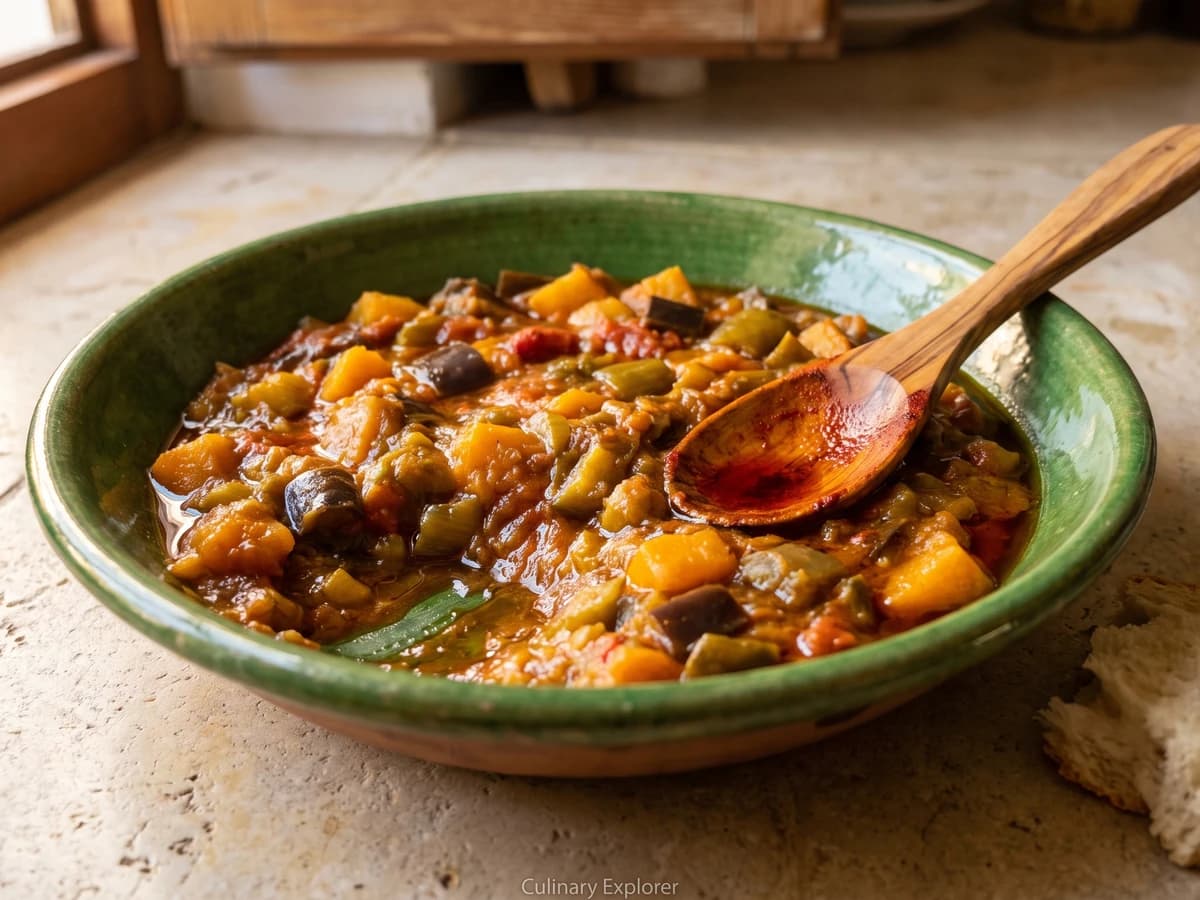
Alboronía is Andalucía's old pumpkin and aubergine stew, deepened with tomato, pimentón, and cumin, then cooked without hurry until the vegetables settle into a glossy, sweet, spoon-soft whole.

Chef Isabel
Aletría Murciana is Murcia's humble noodle guiso: fine fideos, pork ribs, potato, saffron, and a dark sweet sofrito. Get that base right and the pot knows where it's going.
Chef Isabel
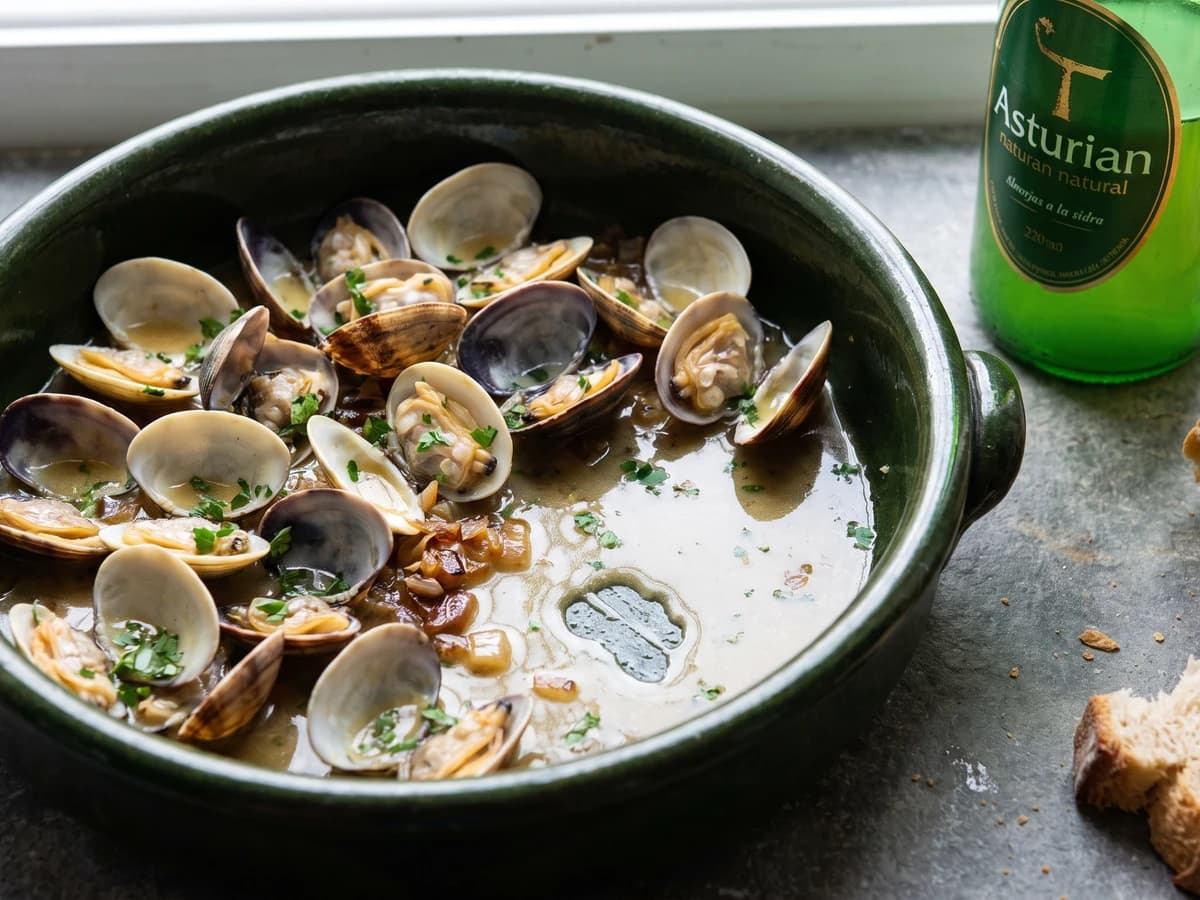
Asturias opens clams in tart natural cider over a slow onion and garlic sofrito, making a bright, briny sauce that asks for bread and rewards one rule: lift each clam as it opens.