
Chef Margarida
Amêijoas à Bulhão Pato
The clam dish that made a poet immortal, nothing but garlic, wine, and coentros meeting the brine of the sea. Ten minutes from pan to table. Bread mandatory.
A cooking platform built around craft, culture, and the stories behind what we eat.
Created by
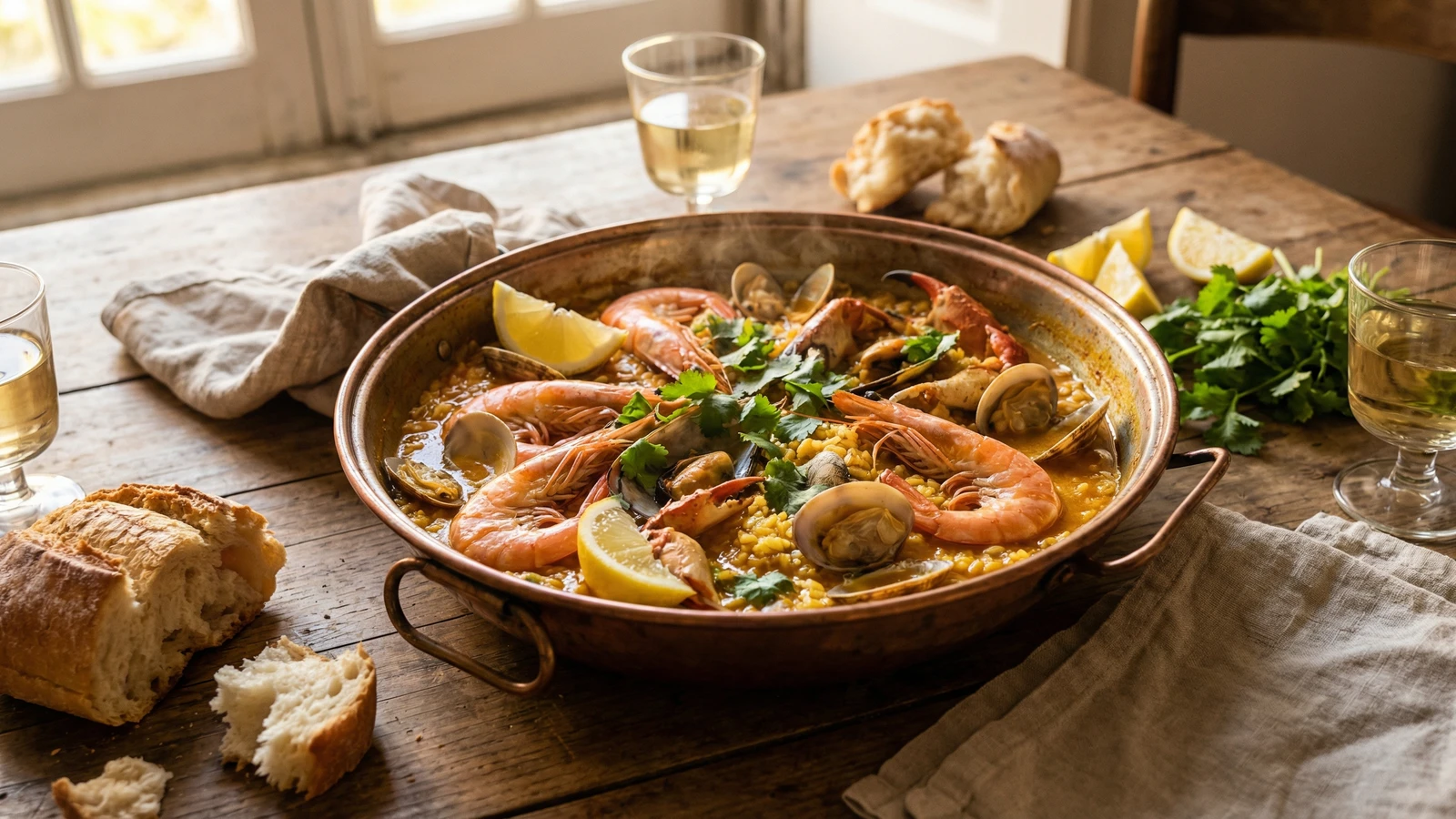
Portugal's greatest celebration of the sea: rice swimming in saffron broth, piled high with prawns, clams, mussels, and crab. Malandrinho, wet, abundant, the dish that brings families to the table.
This is the dish that ends arguments about what to serve at a celebration. Someone's birthday? Arroz de marisco. Family coming from abroad? Arroz de marisco. Nothing to celebrate but you want to feel like there is? Arroz de marisco.
I learned to make this not from Avó Leonor (Alentejo is too far from the coast for fresh seafood), but from the grandmothers I've documented along the Setúbal peninsula and the Algarve. They all argued about the details. More tomato, less tomato. Saffron or no saffron. Wine in the refogado or not. But they all agreed on one thing: the rice must be malandrinho. Wet. Almost soupy. The kind of rice that needs a spoon, not a fork.
This is not paella. Não mexas nisso. Portuguese rice doesn't want a crust on the bottom or grains that stand separate and proud. Portuguese rice wants to swim. It wants broth pooling around every grain, seafood piled high, coentros scattered like confetti. When you lift the lid and the steam hits your face, that's when you know you've made something worth eating.
At Mesa da Avó, this is our celebration dish. We serve it in the pan, set it in the middle of the table, and watch strangers become friends over the shared work of cracking crab legs and mopping up broth with bread. A cozinha é memória. This dish makes memories.
Arroz de marisco emerged from Portugal's coastal fishing communities, where rice replaced bread as the vehicle for stretching the day's catch into a communal meal. The dish became associated with celebration after the spice trade brought saffron within reach. Today it's served at weddings, holidays, and Sunday gatherings from the Algarve to the Minho coast, with each region claiming definitive ownership of the "correct" recipe.
Quantity
500g
Quantity
500g
scrubbed
Quantity
500g
scrubbed and debearded
Quantity
1 small (about 400g) or 200g claws
Quantity
1/3 cup
Quantity
2 medium
finely chopped
Quantity
4 cloves
minced
Quantity
1
diced
Quantity
2
grated, skin discarded
Quantity
1 tablespoon
Quantity
1/2 cup
Quantity
large pinch (about 1/2 teaspoon)
Quantity
1
Quantity
1.5 liters
warm
Quantity
350g
Quantity
1 teaspoon
Quantity
1/2 teaspoon
Quantity
1 large bunch
roughly chopped
Quantity
to taste
Quantity
to taste
freshly ground
Quantity
for serving
| Ingredient | Quantity |
|---|---|
| shell-on prawns or large shrimp | 500g |
| littleneck clamsscrubbed | 500g |
| musselsscrubbed and debearded | 500g |
| cooked crab or crab claws | 1 small (about 400g) or 200g claws |
| extra virgin olive oil (azeite) | 1/3 cup |
| onionsfinely chopped | 2 medium |
| garlicminced | 4 cloves |
| red bell pepperdiced | 1 |
| ripe tomatoesgrated, skin discarded | 2 |
| tomato paste | 1 tablespoon |
| dry white wine | 1/2 cup |
| saffron threads | large pinch (about 1/2 teaspoon) |
| bay leaf | 1 |
| fish or shellfish stockwarm | 1.5 liters |
| short-grain rice (carolino or arborio) | 350g |
| sweet paprika (pimentão doce) | 1 teaspoon |
| piri-piri or crushed red pepper flakes | 1/2 teaspoon |
| fresh cilantro (coentros)roughly chopped | 1 large bunch |
| flaky sea salt | to taste |
| black pepperfreshly ground | to taste |
| lemon wedges | for serving |
If using whole prawns, remove the heads and shells, reserving them. Simmer the heads and shells in the fish stock for 20 minutes to build depth. Strain and keep warm. This is the foundation of your flavor. If you're using pre-made stock, warm it and bloom the saffron threads in a ladleful while you work.
In a wide, heavy-bottomed pan or cataplana, heat the azeite over medium-low heat. Add the onions and cook slowly, stirring occasionally, until soft and golden, about 12 minutes. Add the garlic and red pepper. Cook another 3 minutes until fragrant. This slow refogado is everything. Rush it and you've built your house on sand.
Stir in the grated tomatoes and tomato paste. Add the paprika and piri-piri. Let this cook down for 5 minutes until the tomato darkens slightly and the oil begins to separate at the edges. You're building layers. Add the wine and let it bubble away for 2 minutes.
Add the rice to the pan and stir to coat every grain in the refogado. Let it toast for 2 minutes, stirring constantly. You should hear a gentle sizzle. Add the bay leaf and the saffron with its soaking liquid. This is when the kitchen starts to smell like a celebration.
Add about two-thirds of the warm stock. Stir once to distribute everything evenly, then let it simmer uncovered over medium heat. Do not stir constantly like risotto. Stir occasionally, adding more warm stock as it absorbs. The rice should always be swimming, never dry. This takes about 15 minutes.
When the rice is half-cooked (still firm in the center, about 10 minutes in), nestle the crab pieces and clams into the rice. Cover and cook 3 minutes. Add the mussels, cover again for another 3 minutes. Finally, add the prawns on top, pushing them slightly into the rice. Cover and cook until the prawns are pink and all shells have opened, about 4 minutes more. Discard any clams or mussels that refuse to open.
Remove from heat. The rice should be loose and wet, almost soupy. This is malandrinho: not a risotto, not a pilaf, but rice swimming in flavorful broth. If it looks too thick, add a splash more warm stock. Taste and adjust salt. Scatter most of the coentros over the top, reserving some for serving.
Bring the pan directly to the table. This is not a dish to plate individually. Set it in the center and let everyone serve themselves, spooning rice and broth and shellfish into deep bowls. Finish with the remaining coentros and lemon wedges on the side. Arroz de marisco waits for no one. Eat it now, while the shells are still releasing steam.
1 serving (about 420g)
Culinary guides, cultural storytelling, and the editorial depth that makes cooking meaningful.
Discover Culinary ExplorerChef Margarida
The clam dish that made a poet immortal, nothing but garlic, wine, and coentros meeting the brine of the sea. Ten minutes from pan to table. Bread mandatory.

Chef Margarida
Rice and beans, the combination that kept Portuguese families alive through hard times. Poor food that proves poverty breeds genius. Every spoonful is survival made delicious.

Chef Margarida
The octopus rice of Portugal's coast, where the sea meets the pot and everything becomes one. Malandrinho style: loose, creamy, and deeply savory with every spoonful tasting of the Atlantic.

Chef Margarida
The ugly fish becomes beautiful in the pot. Firm monkfish, creamy rice, rich broth. This is arroz malandrinho, the naughty rice that refuses to behave like a pilaf, and we love it for that.