Culinary Explorer
A cooking platform built around craft, culture, and the stories behind what we eat.
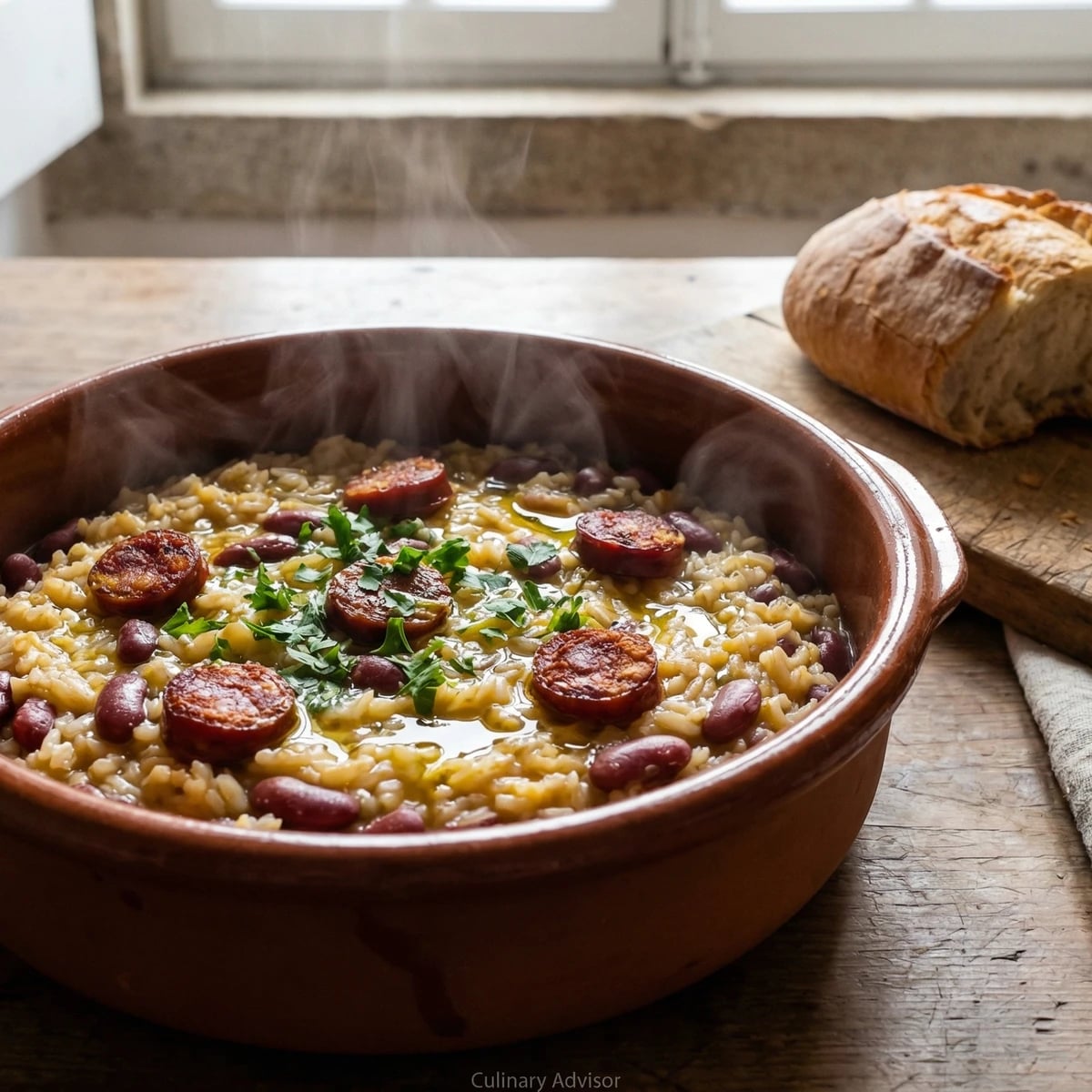
Arroz de Feijão
Created by Chef Margarida
Rice and beans, the combination that kept Portuguese families alive through hard times. Poor food that proves poverty breeds genius. Every spoonful is survival made delicious.
This is the dish that doesn't get written about in food magazines. No chef is putting arroz de feijão on a tasting menu. And that's exactly why I love it.
Avó Leonor made this on Mondays, using whatever was left from Sunday. A handful of beans. Some rice. The chouriço end that was too small to slice for anything else. She'd build a refogado slowly, add the beans with their cooking liquid, then let the rice drink it all up. Nothing fancy. Nothing wasted. Everything delicious.
This is the food of people who couldn't afford meat every day but understood that beans and rice together make you strong. Complete protein, the nutritionists say now. The grandmothers knew it without the science. They knew that a pot of arroz de feijão, some bread, a glass of wine, that's a meal. That's survival. That's love on a budget.
I've documented versions of this dish from the Minho to the Alentejo. Some use white beans, some red. Some add tomato, some don't. Some finish with coentros, some with salsa. All of them are right. The principle is what matters: slow refogado, beans cooked until creamy, rice that absorbs everything. As avós sabem.
Ingredients
dried red kidney beans (feijão vermelho)
Quantity
250g
soaked overnight
bay leaf
Quantity
1
extra virgin olive oil (azeite)
Quantity
1/4 cup
| Ingredient | Quantity |
|---|---|
| dried red kidney beans (feijão vermelho)soaked overnight | 250g |
| bay leaf | 1 |
| extra virgin olive oil (azeite) | 1/4 cup |
Where cooking meets culture.
Culinary guides, cultural storytelling, and the editorial depth that makes cooking meaningful.
Discover Culinary Explorer