
Chef Isabel
Aguaillo de la Sierra de Cadiz
Aguaillo is from the Sierra de Cadiz: cold water, stale bread, garlic, oil and vinegar, closer to a field drink than a bowl of soup, and sharp enough to wake you in the heat.
A cooking platform built around craft, culture, and the stories behind what we eat.
Created by
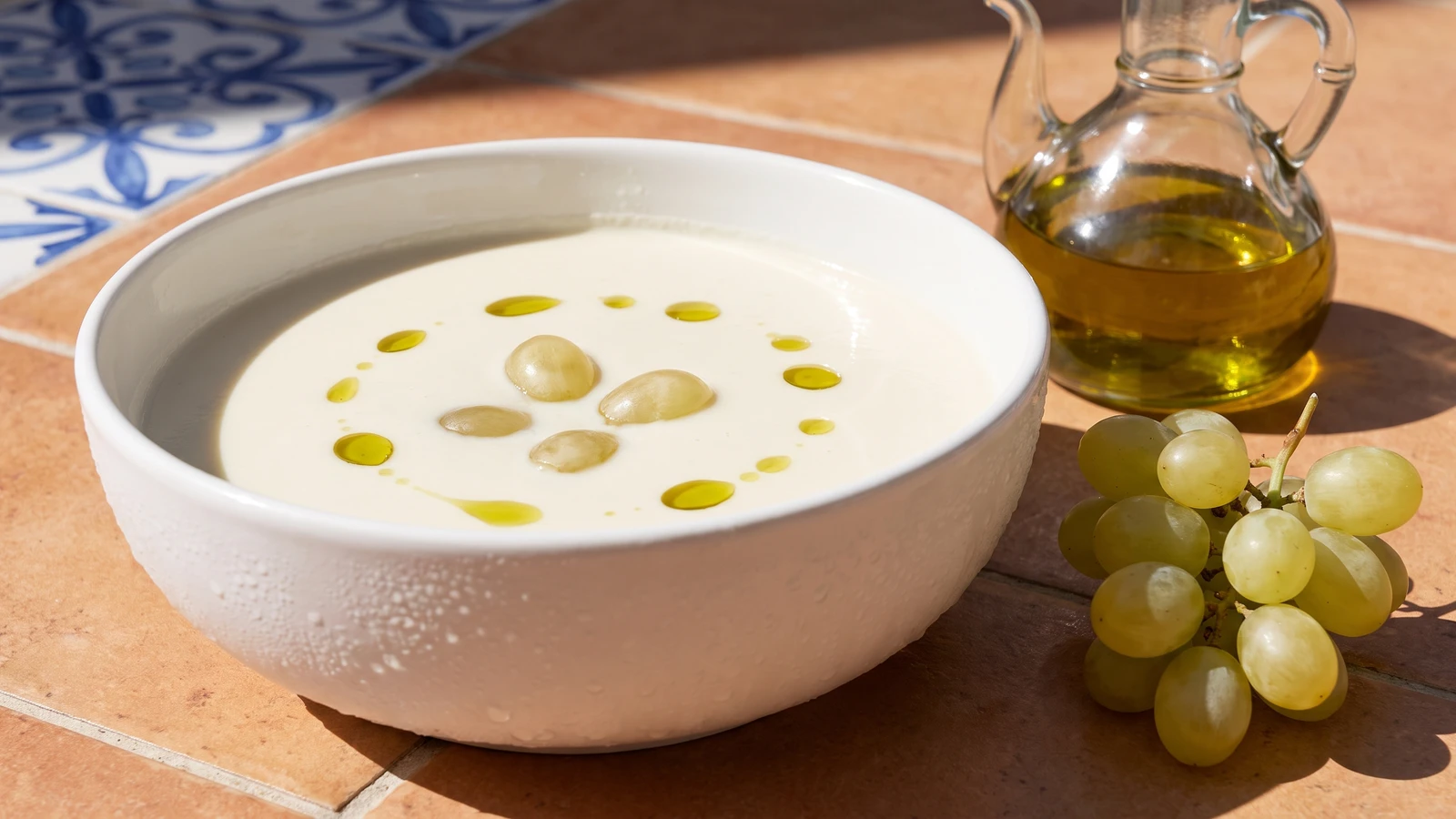
Ajoblanco Malagueño is Andalucía before the tomato: raw almonds, bread, garlic, oil, vinegar, and cold water blended smooth enough to drink, then served with sweet muscatel grapes.
Ajoblanco Malagueño is Málaga's white cold soup, older than the red gazpacho most people know. Almonds, day-old bread, garlic, good olive oil, vinegar, and cold water. That's it. What makes it Malagueño is the almond body and the way it meets the sweet muscatel grapes at the table, sharp, pale, and cold against the heat.
The method that decides it is the emulsion. The almonds and soaked bread must be blended completely smooth first, then the olive oil goes in slowly while the machine runs. Do that and the soup turns silky and white instead of gritty or oily. Rush the oil and it separates. Use old stale bread, not toasted bread, because you want body, not roast flavour.
If you can't find Marcona almonds, use good raw blanched almonds with no salt and no skin. The taste will be a little less sweet and round, but the soup still belongs to Málaga if the almonds are fresh, the oil is good, and the vinegar is clean. Moscatel grapes are best; green seedless grapes will do when you're far from the Axarquía. No hace falta haber pisado España.
Chill it hard and taste it again cold, because cold quiets salt and vinegar. It should pour like light cream, not sit like a sauce. In my Margin beside this one I wrote only: "más agua fría," more cold water. Most failed ajoblancos are simply too thick. Siempre sale, si lo sigues.
Ajoblanco belongs to the older Andalusian family of white gazpachos, made from bread, garlic, olive oil, vinegar, and water before tomatoes and peppers entered the southern kitchen. In Málaga, especially around the Axarquía, almonds and Moscatel grapes shaped the dish into the pale soup served cold at the height of summer. The village of Almáchar keeps the dish closely tied to the grape harvest, where the sweet fruit is not decoration but the old partner to the garlic and vinegar.
Quantity
200g
Quantity
120g
crusts removed and torn
Quantity
1 small clove
germ removed
Quantity
650ml, plus more to loosen
Quantity
100ml
Quantity
2 tablespoons, plus more to taste
Quantity
1 teaspoon, plus more to taste
Quantity
150g
halved if large
| Ingredient | Quantity |
|---|---|
| raw blanched almonds, preferably Marcona | 200g |
| day-old rustic white breadcrusts removed and torn | 120g |
| garlicgerm removed | 1 small clove |
| very cold water | 650ml, plus more to loosen |
| extra virgin olive oil | 100ml |
| vinagre de Jerez (sherry vinegar) | 2 tablespoons, plus more to taste |
| fine sea salt | 1 teaspoon, plus more to taste |
| muscatel grapes or sweet green grapeshalved if large | 150g |
Put the torn bread in a bowl with 250ml of the cold water and leave it for 10 minutes, until soft all the way through. Squeeze it lightly but do not wring it dry; that soaked bread gives ajoblanco its body, so it pours like a cold soup and not like almond milk.
Put the almonds, soaked bread, garlic, salt, vinegar, and another 250ml cold water in a strong blender. Blend for 2 to 3 minutes, stopping to scrape the sides, until the mixture looks pale, thick, and completely smooth. If you can feel grit between your fingers, keep blending. Pésalo, no lo adivines, and blend it longer than you think.
With the blender running, pour in the olive oil slowly in a thin stream. This is the step that decides the dish: the slow pour lets the almonds, bread, and oil bind into a smooth white emulsion. Pour it in all at once and the soup can taste greasy at the edges.
Blend in the remaining 150ml cold water, then check the texture. It should be about the thickness of light cream. Add more cold water, a spoonful at a time, if it sits too heavy. For the silkiest ajoblanco, pass it through a fine sieve, pressing gently with a ladle.
Cover and chill for at least 2 hours, until very cold. Stir well, then taste again. Cold dulls salt and vinegar, so add a little more of either if the soup tastes flat. It should be cool, almond-rich, lightly garlicky, and clean at the finish.
Ladle the ajoblanco into chilled bowls or small glasses. Add the grapes just before serving, with a few drops of olive oil on the surface if you like. Serve it ice-cold, not merely cool. The grapes are not a garnish for prettiness; their sweetness is what answers the garlic and vinegar, tal como se hace allí.
1 serving (about 250g)
Culinary guides, cultural storytelling, and the editorial depth that makes cooking meaningful.
Discover Culinary ExplorerChef Isabel
Aguaillo is from the Sierra de Cadiz: cold water, stale bread, garlic, oil and vinegar, closer to a field drink than a bowl of soup, and sharp enough to wake you in the heat.

Chef Isabel
Ajilimojili is Jaen's tomato-free cold soup: potato, roasted red pepper, garlic, olive oil, and vinegar pounded into a cool, silky spoonful.

Chef Isabel
Ajo carretero is Soriano, from the pine country of Soria: lamb cooked in a plain garlicky broth, then served the old way, meat first and bread-soaked soup after.

Chef Isabel
Ajoblanco Extremeño is the poor-kitchen cold soup of Extremadura: bread, garlic, oil, egg yolk, vinegar, and icy water, with no almonds. Whisk it slowly and serve it bien fresquito.